• 2026.11.02 (Mon)
  • All articles
  • LOGIN
  • JOIN
Global Economic Times
[등록] 2026-09-01 15:48:31
  • Synthesis
  • World
  • Business
  • Industry
  • ICT
  • Distribution Economy
  • Well+Being
    • Pet Life
    • Halal Horizon
  • Travel
  • Eco-News
  • Education
  • Korean Wave News
  • Opinion
  • Arts&Culture
  • Sports
  • People & Life
    • International Student Report
    • With Ambassador
  • Column
    • Cho Kijo Column
    • Cherry Garden Story
    • Ko Yong-chul Column
    • Kim Seul-Ong Column
    • Lee Yeon-sil Column
  • Photo News
  • New Book Guide
MENU
 
Home > Distribution Economy

South Korea Unveils Roadmap to Shift Stock Settlement Cycle to T+1 by 2028

Global Economic Times Reporter / Updated : 2026-11-02 13:42:18
  • -
  • +
  • Print


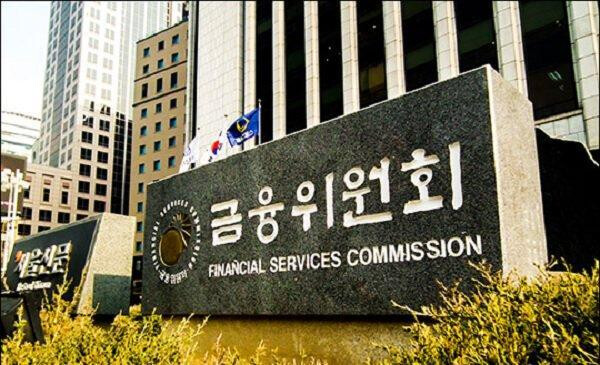
Seoul — South Korea is moving to overhaul its nearly 50-year-old securities settlement system. Under a newly announced preliminary roadmap by financial authorities and market operators, the country’s stock settlement cycle will transition from the current T+2 system to T+1 by 2028, cutting the wait time for stock sales proceeds down to just one day.

The initiative follows a directive from President Lee Jae-myung earlier this year, who questioned why investors had to wait two days to receive funds from stock sales. Although initial discussions considered aligning with Europe's October 2027 timeline, market regulators opted for 2028 to ensure a smoother transition for both domestic and international participants.

What Changes for Investors?

*Faster Liquidity: Investors selling stocks will receive their cash on the next business day (T+1), enabling quicker reinvestment and cash rotation. Conversely, buyers must secure their purchase funds a day earlier.
*Margin Calls and Dividends: For margin trading, the deadline for forced liquidation due to unpaid purchases will move up from T+3 to T+2. Meanwhile, the cutoff date to qualify for dividend payments will be extended by one day, allowing investors to buy dividend-eligible stocks right up until the day before the record date.
*Lower Loan Rates: Ahead of the official transition, individual investors will benefit from reduced borrowing costs. With support from securities finance institutions, brokerages are lowering the interest rates on "proceeds-backed loans"—short-term loans taken while waiting for sales funds to settle—bringing rates down from 7.5%-10% to the mid-5% range.

Challenges and Global Competitiveness

While the reform is expected to reduce overall settlement risks—similar to the 23% drop in clearing funds seen in the U.S. after its 2024 switch to T+1—foreign investors face notable hurdles.

Foreign entities, which account for nearly 39% of South Korea's total market capitalization, must navigate tight time windows for trade verification and currency conversion. Operating across different time zones—such as the late-night hours for U.S.-based investors—presents logistical pressures, and some global funds expressed concerns over potential liquidity mismatches with neighboring markets like Japan, which still operates on a T+2 cycle.

In a recent survey, over 84% of surveyed global financial institutions and custodians favored a transition in late 2028 or later, with some warning that premature implementation could cause foreign investors to scale back their exposure to Korean equities.

Preparation and Infrastructure Overhaul

To mitigate these risks, South Korean financial institutions are rolling out phased support measures:

*System Integration: The Korea Exchange (KRX) and the Korea Securities Depository (KSD) will complete clearing and settlement infrastructure by October 2027, followed by brokerages and foreign institutions updating their systems by the first quarter of 2028, leading into a six-month market-wide testing period.
*Streamlining Foreign Settlements: The KSD plans to link its proprietary system with the U.S. Depository Trust & Clearing Corporation’s (DTCC) CTM platform, cutting the existing 12-step foreign settlement process down to 5 steps.
*Forex and Liquidity Enhancements: Financial authorities are extending foreign exchange market trading hours to 24 hours on weekdays and aiming to launch an offshore Korean Won settlement system by January 2027 to ease currency conversion burdens.

[Copyright (c) Global Economic Times. All Rights Reserved.]

  • #Cherry Garden
  • #HalalFood
  • #Halal
  • #Petlife
  • #Halalhorizone
  • #Hormuz Impasse
  • #globaleconomictimes
  • #micorea
  • #mykor
Global Economic Times Reporter
Reporter Page

Popular articles

  • "Some Chicken Actual Weight Less Than Displayed"... Industry Says "Large Variance After Cooking"

  • Samsung Electronics Enters the 100 Trillion Won Quarterly Operating Profit Era

  • Samsung Electro-Mechanics Signs 290 Billion Won AI Server MLCC Supply Contract with Global Enterprise

I like it
Share
  • Facebook
  • X
  • Kakaotalk
  • LINE
  • BAND
  • NAVER
  • https://globaleconomictimes.kr/article/1065587995310295 Copy URL copied.
Comments >

Comments 0

Weekly Hot Issue

  • Animal Protection Center Budget Only 4% Used, but Increased by 17% Next Year… 47 National Assembly Demands for Correction Unreflected
  • Navigating the "Twindemic": Flu and COVID-19 Surges Together in South Korea
  • Eco-Friendly Cryogenic Cooling Technology for Semiconductor Manufacturing Reaches Commercialization Stage
  • Climate Change Threatens South Korea’s Historic Wooden Architecture as Termite and Fungal Risks Surge
  • Solar Power Emerges as a Lifeline for 400 Million Without Electricity, but Funding Gaps Threaten Expansion
  • Gyeongbuk Social Workers Gather in One Place, 18th Athletic Competition Held

Most Viewed

1
Why Can't We Use 'Muse' in Korea?… Zuckerberg Says, "Due to a Lack of Data Centers"
2
US Army Conducts Rare Temporary Burial Drills to Prepare for Worst-Case Large-Scale War Scenarios
3
US Big Tech Shakes Up Korean Semiconductor Industry as Giants Eye Chinese Memory Alternatives
4
Hyundai Motor and Kia Recruit for AI-Focused "Softeer Bootcamp"
5
Hyundai and Kia Accelerate European Push with Compact Cars to Outrun Chinese Rivalry
체리가든 스토리
nutri huevos
로타리
동포저널

Hot Issue

South Korea on Track for Historic $1 Trillion Export Milestone, Ranking 4th Globally

Alphabet Shares Plummet by $500B on Mixed Earnings and AI Spending Surge; Analysts View the Dip as a Buying Opportunity

US Midterm Elections Complicate Trade Calculus... Persistent Uncertainty Over Tariffs and Investment

Fashion Runway Show 2026

Let’s recycle the old blankets in Jeju Island’s closet instead of incinerating them.

Global Economic Times
korocamia@naver.com
CEO : LEE YEON-SIL
Publisher : KO YONG-CHUL
Registration number : Seoul, A55681
Registration Date : 2024-10-24
Youth Protection Manager: KO YONG-CHUL
Singapore Headquarters
5A Woodlands Road #11-34 The Tennery. S'677728
Korean Branch
Phone : +82(0)10 4724 5264
#304, 6 Nonhyeon-ro 111-gil, Gangnam-gu, Seoul
Copyright © Global Economic Times All Rights Reserved
  • 향기네무료급식
  • APEC2025
  • 반달곰 프로젝트
Search
Category
  • All articles
  • Synthesis
  • World
  • Business
  • Industry
  • ICT
  • Distribution Economy
  • Well+Being 
    • 전체
    • Pet Life
    • Halal Horizon
  • Travel
  • Eco-News
  • Education
  • Korean Wave News
  • Opinion
  • Arts&Culture
  • Sports
  • People & Life 
    • 전체
    • International Student Report
    • With Ambassador
  • Column 
    • 전체
    • Cho Kijo Column
    • Cherry Garden Story
    • Ko Yong-chul Column
    • Kim Seul-Ong Column
    • Lee Yeon-sil Column
  • Photo News
  • New Book Guide
  • Overseas Koreans
  • Multicultural News