"One of the biggest constraints is that this service wasn't rolled out globally because of the significant computing resources it requires to run."
This was the answer given by Meta CEO Mark Zuckerberg during the earnings call following the company's third-quarter financial results on the 21st (local time). An investor had asked what factors were limiting the user base expansion of "Muse," an artificial intelligence (AI) agent launched on September 8th. Put simply, the question was why Muse's launch countries were still being restricted to the U.S. and Canada nearly two months after its release. From an investor's perspective, it seemed unusual that Muse was still operating exclusively in the North American market despite causing a sensation by surpassing 10 million subscribers just 40 days after launch.
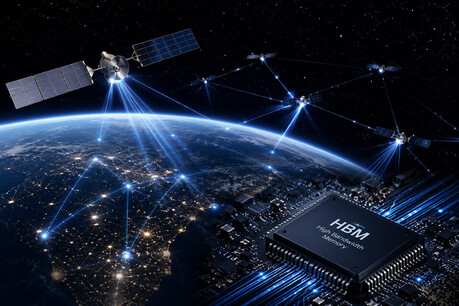
The answer boiled down to a shortage of data centers. Running a personal AI agent 24 hours a day, 365 days a year demands an enormous amount of computing resources. It requires numerous AI chips, including graphics processing units (GPUs) and central processing units (CPUs), which in turn consume massive amounts of costs and electricity. While tying Muse to social media apps operated by Meta—such as Facebook, Instagram, WhatsApp, and Threads—could maximize revenue, Meta's currently secured computing capacity simply could not handle it. Furthermore, because Muse is a free service, its capacity shortages are particularly acute, unlike competitors like Dots, whose alternative models require subscriptions of $100 or more per month.
This completely contrasts with the atmosphere back in early July, when reports surfaced that Meta was pushing to sell its surplus computing capacity externally. CEO Zuckerberg noted that "the 10 million download figure is even more impressive given that it was achieved solely in the U.S. and Canada," stating that if it had been launched in more regions, it could have secured far more users. With companies like Anthropic even unveiling personal AI agents and intensifying competition, Meta's failure to secure sufficient data centers is holding the company back.
CEO Zuckerberg projected, "Running Muse requires significant computing, but we expect to improve cost efficiency by more than 10 times next year. Through this, as our scale of revenue grows, we will be able to secure profitability." He forecasted that Muse’s revenue per user would be higher than that of its existing app product family, reaching "several hundred dollars a year." Truist Securities analyzed that Muse could generate up to $28.5 billion in additional revenue by 2030.
A Common Bottleneck for Hyperscalers and Big Tech
Capacity shortages are a shared headache for hyperscalers operating large-scale computing infrastructure. Bloomberg projected that the four major hyperscalers—Amazon, Microsoft, Google, and Meta—plan to invest $2.4 trillion (approx. 3,184.8 trillion won) over the next several years to strengthen data center competitiveness. Meta's move on the 26th to raise AI investment funds through a record-breaking $95 billion stock issuance is a decisive step to expand its infrastructure. In a podcast interview on the 23rd with Ben Horowitz, co-founder of venture capital firm Andreessen Horowitz, Amazon CEO Andy Jassy revealed that AWS computing capacity lease agreements are already nearly fully booked through 2028.
Bloomberg reported last month, citing sources, that Microsoft plans to more than triple its data center capacity from the current 12 gigawatts (GW) to over 38 GW by 2032—exceeding the peak electricity consumption of the entire state of New York. Two years ago, Microsoft temporarily halted construction out of concern over data center oversupply risks, leaving it unable to adequately respond to explosive AI development demand. Microsoft's decision to limit subscription usage times for its Xbox video game console business and warn users of additional charges upon exceeding those limits was also driven by computing shortages.
Ultra-large AI startups face the exact same predicament. The connection errors experienced by the latest version of Anthropic's AI model, "Claude," in the first half of this year stemmed from a shortage of computing resources. OpenAI's suspension of its video generation service to focus on developing AI coding tools was driven by the exact same reason.
Desperate Alliances and Internal Strife Over Compute
In May, Anthropic signed a computing capacity lease agreement for over 300 megawatts (MW) with SpaceX, led by Elon Musk. The deal, rumored to reach up to $45 billion over several years, shocked the industry. In late February, when Anthropic clashed with the U.S. Department of Defense after refusing the military use of AI, CEO Musk launched a harsh public attack against Anthropic CEO Dario Amodei, claiming "Anthropic hates Western civilization." Despite their prickly relationship, CEO Amodei reached out to his rival Musk to resolve the computing shortage, and Musk publicly praised him, saying he was "impressed by Anthropic's management." For Anthropic, resolving business bottlenecks took precedence over personal grievances.
Data center shortages can also become seeds of internal conflict within AI companies. In August, news broke that Demis Hassabis, CEO of Google DeepMind and the "Father of AlphaGo," was stepping back from front-line management, while Google co-founder Sergey Brin was indirectly involving himself in AI development. Various interpretations emerged, one of which pointed to a power struggle between Hassabis and Brin over how to allocate limited computing resources. The Wall Street Journal reported that Brin's intervention stoked tensions amid fierce tug-of-wars over compute distribution, with Hassabis reportedly expressing frustration that insufficient computing resources were being allocated to long-term research.
[Copyright (c) Global Economic Times. All Rights Reserved.]