• 2026.11.02 (Mon)
  • All articles
  • LOGIN
  • JOIN
Global Economic Times
[등록] 2026-09-01 15:48:31
  • Synthesis
  • World
  • Business
  • Industry
  • ICT
  • Distribution Economy
  • Well+Being
    • Pet Life
    • Halal Horizon
  • Travel
  • Eco-News
  • Education
  • Korean Wave News
  • Opinion
  • Arts&Culture
  • Sports
  • People & Life
    • International Student Report
    • With Ambassador
  • Column
    • Cho Kijo Column
    • Cherry Garden Story
    • Ko Yong-chul Column
    • Kim Seul-Ong Column
    • Lee Yeon-sil Column
  • Photo News
  • New Book Guide
MENU
 
Home > World

Solar Power Emerges as a Lifeline for 400 Million Without Electricity, but Funding Gaps Threaten Expansion

Ana Fernanda Reporter / Updated : 2026-11-02 12:51:56
  • -
  • +
  • Print


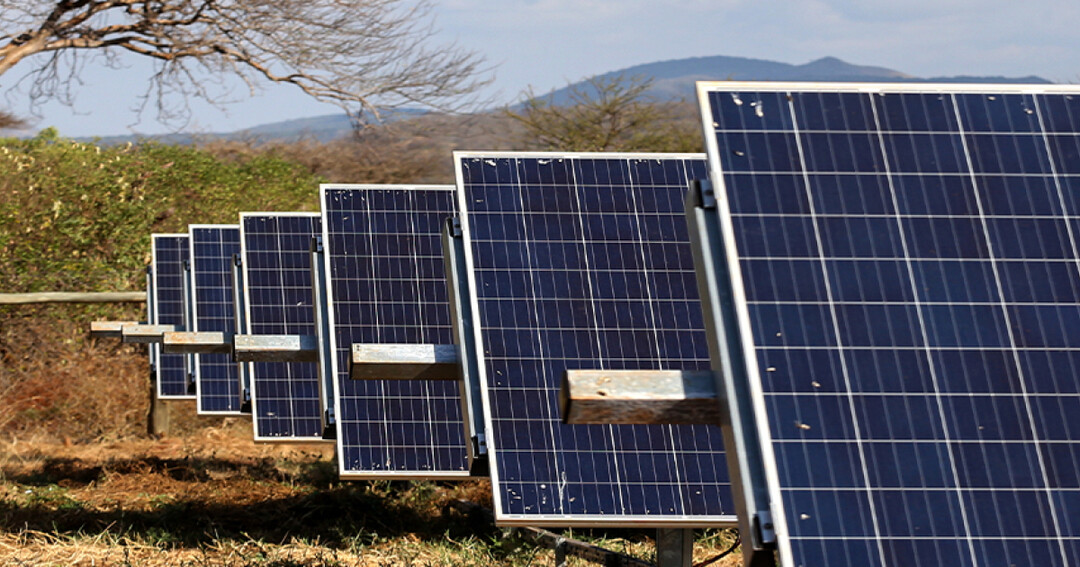
Solar power is increasingly recognized as a practical solution to bring electricity to millions currently living in the dark. However, financial hurdles continue to threaten the widespread adoption of these clean energy systems.

According to the 2026 Off-Grid Solar Market Trends Report—released jointly by the World Bank Group’s Energy Sector Management Assistance Program (ESMAP) and GOGLA—approximately 398 million people across remote areas and sub-Saharan Africa without access to grid electricity would benefit more from standalone solar systems than from the costly installation of new transmission lines.

Unlike traditional grids, off-grid solar utilizes independent solar panels and batteries to generate and store energy locally. This approach has become vital for remote communities, powering not only household lighting but also agricultural water pumps, schools, medical clinics, and small local businesses.

Measurable Benefits and Industry Growth
The impact of off-grid solar is expanding. Data shows that the population using certified or association-backed solar products rose 26% from 118 million in 2023 to 149 million in 2025. Furthermore, surveys of household solar users revealed that 95% of systems installed four years ago are still operating normally.

Beyond lighting, these systems are driving economic activity. Roughly 7.4 million people utilize off-grid solar for income-generating activities such as farming and retail. Over the past 15 years, users have accumulated an estimated $28 billion in combined additional income and cost savings.

The sector has also been a boon for employment. The off-grid solar industry currently supports approximately 219,000 jobs. Full-time corporate employment grew by 29% between 2021 and 2025, with major job creation concentrated in product sales, installation, and maintenance.

The High Cost of Energy Access
Despite these positive trends, high upfront equipment costs remain a major barrier. Two-thirds of off-grid households struggle to purchase solar equipment or face significant economic strain to do so. One-third cannot afford the systems even with installment plans, while another third must allocate 5% to 10% of their total household consumption budget just to buy a unit.

Investment in solar enterprises remains stagnant as well. In 2025, capital funding for off-grid solar companies remained flat at roughly $315 million. During 2024–2025, about 70% of total corporate funding was funneled to the top three enterprises, leaving locally owned businesses with a mere 3.1% share of total financing in 2025.

Lending to small and medium-sized enterprises (SMEs) has also plummeted. Financing for these businesses dropped by approximately 55%, falling from $175 million in 2022–2023 to $79 million in 2024–2025, highlighting a stark disparity in capital distribution.

A Path Forward
To power the 398 million individuals identified as prime candidates for off-grid solar by 2030, the report estimates that roughly $11.4 billion in investments will be needed over the four-year period starting in 2027. This financial roadmap calls for an annual allocation of about $1.3 billion in subsidies and consumer purchasing support, alongside $1.6 billion in equity investments and loans.

"Off-grid solar is already powering agricultural irrigation, healthcare, and rural enterprises," noted Sarah Malm, Executive Director of GOGLA. "Yet, investments in these solutions are failing to keep pace with soaring demand."

To bridge this gap, the report recommends implementing tax incentives, such as exemptions on value-added tax (VAT) and import tariffs for solar products, and leveraging public funds to catalyze private investment. Lowering purchasing barriers for low-income populations and expanding financial support for local businesses will ultimately determine the future success of off-grid solar expansion.

[Copyright (c) Global Economic Times. All Rights Reserved.]

  • #Cherry Garden
  • #HalalFood
  • #Halal
  • #Petlife
  • #Halalhorizone
  • #Hormuz Impasse
  • #globaleconomictimes
  • #micorea
  • #mykor
Ana Fernanda Reporter

Popular articles

  • US Army Conducts Rare Temporary Burial Drills to Prepare for Worst-Case Large-Scale War Scenarios

  • Henri Kagan and Kenso Soai Awarded the Nobel Prize in Chemistry

  • US Deploys Third Carrier and 10,000 Troops to Middle East Amid Rising Tensions with Iran

I like it
Share
  • Facebook
  • X
  • Kakaotalk
  • LINE
  • BAND
  • NAVER
  • https://globaleconomictimes.kr/article/1065585056959874 Copy URL copied.
Comments >

Comments 0

Weekly Hot Issue

  • South Korea Unveils Roadmap to Shift Stock Settlement Cycle to T+1 by 2028
  • Animal Protection Center Budget Only 4% Used, but Increased by 17% Next Year… 47 National Assembly Demands for Correction Unreflected
  • Navigating the "Twindemic": Flu and COVID-19 Surges Together in South Korea
  • Eco-Friendly Cryogenic Cooling Technology for Semiconductor Manufacturing Reaches Commercialization Stage
  • Climate Change Threatens South Korea’s Historic Wooden Architecture as Termite and Fungal Risks Surge
  • Gyeongbuk Social Workers Gather in One Place, 18th Athletic Competition Held

Most Viewed

1
Why Can't We Use 'Muse' in Korea?… Zuckerberg Says, "Due to a Lack of Data Centers"
2
US Army Conducts Rare Temporary Burial Drills to Prepare for Worst-Case Large-Scale War Scenarios
3
US Big Tech Shakes Up Korean Semiconductor Industry as Giants Eye Chinese Memory Alternatives
4
Hyundai Motor and Kia Recruit for AI-Focused "Softeer Bootcamp"
5
Hyundai and Kia Accelerate European Push with Compact Cars to Outrun Chinese Rivalry
체리가든 스토리
nutri huevos
로타리
동포저널

Hot Issue

South Korea on Track for Historic $1 Trillion Export Milestone, Ranking 4th Globally

Alphabet Shares Plummet by $500B on Mixed Earnings and AI Spending Surge; Analysts View the Dip as a Buying Opportunity

US Midterm Elections Complicate Trade Calculus... Persistent Uncertainty Over Tariffs and Investment

Fashion Runway Show 2026

Let’s recycle the old blankets in Jeju Island’s closet instead of incinerating them.

Global Economic Times
korocamia@naver.com
CEO : LEE YEON-SIL
Publisher : KO YONG-CHUL
Registration number : Seoul, A55681
Registration Date : 2024-10-24
Youth Protection Manager: KO YONG-CHUL
Singapore Headquarters
5A Woodlands Road #11-34 The Tennery. S'677728
Korean Branch
Phone : +82(0)10 4724 5264
#304, 6 Nonhyeon-ro 111-gil, Gangnam-gu, Seoul
Copyright © Global Economic Times All Rights Reserved
  • 향기네무료급식
  • APEC2025
  • 반달곰 프로젝트
Search
Category
  • All articles
  • Synthesis
  • World
  • Business
  • Industry
  • ICT
  • Distribution Economy
  • Well+Being 
    • 전체
    • Pet Life
    • Halal Horizon
  • Travel
  • Eco-News
  • Education
  • Korean Wave News
  • Opinion
  • Arts&Culture
  • Sports
  • People & Life 
    • 전체
    • International Student Report
    • With Ambassador
  • Column 
    • 전체
    • Cho Kijo Column
    • Cherry Garden Story
    • Ko Yong-chul Column
    • Kim Seul-Ong Column
    • Lee Yeon-sil Column
  • Photo News
  • New Book Guide
  • Overseas Koreans
  • Multicultural News