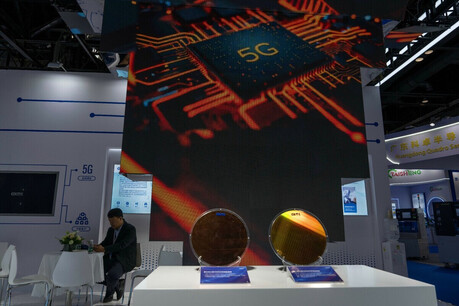
Despite record-breaking performances by Samsung Electronics and SK Hynix, market concerns surrounding South Korea's memory semiconductor industry are intensifying, with American Big Tech companies pointing to mounting risks. Major AI infrastructure tech firms, once the primary growth engine, are now being labeled as the epicenter of an "AI bubble" due to weak financial structures and slowing revenue growth. As these key consumers of memory semiconductors falter, worries are rising that the current memory boom may end prematurely. Furthermore, finished-product manufacturers, including Apple and Tesla, are eyeing Chinese memory alternatives, citing high costs for Korean products.
According to the semiconductor industry on October 18, American AI infrastructure firms CoreWeave and Oracle are facing severe financial distress driven by soaring debt relative to profits. Both companies operate as "neocloud" providers, supplying the cloud servers required to run AI programs. To support servers handling massive amounts of data, these firms have been aggressively purchasing server computers since last year. The core issue is that skyrocketing memory prices have driven up the costs of these servers. As deployment expenses outpace revenues, preventing companies from funding server construction through internal cash flow alone, cloud providers have increasingly turned to debt financing.
Debt has snowballed, leaving CoreWeave and Oracle in precarious financial health. According to financial information provider LSEG, CoreWeave currently carries roughly $50 billion (approx. 66 trillion won) in debt, with its 5-probability of default within the next five years reportedly surging to 64%. Certain corporate bond yields have exceeded 15% annually—meaning that investors demand a 15% yearly return just to purchase the company's bonds, reflecting exceptionally high default risks.
Oracle faces a strikingly similar situation. Oracle’s Credit Default Swap (CDS) premium is approaching 300 basis points (bp), having jumped 31 bp in the second week of October alone. A CDS is a financial derivative used to compensate for losses if a company defaults; higher premiums indicate that the market perceives a greater risk of default.
AI infrastructure firms sit at the downstream end of the memory semiconductor consumption chain. Memory makers produce chips, which NVIDIA and AMD then process into various memory products before selling them to AI infrastructure and software firms. If these final consumers stumble, it deals an immediate blow to South Korea's memory sector. "Similar to the dot-com bubble of the past, the concern that the AI bubble could burst at any moment appears to be a major source of pessimism toward domestic semiconductors," an industry insider analyzed.
Slowing revenue growth at AI software firm Anthropic has further fueled pessimism. Anthropic, the developer of the AI program Claude, posted a quarter-over-quarter revenue growth rate of just 45% in the third quarter. This represents a steep drop from the 140% growth rate recorded between the first and second quarters, shrinking to a third in a single quarter. While a 45% quarterly revenue increase still signals rapid growth, it falls far short of market expectations. A slowdown in growth is likely to disrupt Anthropic's memory procurement plans, potentially dealing a direct blow to the sales of Korean semiconductor firms.
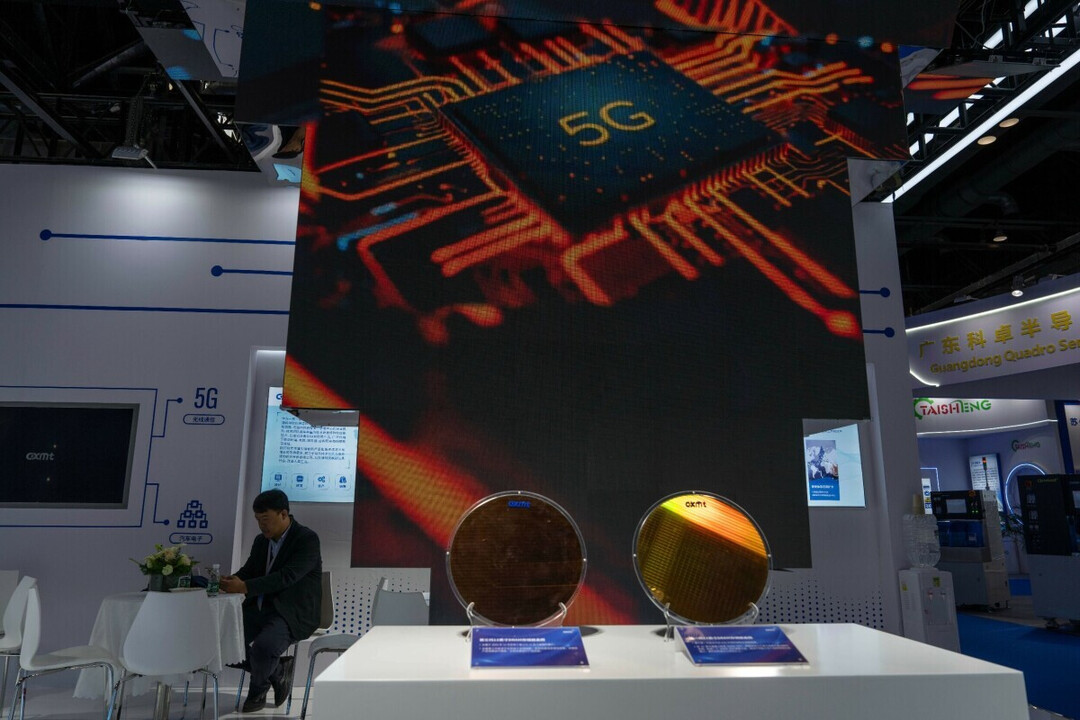
Meanwhile, finished-goods manufacturers such as Apple and Tesla are actively cultivating Chinese competitors to challenge South Korea's memory dominance. Unable to purchase Korean memory chips at their desired prices, these tech giants are looking to foster Chinese alternatives as a counterweight to Samsung Electronics and SK Hynix. During an event on the 15th, Apple CEO John Ternus signaled an openness to using products from Chinese memory makers, including Changxin Memory Technologies (CXMT), stating, "Our fundamental philosophy is that all options must be kept on the table." Reports indicate that Apple is indeed testing CXMT memory chips. Similarly, Tesla CEO Elon Musk promoted China's semiconductor industry on the 18th, remarking that "China will produce an immense volume of memory semiconductors by 2028."
Although neither company has implemented these measures due to US government opposition against utilizing Chinese-made memory, industry watchers believe they could adopt Chinese components at the slightest opening in US-China relations. Experts emphasize that the government and the domestic semiconductor industry must thoroughly prepare, as such a shift could undermine South Korea's global semiconductor hegemony.
[Copyright (c) Global Economic Times. All Rights Reserved.]