• 2026.11.02 (Mon)
  • All articles
  • LOGIN
  • JOIN
Global Economic Times
[등록] 2026-09-01 15:48:31
  • Synthesis
  • World
  • Business
  • Industry
  • ICT
  • Distribution Economy
  • Well+Being
    • Pet Life
    • Halal Horizon
  • Travel
  • Eco-News
  • Education
  • Korean Wave News
  • Opinion
  • Arts&Culture
  • Sports
  • People & Life
    • International Student Report
    • With Ambassador
  • Column
    • Cho Kijo Column
    • Cherry Garden Story
    • Ko Yong-chul Column
    • Kim Seul-Ong Column
    • Lee Yeon-sil Column
  • Photo News
  • New Book Guide
MENU
 
Home > Eco-News

Eco-Friendly Cryogenic Cooling Technology for Semiconductor Manufacturing Reaches Commercialization Stage

Kim Young Min Reporter / Updated : 2026-11-02 13:04:42
  • -
  • +
  • Print


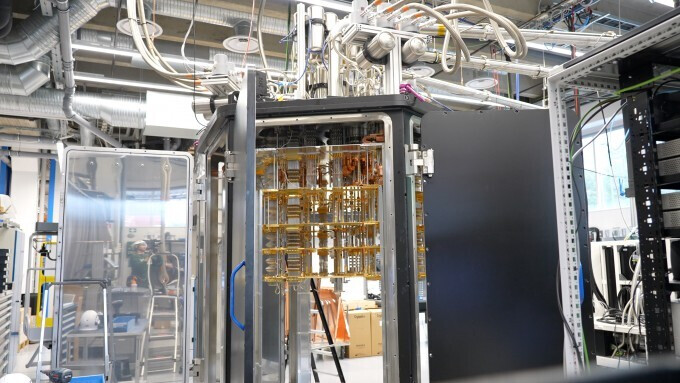
South Korea has taken a major leap forward in sustainable high-tech manufacturing. A research team led by Dr. Joon-seok Ko at the Energy Storage Research Center of the Korea Institute of Machinery and Materials (KIMM) has successfully developed a turbo-Brayton cryogenic cooling system capable of delivering 15 kilowatts (kW) of cooling performance at temperatures below $-120^circtext{C}$.

Overcoming Limitations of Traditional Chiller Systems

Advanced, highly integrated semiconductor manufacturing processes require ultra-low-temperature chillers—often reaching around $-100^circtext{C}$—to effectively dissipate intense heat. However, conventional vapor-compression chillers frequently rely on refrigerants with high global warming potentials (GWP) and face structural limitations when trying to expand cooling capacity.

To solve this, the KIMM research team adopted a turbo-Brayton cycle, which harnesses the cooling effect produced by compressing and expanding nitrogen gas. Because nitrogen boasts a GWP of zero, it acts as an environmentally safe and harmless medium. Furthermore, the team designed the cooling system to operate at pressures below 10 atmospheres, significantly enhancing overall operational safety.

Innovation in Core Components

At the heart of the system is a specialized turbomachinery utilizing magnetic bearings to support the rotating shaft without the need for lubricating oil. Operating at ultra-high speeds of 60,000 revolutions per minute (rpm), conventional oil-lubricated systems risk freezing and subsequent failure under extreme cryogenic conditions.

By independently developing oil-free turbomachinery, the team eliminated this vulnerability while enabling flexible control over both temperature and cooling capacity. The compact, simplified structural design also minimizes the physical footprint required in industrial settings.

Proven Performance and Commercial Outlook

During self-performance tests, the newly developed chiller plummeted to below $-120^circtext{C}$ within 30 minutes of startup and successfully achieved its target load capacity of 15 kW in under 60 minutes. Under rated operating conditions, the system recorded a power consumption of 90 kW and a coefficient of performance (COP) of 0.167. This milestone marks South Korea's first successful development and operational validation of a commercial-grade, large-capacity turbo-Brayton cryogenic chiller.

This achievement builds upon the team's 2004 breakthrough—where they demonstrated 10 kW cooling performance at $-100^circtext{C}$—and elevates the technology to a robust industrial scale. It is expected to directly cater to semiconductor manufacturing facilities urgently seeking hyper-integrated fabrication processes.

The technology has already been transferred to Chago Engineering, a dedicated semiconductor chiller manufacturer, with a commercial product launch targeted for next year. Looking ahead, KIMM’s Energy Storage Research Center plans to advance its cooling capabilities down to $-269^circtext{C}$, expanding applications into future-oriented sectors such as superconductivity, aerospace, hydrogen energy, quantum computing, and nuclear fusion.

"We will continue to develop versatile industrial cryogenic cooling technologies that can be deployed not only in semiconductor manufacturing but across a wide array of promising future industries," stated Dr. Joon-seok Ko.

[Copyright (c) Global Economic Times. All Rights Reserved.]

  • #Cherry Garden
  • #HalalFood
  • #Halal
  • #Petlife
  • #Halalhorizone
  • #Hormuz Impasse
  • #globaleconomictimes
  • #micorea
  • #mykor
Kim Young Min Reporter

Popular articles

  • Deploying Drones to Inspect Sites and Support Administrative Tasks

  • Offshore Wind Orders Gaining Momentum: LS Marine Solution Responds with Major Wins and Fleet Investments

  • Chungnam Delegation Aims for 3rd Overall Place at National Sports Festival

I like it
Share
  • Facebook
  • X
  • Kakaotalk
  • LINE
  • BAND
  • NAVER
  • https://globaleconomictimes.kr/article/1065585751441560 Copy URL copied.
Comments >

Comments 0

Weekly Hot Issue

  • Czech Nuclear Project Faces Headwinds as Construction Contract Framework Sparks Industry Debate
  • South Korea Unveils Roadmap to Shift Stock Settlement Cycle to T+1 by 2028
  • Animal Protection Center Budget Only 4% Used, but Increased by 17% Next Year… 47 National Assembly Demands for Correction Unreflected
  • Navigating the "Twindemic": Flu and COVID-19 Surges Together in South Korea
  • Climate Change Threatens South Korea’s Historic Wooden Architecture as Termite and Fungal Risks Surge
  • Solar Power Emerges as a Lifeline for 400 Million Without Electricity, but Funding Gaps Threaten Expansion

Most Viewed

1
Why Can't We Use 'Muse' in Korea?… Zuckerberg Says, "Due to a Lack of Data Centers"
2
US Army Conducts Rare Temporary Burial Drills to Prepare for Worst-Case Large-Scale War Scenarios
3
US Big Tech Shakes Up Korean Semiconductor Industry as Giants Eye Chinese Memory Alternatives
4
Hyundai Motor and Kia Recruit for AI-Focused "Softeer Bootcamp"
5
Hyundai and Kia Accelerate European Push with Compact Cars to Outrun Chinese Rivalry
체리가든 스토리
nutri huevos
로타리
동포저널

Hot Issue

South Korea on Track for Historic $1 Trillion Export Milestone, Ranking 4th Globally

Alphabet Shares Plummet by $500B on Mixed Earnings and AI Spending Surge; Analysts View the Dip as a Buying Opportunity

US Midterm Elections Complicate Trade Calculus... Persistent Uncertainty Over Tariffs and Investment

Fashion Runway Show 2026

Let’s recycle the old blankets in Jeju Island’s closet instead of incinerating them.

Global Economic Times
korocamia@naver.com
CEO : LEE YEON-SIL
Publisher : KO YONG-CHUL
Registration number : Seoul, A55681
Registration Date : 2024-10-24
Youth Protection Manager: KO YONG-CHUL
Singapore Headquarters
5A Woodlands Road #11-34 The Tennery. S'677728
Korean Branch
Phone : +82(0)10 4724 5264
#304, 6 Nonhyeon-ro 111-gil, Gangnam-gu, Seoul
Copyright © Global Economic Times All Rights Reserved
  • 향기네무료급식
  • APEC2025
  • 반달곰 프로젝트
Search
Category
  • All articles
  • Synthesis
  • World
  • Business
  • Industry
  • ICT
  • Distribution Economy
  • Well+Being 
    • 전체
    • Pet Life
    • Halal Horizon
  • Travel
  • Eco-News
  • Education
  • Korean Wave News
  • Opinion
  • Arts&Culture
  • Sports
  • People & Life 
    • 전체
    • International Student Report
    • With Ambassador
  • Column 
    • 전체
    • Cho Kijo Column
    • Cherry Garden Story
    • Ko Yong-chul Column
    • Kim Seul-Ong Column
    • Lee Yeon-sil Column
  • Photo News
  • New Book Guide
  • Overseas Koreans
  • Multicultural News