• 2026.11.23 (Mon)
  • All articles
  • LOGIN
  • JOIN
Global Economic Times
한인동포뉴스(상단)
  • Synthesis
  • World
  • Business
  • Industry
  • ICT
  • Distribution Economy
  • Well+Being
    • Pet Life
    • Halal Horizon
  • Travel
  • Eco-News
  • Education
  • Korean Wave News
  • Opinion
  • Arts&Culture
  • Sports
  • People & Life
    • International Student Report
    • With Ambassador
  • Column
    • Cho Kijo Column
    • Cherry Garden Story
    • Ko Yong-chul Column
    • Kim Bong-seon's Photo Column
    • Kim Seul-Ong Column
    • Lee Yeon-sil Column
    • Professor Lee Soo-young’s Life Essays
  • Photo News
  • New Book Guide
MENU
 
Home > Industry

Surge in Chinese-Built EVs Pushes South Korea’s Auto Trade Deficit with China to Record $4.23 Billion

Desk / Updated : 2026-11-23 08:02:32
  • -
  • +
  • Print


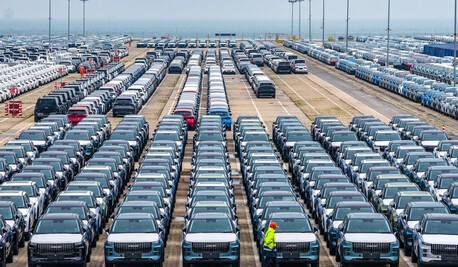
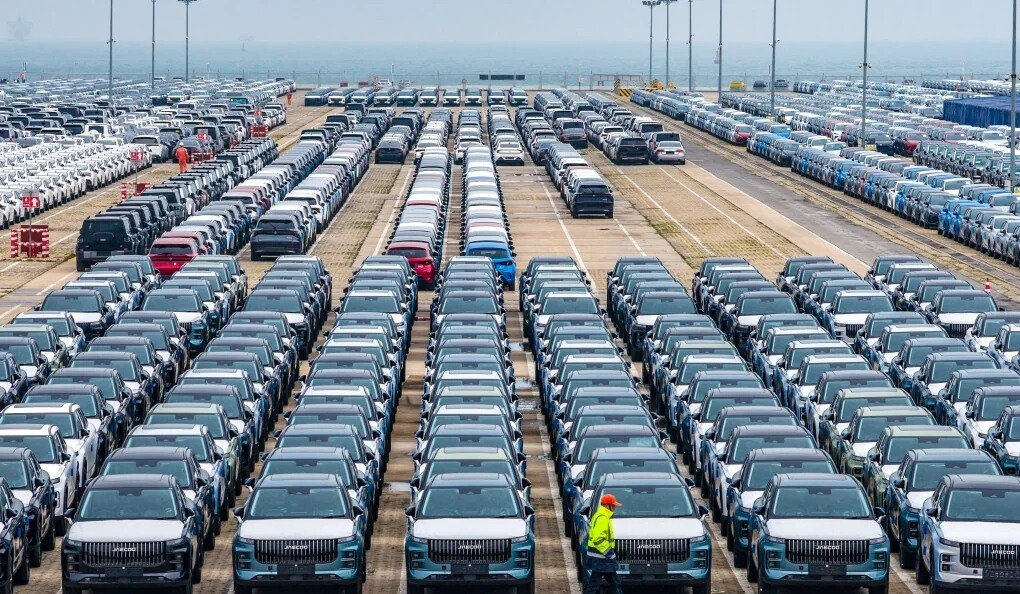
SEOUL — Driven by a massive influx of Shanghai-built Tesla vehicles and aggressive pricing from Chinese automakers, South Korea’s automotive trade deficit with China has swelled to an unprecedented high in 2026, sparking urgent calls from local manufacturers for protective tax incentives.

Data compiled by the Korea International Trade Association (KITA) and the Ministry of Trade, Industry and Energy reveals that South Korea’s auto trade shortfall with China hit $4.23 billion (roughly 5.7 trillion won) during the first ten months of the year. This marks a 92.7% jump from the same timeframe a year prior and easily surpasses the full-year deficit of $2.51 billion recorded in 2025. While South Korean auto exports to China contracted by 34.9% to $168.8 million through October, imports skyrocketed 79.2% to $4.39 billion—outpacing exports by 26-fold and cementing a decade-long streak of annual deficits since 2017.

Tesla and BYD Fuel Market Shift

The import boom is largely anchored by Tesla’s Shanghai Gigafactory, which supplies the vast majority of the brand's vehicles sold in South Korea. Figures from the Korea Automobile Importers & Distributors Association (KAIDA) show that Tesla registrations more than doubled (+105.0%) year-on-year to 98,313 units between January and October, capturing over 30% of the entire imported car market. The Model Y led all foreign models with 78,631 units sold.

Simultaneously, Chinese EV giant BYD has capitalized on competitive pricing since its local debut last year, crossing the 20,000-unit registration mark over the ten-month period, alongside steady sales of Chinese-manufactured Polestar models.

A Unique Vulnerability Among Auto Giants

Industry researchers warn that South Korea is experiencing one of the fastest EV market shifts globally. According to the Korea Automobile & Mobility Association (KAMA), Chinese-made vehicles expanded their share of South Korea’s EV segment from just 1.1% in 2021 to 33.9% in 2025. Among the world’s top ten automotive manufacturing nations, only Mexico (+90.7 percentage points) and Brazil (+81.6 percentage points) saw steeper gains. However, analysts note that South Korea faces far greater structural risk because its automotive sector relies heavily on domestic brands and local supply chains, rather than serving as a contract manufacturing hub for foreign carmakers.

Tariff Disparities and Policy Calls

Local industry leaders attribute this vulnerability to an asymmetric trade environment. While major economies have erected steep barriers—such as U.S. tariffs up to 127.5% alongside connected-car restrictions, EU duties reaching 45.3%, and India’s 70% minimum tariff—South Korea levies only an 8% base tariff on imported passenger cars, undercutting China’s 15% rate.

Other nations have also moved to shield domestic manufacturing; France overhauled its EV subsidies in 2024 to favor locally built cars, and Japan introduced a 400,000-yen tax credit per domestically produced EV the same year. Meanwhile, South Korean automakers saw domestic sales drop 7.2% to 1.04 million units through October, even as overall foreign car sales climbed 23.3% to 325,542 units.

To prevent the erosion of domestic manufacturing and parts ecosystems, industry groups are pressing Seoul to introduce a domestic production tax credit for EVs—a measure the government is currently evaluating.

"Because South Korea’s economy relies heavily on exports, deploying aggressive trade barriers like the U.S. or Europe is challenging," an auto industry representative noted. "Without swift policy intervention such as domestic production tax credits, our local automotive ecosystem risks severe decline."

[Copyright (c) Global Economic Times. All Rights Reserved.]

  • #Cherry Garden
  • #HalalFood
  • #Halal
  • #Petlife
  • #Halalhorizone
  • #Hormuz Impasse
  • #Joseon
  • #globaleconomictimes
  • #micore
Desk
Desk

Popular articles

  • Beijing Demands Washington Deliver on Tariff Cuts to Unlock U.S. Farm Exports

  • AI Semiconductor Stocks Plummet: Philadelphia Index Drops 5.28% and Micron Plunges 7.59% Amid Executive Shakeup and Export Restrictions

  • Samsung Electronics Acquires Additional Building in Silicon Valley, Doubling Headquarters Size

I like it
Share
  • Facebook
  • X
  • Kakaotalk
  • LINE
  • BAND
  • NAVER
  • https://globaleconomictimes.kr/article/1065567655803762 Copy URL copied.
Comments >

Comments 0

Weekly Hot Issue

  • Timor-Leste Closes Schools Amid Wildfire Smoke; Climate Crisis Halts Early Childhood Learning
  • Incheon Misses Annual Carbon Reduction Target, Prompting Calls for Industrial Cooperation
  • South Korean Court Ruling on Bird Strike Risks Threatens Nationwide Airport Expansion Plans
  • Beyond Tangerines: Warming Climate Transforms Jeju Island into a Hub for Exotic Tropical Crops
  • Washington Weighs Section 301 Trade Probe Over Digital Regulations in South Korea, EU, and Australia
  • Delta Air Lines Experiences Nationwide Flight Delays Following Automated System Glitch

Most Viewed

1
South Korea and Ethiopia Sign Trilateral MOU to Introduce Liquid-Based Cytology (LBC) Technology for Cervical Cancer Diagnosis
2
South Korean Burger Chain Lotteria Expands Singapore Footprint with Halal Certification and New Teriyaki Lineup
3
AI Semiconductor Stocks Plummet: Philadelphia Index Drops 5.28% and Micron Plunges 7.59% Amid Executive Shakeup and Export Restrictions
4
"Stay Out, Get Paid, or Have Police Stay With You": Shenzhen Imposes Strict Security Ahead of APEC Summit
5
AI Music Tops Melon Chart: Is the K-Pop Production Formula Changing?
체리가든 스토리
nutri huevos
로타리
동포저널

Hot Issue

Surge in Chinese-Built EVs Pushes South Korea’s Auto Trade Deficit with China to Record $4.23 Billion

South Korean Tea Maker Herb & Tea Expands Global Footprint to Nine Countries with Local Produce

Urban Sanctuary on Namsan: Banyan Tree Club & Spa Seoul Redefines the Luxury 'K-Staycation'

Fashion Runway Show 2026

Let’s recycle the old blankets in Jeju Island’s closet instead of incinerating them.

Global Economic Times
korocamia@naver.com
CEO : LEE YEON-SIL
Publisher & Editor : KO YONG-CHUL
Registration number : Seoul, A55681
Registration Date : 2024-10-24
Youth Protection Manager: KO YONG-CHUL
Singapore Headquarters
5A Woodlands Road #11-34 The Tennery. S'677728
Korean Branch
Phone : +82(0)10 4724 5264
#304, 6 Nonhyeon-ro 111-gil, Gangnam-gu, Seoul
Copyright © Global Economic Times All Rights Reserved
  • News K
  • 반달곰 프로젝트
  • 광고문의
Search
Category
  • All articles
  • Synthesis
  • World
  • Business
  • Industry
  • ICT
  • Distribution Economy
  • Well+Being 
    • 전체
    • Pet Life
    • Halal Horizon
  • Travel
  • Eco-News
  • Education
  • Korean Wave News
  • Opinion
  • Arts&Culture
  • Sports
  • People & Life 
    • 전체
    • International Student Report
    • With Ambassador
  • Column 
    • 전체
    • Cho Kijo Column
    • Cherry Garden Story
    • Ko Yong-chul Column
    • Kim Bong-seon's Photo Column
    • Kim Seul-Ong Column
    • Lee Yeon-sil Column
    • Professor Lee Soo-young’s Life Essays
  • Photo News
  • New Book Guide
  • Overseas Koreans
  • Multicultural News