

INCHEON — Incheon’s ambitious goal to achieve carbon neutrality by 2045 is facing early hurdles, with municipal data revealing that the city failed to meet its greenhouse gas (GHG) reduction quota last year. The shortfall has sparked demands from local lawmakers for a stronger collaborative framework involving major industrial emitters.
Figures disclosed by the city government on November 22 show that Incheon cut 1.219 million tons of greenhouse gases last year. This represents just 78.4% of its annual goal of 1.555 million tons set under its initial carbon neutrality roadmap.
While municipal initiatives yielded positive results in areas under direct local control—such as deploying nearly 319,000 eco-friendly vehicles and planting 3.87 million trees—city officials pointed to structural jurisdiction issues as the primary bottleneck. Power plants and industrial complexes represent roughly 60% and 20% of the city’s carbon reduction targets, respectively, yet regulatory authority over these sectors largely rests with the central government rather than local municipalities.
Incheon previously pledged to reach net-zero emissions by 2045, outpacing South Korea’s national 2050 target by five years. Under this timeline, the city aims to slash emissions by 41.3% by 2030 and 46.8% by 2033 compared to 2018 levels. However, a recent assessment by the Incheon Institute projects that the city will likely achieve only 81% to 83% of its planned reductions over the next five years under current conditions.
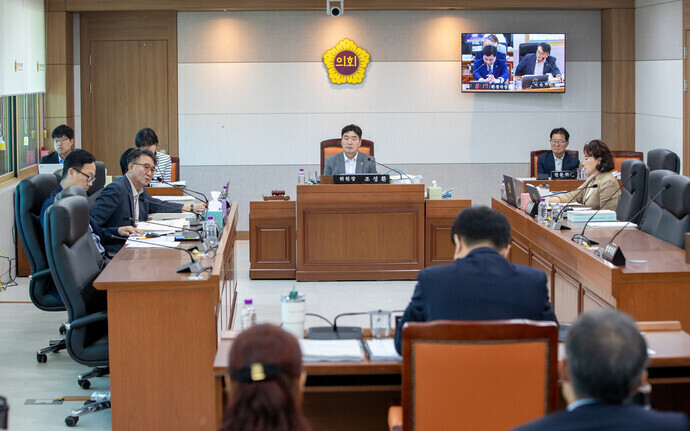
During a recent administrative audit, Incheon Metropolitan Council member Ahn Su-kyung urged the city to move beyond relying on voluntary corporate compliance. She emphasized the necessity of building a dedicated consultative body with major emitters to create tailored, actionable reduction strategies.
In response, Incheon’s Climate and Energy Bureau announced plans to overhaul its strategy as it prepares to draft its second comprehensive carbon neutrality plan next year. Bureau Director Lee Nam-joo stated that the administration will prioritize policy coordination with the central government regarding the industrial and energy sectors, while aggressively expanding local renewable energy infrastructure, including offshore wind and solar power projects.
[Copyright (c) Global Economic Times. All Rights Reserved.]