HAMYANG, South Korea — Driven by regional agricultural ingredients and state-backed manufacturing upgrades, South Korean tea producer Herb & Tea Co. is rapidly scaling its international presence, now exporting to nine countries while projecting its annual revenue to double this year.
Founded in January 2018 and led by CEO Heo Jeong-woo, the Hamyang-based agricultural corporation has successfully pivoted from a contract-manufacturing model to building its own consumer-facing brand, "Dahada." While the business traces its roots back to a sole proprietorship started by Heo’s father in 2006, the company accelerated its transformation in 2020 by tapping into pandemic-era e-commerce demand.
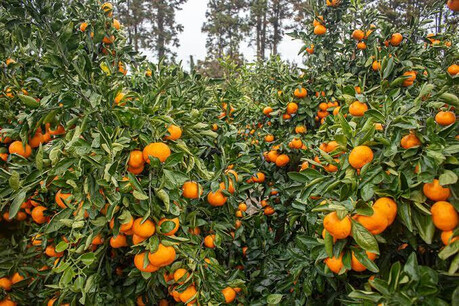
Today, Dahada offers roughly 30 varieties of steeped teas crafted from familiar Korean crops such as mature pumpkin, red beans, Solomon’s seal, and scorched rice (nurungji). Its flagship pumpkin-red bean blend has become a major driver for local farm consumption, with the company sourcing approximately 170 metric tons of mature pumpkins annually through the National Agricultural Cooperative Federation (Nonghyup). Domestically, its products have secured shelf space across major retail channels, including Coupang, E-Mart Traders, and duty-free stores.
A key catalyst behind Herb & Tea’s recent momentum has been targeted support from Gyeongnam Technopark (Gyeongnam TP) and the Hamyang County government. Through a regional industry promotion initiative, the company secured 30 million KRW ($22,000) in 2025 for branding, R&D, and marketing to launch a line of caffeine-free children's teas—featuring barley and sword bean blends—under an intellectual property licensing deal with the popular animated series Bread Barbershop.
In 2026, an additional 30 million KRW grant enabled the firm to replace outdated automated wrapping machinery. The upgrade doubled its packaging speed from a maximum of 20 pouches per minute to up to 40, significantly reducing defect rates and boosting capacity for large-scale export orders.
These operational improvements have translated into tangible overseas gains across nine markets, including China, Malaysia, Taiwan, and Mongolia. Following a $10,000 memorandum of understanding (MOU) at an Indonesian consumer goods fair last year, Herb & Tea inked two separate $100,000 MOUs in Mongolia and Vietnam this year. The company also earned recognition at the K-Brand Awards 2026 and is currently negotiating distribution deals on the U.S. East Coast alongside local influencer marketing campaigns. Management aims to grow exports from 30% to 50% of total revenue over the long term.
Financially, the company has maintained a steep upward trajectory. Annual sales rose from 1.4 billion KRW in 2023 to 2.1 billion KRW in 2024 and 2.5 billion KRW in 2025, bolstered by strong domestic live-commerce performance. Revenue is forecast to exceed 5 billion KRW in 2026.
To meet rising demand, Herb & Tea has acquired a 19,170-square-meter (5,800-pyeong) site in Hamyang’s Jungbang Agro-Industrial Complex. Once construction is complete, annual tea bag output is expected to jump from 150 million to 250 million units, paving the way for the company to diversify into solid and liquid tea beverages.
"Support from Gyeongnam Technopark was instrumental in modernizing our production lines and launching specialized products for overseas buyers," a company spokesperson said. "We plan to keep leveraging local agricultural produce to strengthen our competitiveness both at home and abroad."
[Copyright (c) Global Economic Times. All Rights Reserved.]