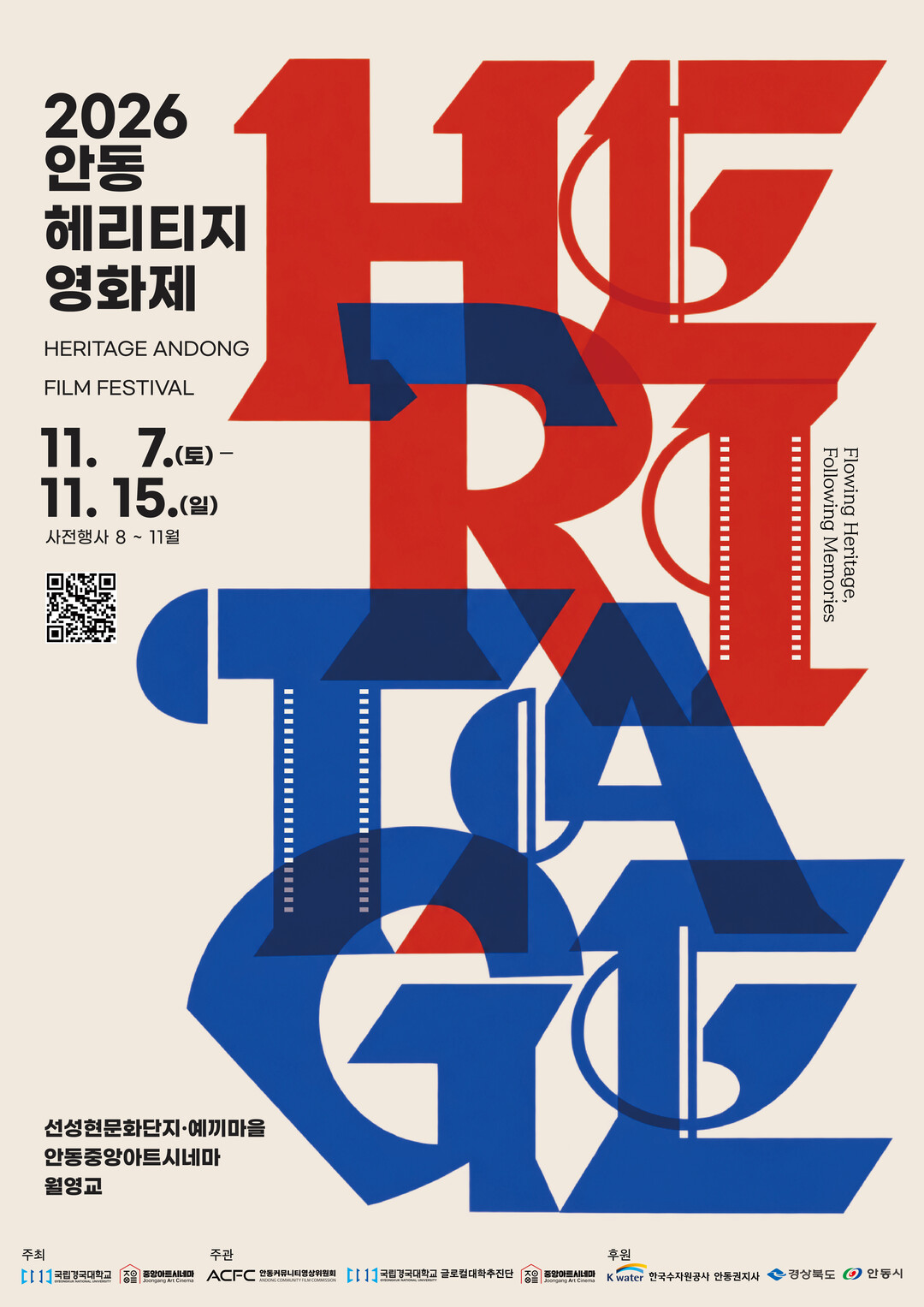
ANDONG — Gyeongsangbuk-do has announced the launch of the very first Andong Heritage Film Festival, an event dedicated to capturing the region’s rich history, cultural landmarks, and personal histories of its residents through the medium of cinema.
The nine-day festival opened on November 7 and will run through November 15. It is jointly organized by National Gyeongguk University and Andong Jungang Art Cinema, with events taking place across multiple cultural hotspots, including the Sunseonghyeon Cultural Complex, Yekki Village, Andong Jungang Art Cinema, and the scenic Wolyeonggyo Bridge.
An opening ceremony took place at Geunmindang, the historical government office within the Sunseonghyeon Cultural Complex. Drawing roughly 200 attendees—including filmmakers, local artists, and movie enthusiasts—the ceremony featured the premiere of the official festival trailer, a documentary video featuring interviews with Yekki Village locals, and a live concert performing memorable film scores.
The festival kicked off with acclaimed Chinese director Jia Zhangke’s 2006 masterpiece, Still Life. Set in China’s Three Gorges region amid sweeping infrastructural and social changes, the film portrays two individuals navigating a rapidly transforming landscape as they search for loved ones.
As part of the opening-day programs, a nationwide forum was held at the Sunseonghyeon seminar room under the banner "Re-visiting Regions through the Lens of Video and Cinema." Industry professionals and regional film festival organizers gathered to exchange operational strategies, discuss cinematic policy applications, and brainstorm ways to foster a thriving, self-sustaining local creative ecosystem.
Throughout the festival's run, audiences can enjoy a diverse lineup of screenings, ranging from short films and independent projects by young regional directors to recorded live theater performances and student films. Interactive events such as "Talk with the Artist" (GV) sessions and heritage talk concerts are designed to bridge the gap between creators and viewers.
Beyond cinema, the festival offers an array of hands-on cultural activities. Visitors can try on traditional Korean garments, participate in folk games and craft workshops, view historical archiving photography exhibitions, and join a heritage art competition. Additionally, a night-time media photo zone has been installed to immerse visitors in the region's cultural heritage and local lifestyle.
Park Chan-woo, Director-General of the Culture, Sports and Tourism Bureau for Gyeongsangbuk-do, expressed high expectations for the event. "We hope this film festival serves as a meaningful platform to spotlight the stories hidden within our regional heritage and everyday lives," Park remarked. "We remain committed to helping unique local assets merge with video content to generate new value, ensuring a sustainable environment where both audiences and creators can flourish together."
[Copyright (c) Global Economic Times. All Rights Reserved.]