![[등록] 2026-09-01 15:48:31](/support/_updata/banner2/tl181982910_6749.png)


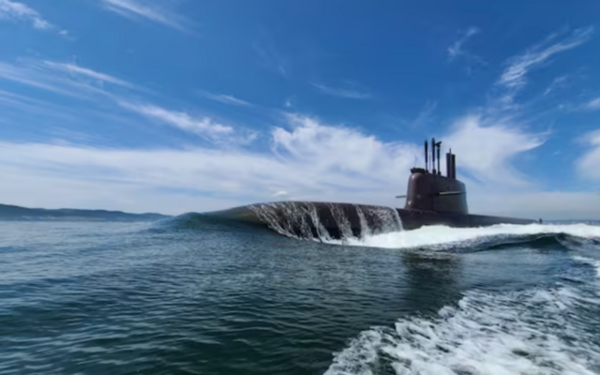
The "K-Defense" juggernaut, which has achieved remarkable global success, has hit a wall in the North Atlantic. South Korea’s bid to supply submarines to Canada’s massive 60-trillion-won (approx. CAD $60 billion) Next-Generation Submarine Project (CPSP) has been set aside in favor of Germany’s ThyssenKrupp Marine Systems (TKMS).
While the loss marks a setback, it offers a stark, high-level reality check for South Korea’s defense export strategy: in the modern global defense market, technical superiority and price competitiveness are no longer the only keys to success. Security alliances and strategic interoperability have emerged as the final, and often decisive, barriers.
The "NATO Wall" and Strategic Alignment
On July 6, Canadian Prime Minister Mark Carney announced that the German-Norwegian consortium (TKMS) had been selected as the preferred negotiator. The project, which involves constructing 12 submarines and managing 30 years of maintenance, is a cornerstone of Canada’s defense modernization.
Though South Korean firms Hanwha Ocean and HD Hyundai Heavy Industries—backed by the South Korean government—put forth a competitive bid featuring the proven Jangbogo-III (KSS-III) submarine, they ultimately could not overcome the "NATO factor."
Prime Minister Carney stated that the choice was driven by "strategic security," emphasizing that the German platform offers full interoperability with NATO partners. Because Canada, Germany, and Norway are all long-standing NATO allies, the TKMS proposal allows for shared training, maintenance, parts, and crew operations. For Ottawa, this integration was an insurmountable advantage that technical performance alone could not offset.
Beyond Performance: A Complex Strategic Landscape
Industry analysts point out that the Canadian decision highlights a significant shift in defense procurement. In an era of deepening geopolitical rivalry, nations are prioritizing "trusted security partners" over simple transactional value.
Interoperability: NATO member states prioritize defense systems that work seamlessly together. South Korea, while a key Pacific partner, is not a formal NATO member, making "total integration" a difficult promise to fulfill compared to a trans-Atlantic ally like Germany.
Economic Offsets: Both sides offered significant industrial benefits. However, Germany’s proposal, involving collaboration with Norway, projected a massive contribution to Canada’s GDP and long-term employment, making it a highly attractive partner for Ottawa’s industrial policy.
A "Living" Bid: The Korean consortium’s performance was undeniable. Hanwha Ocean even sailed a 3,000-ton submarine across the Pacific to Canada to demonstrate its endurance—a move rarely seen in defense sales. This effort proved that South Korea is now a world-class competitor in naval technology, capable of standing shoulder-to-shoulder with industry pioneers like Germany.
The Path Forward for K-Defense
Despite the disappointment, the South Korean government and defense industry are viewing this experience as a vital stepping stone. President Lee Jae-myung emphasized that the bid clearly demonstrated Korea’s technological prowess to the international community and vowed continued support for the defense sector.
The government has clarified that the door is not fully closed. Should negotiations with TKMS fail, Canada may still return to the table with "reserve" candidates, including Hanwha Ocean. Furthermore, the extensive preparations made by the Korean "One-Team"—a collaborative effort between the government, military, and private shipbuilders—have provided a blueprint for future large-scale international bids.
To achieve its goal of becoming one of the world's top four defense exporters, the industry must evolve its strategy:
Defense Diplomacy: Moving beyond simple sales to building deep, multi-layered security partnerships.
Tailored Ecosystems: Developing "export packages" that include not just the hardware, but MRO (Maintenance, Repair, and Overhaul) services, personnel training, and localized industrial infrastructure.
Regional Customization: Adapting strategies to meet the specific geopolitical needs of different regions—whether it be the NATO theater or the Indo-Pacific.
While "K-Defense" has proven it can build the best ships, the Canadian experience serves as a definitive signal that the next frontier is not just about the quality of the product, but about securing a seat at the table of strategic and diplomatic trust.
[Copyright (c) Global Economic Times. All Rights Reserved.]