![[등록] 2026-09-01 15:48:31](/support/_updata/banner2/tl181982910_6749.png)


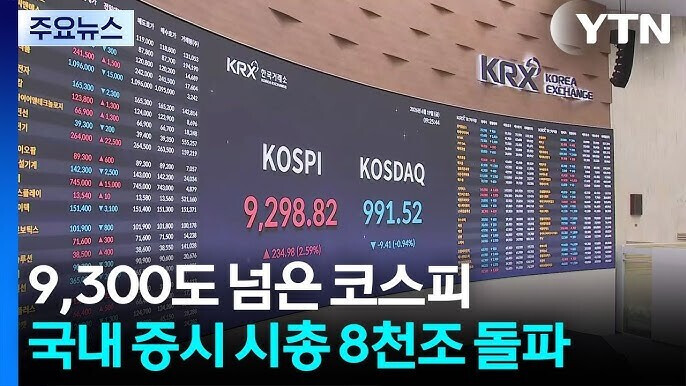
The South Korean stock market reached a historic landmark on June 19, 2026, as the benchmark KOSPI index shattered the 9,300-point barrier, fueled by a relentless rally in semiconductor giants. This record-breaking surge propelled the combined market capitalization of the KOSPI and KOSDAQ to exceed 8,000 trillion won (approximately US$5.2 trillion) for the first time in history.
Semiconductor Supercycle Powers Growth
The KOSPI's ascent has been primarily driven by the "dynamic duo" of the domestic chip industry: Samsung Electronics and SK hynix. On June 19, SK hynix achieved a monumental valuation, becoming the second South Korean company after Samsung Electronics to surpass a market capitalization of 2,000 trillion won. Together, these two semiconductor heavyweights now account for approximately 52% of the KOSPI’s total market value, highlighting an unprecedented level of market concentration.
This rally is rooted in the global artificial intelligence (AI) infrastructure boom. Strong first-quarter earnings and optimistic outlooks for high-performance memory chips have sustained investor enthusiasm, effectively offsetting broader economic concerns, such as rising oil prices and geopolitical tensions in the Middle East.
Market Dynamics and Investor Sentiment
Despite the index's record-breaking performance, the session revealed a divergence in investor activity. While individual investors continued to pour capital into the market—net buying over 1 trillion won on the day of the 9,300 milestone—foreign and institutional investors adopted a more cautious approach, engaging in profit-taking.
The rapid growth of the exchange-traded fund (ETF) market has also played a crucial role in the bull run. With retirement pension assets exceeding 500 trillion won, a significant portion of these funds has flowed into equity-based ETFs, providing consistent buying pressure that has underpinned the KOSPI’s climb from the 7,000-point range earlier this year.
Caution Amidst Euphoria
While the market is celebrating these record highs, analysts remain watchful. The extreme concentration in large-cap semiconductor stocks has left the broader market vulnerable to global AI spending cycles and supply chain fluctuations. Furthermore, indicators such as volatility indexes and the widening gap between the performance of large-cap leaders and small-cap stocks suggest that the market is showing signs of overheating.
As the KOSPI enters this new, uncharted territory above 9,000, market participants are keeping a close eye on external variables, including Bank of Korea interest rate decisions and potential shifts in global trade policies, which could determine whether this "once-in-a-generation" surge can be sustained in the second half of the year.
[Copyright (c) Global Economic Times. All Rights Reserved.]