![[등록] 2026-09-01 15:48:31](/support/_updata/banner2/tl181982910_6749.png)


The South Korean financial markets have entered a new phase of monetary tightening as the Bank of Korea (BOK) extended its hawkish stance for a second consecutive month. On August 27, 2026, the BOK’s Monetary Policy Board decided to raise the benchmark interest rate by 0.25 percentage points, lifting it from 2.75% to 3.00%. This decisive policy shift brought an immediate reaction across the foreign exchange market, driving the won-dollar exchange rate down into the 1,370-won range during intraday trading.
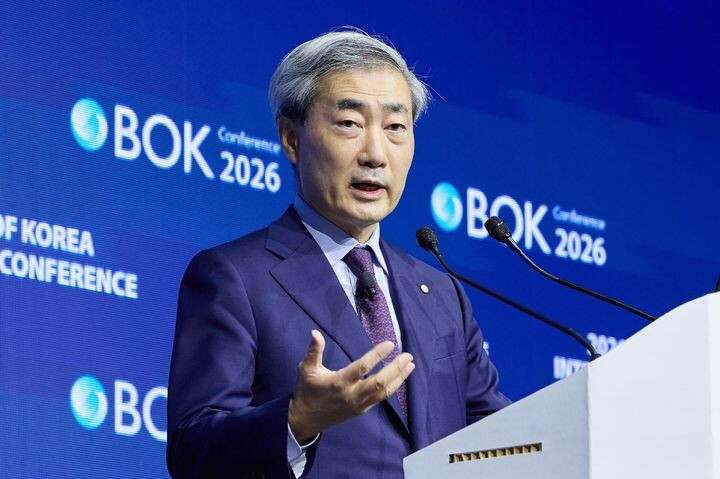
Addressing the press at the BOK headquarters in central Seoul following the rate decision, Governor Shin Shin-song provided profound insights into the central bank's ongoing strategy. While acknowledging that the exchange rate has stabilized significantly compared to its peak earlier this year, Governor Shin stressed that the current level of the won remains excessively high from a historical perspective. He openly hinted that proactive monetary policy measures could foster further appreciation of the South Korean won going forward.
"Although the exchange rate has settled down considerably, it is still elevated compared to previous years," Governor Shin noted during the press conference. He further emphasized that a stronger won is both desirable and necessary to stabilize import prices and tame domestic inflationary pressures. By encouraging a stronger local currency through preemptive tightening, the central bank aims to insulate the domestic economy from external cost shocks.
This latest benchmark rate adjustment has also narrowed the interest rate differential between South Korea and the United States. With the U.S. Federal Reserve maintaining its rate range at 3.50% to 3.75%, the gap between the two nations shrank from 1.00 percentage point to 0.75 percentage points. Financial analysts note that a reduced rate gap typically alleviates downward pressure on the local currency, reinforcing expectations that the downward trend in the won-dollar exchange rate could be sustained.
The volatility of the exchange rate has been a major focal point for policymakers throughout the year. Back in early June, the won-dollar rate breached the 1,560-won threshold during intraday trading, recording its highest level since the devastating 2008 global financial crisis. However, following the announcement of the rate hike at 11:00 AM on August 27, the exchange rate sharply plunged to the 1,379-won level. Although it later recovered slightly due to market adjustments, the regular daytime trading session ultimately closed at 1,380.9 won per dollar, down 3.9 won from the previous session.
Governor Shin also highlighted the philosophy behind the BOK’s swift policy actions, invoking a traditional Korean proverb about prevention. Rather than applying delayed remedies that incur heavier economic costs—akin to fixing a minor leak with a massive hoe later—the central bank opted to act early with a smaller tool to prevent inflation from spiraling out of control. This philosophy underpins the consecutive rate hikes in July and August, illustrating a commitment to curbing inflation before it entrenches itself broadly across the economy.
Meanwhile, despite the central bank's aggressive tightening measures and growing concerns over household debt burdens—particularly for heavily leveraged borrowers such as "young-kle" and debt-driven investors—domestic equity markets displayed strong resilience. Boosted by stellar earnings reports from global artificial intelligence heavyweight Nvidia, the benchmark Kospi surged 1.53% to close at 6,912.37 points. Concurrently, the tech-heavy Kosdaq index advanced 1.30% to finish at 837.65 points.
As the BOK navigates the delicate balance between curbing inflation, stabilizing housing prices, and managing household debt, market participants are closely monitoring whether the won will maintain its upward trajectory. Governor Shin's remarks suggest that the central bank remains vigilant, leaving the door open for additional policy adjustments should external economic conditions or inflation paths demand further intervention.
[Copyright (c) Global Economic Times. All Rights Reserved.]