![[등록] 2026-09-01 15:48:31](/support/_updata/banner2/tl181982910_6749.png)


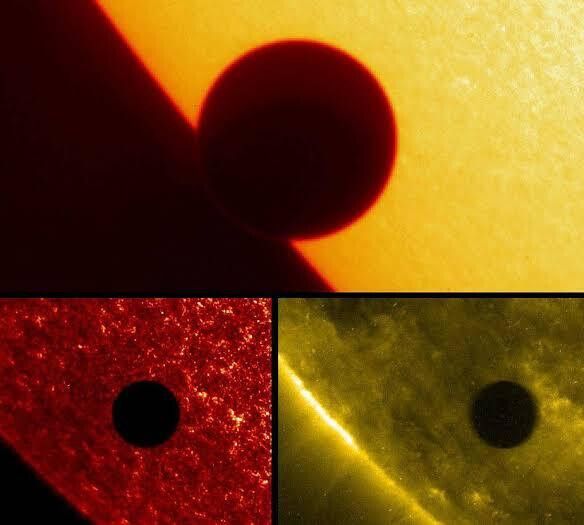
An international joint research team, featuring significant leadership from South Korean researchers, has taken a major step forward in solving a nearly 100-year-old astronomical mystery regarding the enigmatic cloud patterns of Venus.
The Institute for Basic Science (IBS) announced that a collaborative research team—led by Dr. Yeon Joo Lee, Chief Investigator of the Planetary Atmospheres Group at IBS, and Dr. Jan Spacek of the U.S.-based Foundation for Applied Molecular Evolution (FfAME)—successfully identified critical quantitative characteristics of the liquid droplets forming Venus's cloud patterns. The findings were published on August 25 in the international journal Astrobiology.
When viewed through visible light, Venus displays a serene, pale yellowish hue. However, when observed in ultraviolet (UV) wavelengths, distinct bright and dark patterns emerge, moving synchronously with the upper deck of the planet's clouds. These patterns are generated as liquid droplets composed of an unidentified substance absorb sunlight. For approximately a century, scientists have tried to determine the exact chemical composition of the absorbing agent trapped inside these droplets, yet definitive answers have remained elusive.
Various candidates have been proposed over the decades, ranging from inorganic materials containing iron or sulfur to diverse organic compounds. To determine which of these candidate substances actually forms the observed patterns on Venus, researchers require reliable quantitative criteria to check whether real observations align with theoretical predictions. A major obstacle has been the intense scattering of sunlight by cloud droplets and atmospheric molecules, which makes it exceptionally difficult to deduce the true color and intrinsic light-absorbing properties of the particles from space.
To bypass this hurdle, the research team utilized a sophisticated "radiative transfer model"—a computational method that simulates how light is absorbed and scattered in multiple directions as it passes through planetary atmospheres and clouds. By combining spacecraft observations of Venus's cloud brightness with this radiative transfer framework, the team reverse-calculated the precise degree of light absorption occurring within the cloud droplets.
The results were expressed using "absorption coefficients," a standard physical quantity routinely utilized in laboratory spectroscopy to measure how rapidly light weakens as it travels through a medium. The analysis revealed that the absorption coefficient of Venus's cloud liquid drops sharply as the wavelength increases within the 365 to 455 nanometer (nm) range, peaking dramatically at 375 nm with a value of approximately 1,278 cm⁻¹.
This quantitative baseline demonstrates that whatever substance acts as the unknown absorber must either possess extraordinary light-absorbing capabilities or exist at exceptionally high concentrations within the cloud droplets to create the high-contrast dark markings observed from space. Furthermore, the steep and specific decline in absorption at longer wavelengths indicates that the unknown absorber is consistent with a substance possessing a relatively well-defined chemical structure, rather than transforming into an amorphous, tar-like mixture often typical of organic compounds dissolved in concentrated sulfuric acid.
Dr. Lee, who performed the complex radiative transfer model calculations for the study, explained the significance of the work: "Because Venus's cloud particles scatter sunlight so efficiently, it has always been challenging to directly compare observational brightness from space with the absorption properties of liquids measured inside a laboratory. This research is meaningful because it quantitatively establishes how intensely the liquid inside Venus's cloud droplets must absorb light, properly accounting for both scattering and absorption effects."
Dr. Spacek added, "We hope these results will serve as a robust benchmark to rigorously test candidate substances for the unknown absorber and systematically narrow down the list of possibilities." As upcoming international space initiatives—such as Rocket Lab's planned in-situ Venus exploration missions—gear up to investigate the atmospheric chemistry of Venus directly, these new quantitative constraints will play an essential role in decoding the planet's atmospheric dynamics and searching for complex organic molecules.
[Copyright (c) Global Economic Times. All Rights Reserved.]