![[등록] 2026-09-01 15:48:31](/support/_updata/banner2/tl181982910_6749.png)


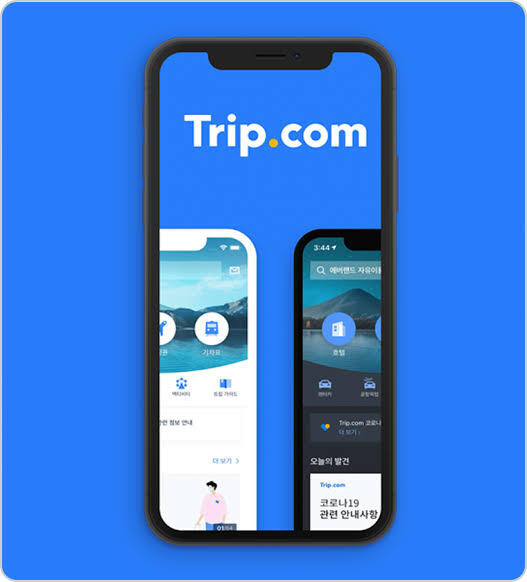
SEOUL — In a dramatic shift within South Korea's online travel agency (OTA) sector, Shanghai-based global giant Trip.com has officially taken the top spot in monthly active users, knocking longstanding domestic powerhouses Nol (formerly Yanolja) and Yeogi Eottae down from their market leadership positions.
According to mobile market intelligence platform Mobile Index on July 30, Trip.com recorded 4.77 million Monthly Active Users (MAUs) in South Korea in June 2026. This figure places the foreign platform ahead of domestic market incumbents Nol (4.52 million MAUs) and Yeogi Eottae (3.81 million MAUs), making it the single most-used travel platform in the country for the first time in industry history.
A Monumental 25-Fold Surge in Five Years
Trip.com’s ascension represents one of the fastest growth trajectories ever recorded in South Korea’s digital platform economy. Five years ago, in June 2021, Trip.com had a modest presence with approximately 190,000 monthly active users. Since then, its user base has expanded by an astonishing 25-fold.
While domestic competitors Nol and Yeogi Eottae remained stagnant within the 3 million to 4 million range over the past three years, Trip.com displayed explosive, non-linear growth. Historical tracking data reveals that Trip.com reached 1.04 million MAUs in June 2024, surged to 2.20 million in November 2025, and ultimately climbed to 4.77 million last month.
Fueling the Offensive: Multi-Billion Dollar Capital Spending
Industry analysts attribute Trip.com’s overwhelming dominance to aggressive and relentless capital deployment in marketing and research & development (R&D). According to annual financial reports from Trip.com Group, the company's global sales and marketing expenditures expanded by 25% year-over-year, rising from 11.9 billion RMB (approx. $1.73 billion / 2.54 trillion KRW) in 2024 to 14.9 billion RMB (approx. $2.16 billion / 3.18 trillion KRW) in 2025.
During the same period, product development expenses increased by 15%, expanding from 13.1 billion RMB (approx. 2.79 trillion KRW) to 15.1 billion RMB (approx. 3.22 trillion KRW). Although localized spending figures for South Korea are not disclosed separately, local media and industry insiders report that an aggressive marketing push aimed at Korean consumers began in earnest in 2024.
A prime indicator of this capital blitz is seen in television advertising share. Mobile Index figures show that Trip.com’s share of voice in the South Korean travel television advertising market leaped nearly threefold—from 13% in the first half of 2024 to 37% in the same period of 2025—allowing it to capture the leading share of broadcast advertising attention.
Growing Alarm Over Regulatory "Reverse Discrimination"
As Chinese and global platforms rapidly solidify their dominance, South Korea's domestic travel industry is expressing deep frustration over what they characterize as structural "reverse discrimination." Local industry representatives contend that foreign entities operate in regulatory blind spots because domestic legal enforcement mechanisms struggle to hold overseas-headquartered firms fully accountable.
Domestic platforms are subject to strict legal guidelines regarding consumer protection, transparent pricing, and strict compliance rules. In contrast, overseas platforms are frequently criticized for engaging in deceptive low-price advertising, maintaining non-compliant refund and cancellation policies, and evading local consumer protection mandates. This regulatory imbalance grants foreign entrants unfair competitive advantages while exposing Korean consumers to heightened risk of unresolved grievances.
"Because foreign operators often fail to comply with domestic laws and government enforcement authorities face severe limitations in exercising jurisdiction overseas, domestic companies are placed at a significant competitive disadvantage. This regulatory reverse discrimination directly translates into consumer harm, making it an urgent issue that the government must address immediately."
— Prof. Lee Seong-yeob, Graduate School of Management of Technology, Korea University
As Trip.com strengthens its market dominance, calls are mounting among lawmakers and industry groups for South Korean authorities to implement equitable legal standards and enforce stricter oversight on cross-border digital service providers.
[Copyright (c) Global Economic Times. All Rights Reserved.]