• 2026.08.28 (Fri)
  • All articles
  • LOGIN
  • JOIN
Global Economic Times
fashionrunwayshow2026
  • Synthesis
  • World
  • Business
  • Industry
  • ICT
  • Distribution Economy
  • Well+Being
  • Travel
  • Eco-News
  • Education
  • Korean Wave News
  • Opinion
  • Arts&Culture
  • Sports
  • People & Life
    • International Student Report
    • With Ambassador
  • Column
    • Cho Kijo Column
    • Cherry Garden Story
    • Ko Yong-chul Column
    • Kim Seul-Ong Column
    • Lee Yeon-sil Column
  • Photo News
  • New Book Guide
MENU
 
Home > Synthesis

'K-Hydropower' Concentrated in South Asia Faces Rising Risks: Urgent Need for Comprehensive Disaster Response Systems

Kim Young Min Reporter / Updated : 2026-08-28 07:32:29
  • -
  • +
  • Print


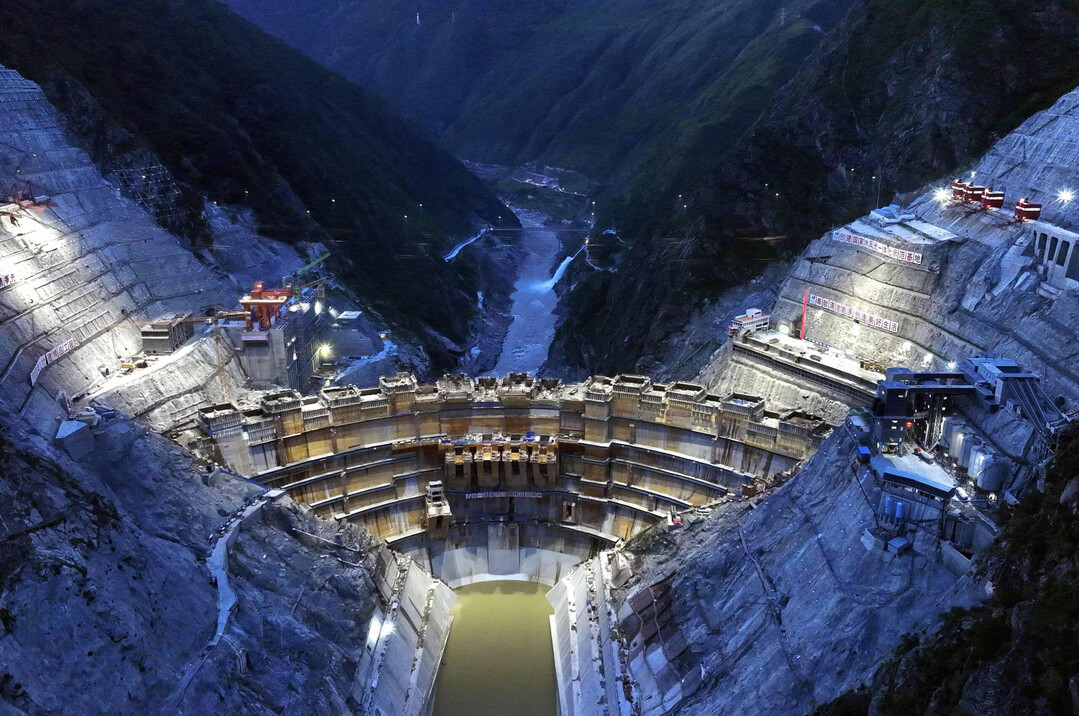
South Asia, including Nepal where recent catastrophic floods have disrupted major construction sites and left workers missing, has emerged as a primary destination for South Korean energy companies seeking overseas hydropower development. Blessed with the steep drops of Himalayan valleys and abundant water flows, the region offers ideal natural conditions for hydroelectric generation. However, as global warming and climate anomalies drastically intensify the frequency of severe floods and natural disasters, experts emphasize that robust, systematic disaster management frameworks are urgently required.

According to industry sources on August 27, Korea South-Power Co. (KOEN)—a subsidiary of the Korea Electric Power Corporation (KEPCO)—has been aggressively expanding its footprint in South Asian hydropower projects. Aside from the Upper Trishuli-1 hydroelectric project in Nepal, which suffered severe flooding and structural damage, KOEN has completed or is currently pursuing three major projects in neighboring Pakistan.

In September 2022, KOEN completed the 102-megawatt (MW) Gulpur Hydropower Plant along the Poonch River, located about 167 kilometers southeast of Pakistan's capital, Islamabad. Undertaken as a joint venture with DL E&C and Lotte Engineering & Construction, KOEN holds the rights to operate the facility for 30 years, with seven staff members currently stationed on-site. Furthermore, in Pakistan’s northern Khyber Pakhtunkhwa province, KOEN is advancing two additional development initiatives: the Asrit-Kadam (229 MW) and Kalam-Asrit (238 MW) projects, which are currently moving through the licensing and permitting phases with two resident employees dispatched locally.

Korean companies are heavily investing in South Asian hydropower due to its exceptional potential. The region combines the massive hydraulic heads of the Himalayan mountain ranges with rich glacial meltwater, making it exceptionally well-suited for large-scale hydro projects.

The core challenge, however, lies in the frequent natural disasters triggered by global warming and climate volatility across South Asia. According to reports from agencies like the Associated Press, heavy downpours and subsequent floods claimed over a hundred lives in Pakistan over a couple of months, while neighboring India suffered similarly heavy casualties during the peak monsoon season. In particular, fragile mountain terrains face escalating risks from sudden flash floods and overflowing glacial lakes.

As more South Korean enterprises expand into South Asia, specialists point out the critical necessity of establishing comprehensive disaster response systems tailored to extreme weather risks. Professor Choi Myung-ki of the Korea Industrial Safety Association noted, "While glacial outburst floods in the Himalayas used to occur once every 5 to 10 years in the past, they are now happening multiple times a year. If alerts fail to translate immediately into evacuation actions, it inevitably leads to catastrophic loss of life."

Professor Choi emphasized a five-stage integrated response model encompassing "prediction, prevention, monitoring, warning, and evacuation," stressing that comprehensive basin-wide flood control strategies must be prioritized. He advised that authorities must treat hazards such as upstream glacial lakes, valleys, and steep slopes alongside downstream residential areas, roads, bridges, and tourism facilities as a unified watershed ecosystem. This requires drafting detailed flood-risk mapping and conducting long-term disaster impact assessments to preemptively identify high-risk zones before development and operation proceed further.

[Copyright (c) Global Economic Times. All Rights Reserved.]

  • #\ormuz Impasse
  • #globaleconomictimes
  • #micorea
  • #mykorea
  • #nammidonganews
  • #singaporenewsk
  • #Samsung
  • #Daewoo
  • #Hyos
Kim Young Min Reporter

Popular articles

  • SK Hynix Declares Q2 Dividend of 375 Won Per Share, Signals Enhanced Shareholder Returns in Q3

  • Slight Relief: Domestic Fuel Prices Drop for 11th Consecutive Week as Gasoline and Diesel Hover in 1,800-Won Range

  • Ansan City Pay-as-You-Throw Trash Bag Abandoned in Japan Sparks Controversy in Kamikochi

I like it
Share
  • Facebook
  • X
  • Kakaotalk
  • LINE
  • BAND
  • NAVER
  • https://globaleconomictimes.kr/article/1065565895244154 Copy URL copied.
Comments >

Comments 0

Weekly Hot Issue

  • South Korean National Team Defender Seol Young-woo Completes Dream Transfer to German Bundesliga Side FC Augsburg on a Four-Year Deal
  • "Kim Sang-sik Magic": Vietnam Defeats Thailand to Claim Second Consecutive ASEAN Hyundai Cup Title
  • The Return of the Bunt Era in Major League Baseball: A Strategic Countermeasure to the Velocity Revolution
  • A "Little Red Dot" Spotted in Deep Space: Is It a Black Hole or a Baby Galaxy?
  • Unlocking a Century-Old Venusian Mystery: New Quantitative Clues Shed Light on Venus's Elusive UV Patterns
  • Kim Jae-joong Unveils His Luxury Tokyo Detached House for the First Time: Featuring a 4-Meter High Ceiling and a Private Elevator 

Most Viewed

1
KOSPI Nears 7,000 Milestone with a 2.4% Surge, Riding a Five-Day Winning Streak Market Overview: A Powerful Weekly Rally
2
Samsung Electronics Enters a Strong Recovery Phase, Eyeing a Potential Rebound Past Recent Lows
3
South Korea to Revive Pro-Japanese Asset Recovery: New Law Targets "Disposed" Property
4
Record-Breaking Deluge Batters Chiba: 8 Dead, Thousands Stranded in Night of Chaos
5
"Why Is Coupang Delivering While My Package Is Stuck?"—The 2026 Delivery Shutdown and What You Need to Know
광고문의
임시1
임시3
임시2

Hot Issue

'K-Hydropower' Concentrated in South Asia Faces Rising Risks: Urgent Need for Comprehensive Disaster Response Systems

Samsung Speeds Up 'AI Transformation': Executive Evaluation Expansion Across All Affiliates

The Autonomous Driving Era Approaches: Automotive Industry Fiercely Competes Over "Running Screens"

Beyond China’s Ambition: Will YMTC’s Push to Overtake Samsung and SK Hynix Become Reality?

Fashion Runway Show 2026

Global Economic Times
korocamia@naver.com
CEO : LEE YEON-SIL
Publisher : KO YONG-CHUL
Registration number : Seoul, A55681
Registration Date : 2024-10-24
Youth Protection Manager: KO YONG-CHUL
Singapore Headquarters
5A Woodlands Road #11-34 The Tennery. S'677728
Korean Branch
Phone : +82(0)10 4724 5264
#304, 6 Nonhyeon-ro 111-gil, Gangnam-gu, Seoul
Copyright © Global Economic Times All Rights Reserved
  • 향기네무료급식
  • BCB부천방송
  • 반달곰 프로젝트
Search
Category
  • All articles
  • Synthesis
  • World
  • Business
  • Industry
  • ICT
  • Distribution Economy
  • Well+Being
  • Travel
  • Eco-News
  • Education
  • Korean Wave News
  • Opinion
  • Arts&Culture
  • Sports
  • People & Life 
    • 전체
    • International Student Report
    • With Ambassador
  • Column 
    • 전체
    • Cho Kijo Column
    • Cherry Garden Story
    • Ko Yong-chul Column
    • Kim Seul-Ong Column
    • Lee Yeon-sil Column
  • Photo News
  • New Book Guide
  • Multicultural News
  • Jobs & Workers