![[등록] 2026-09-01 15:48:31](/support/_updata/banner2/tl181982910_6749.png)


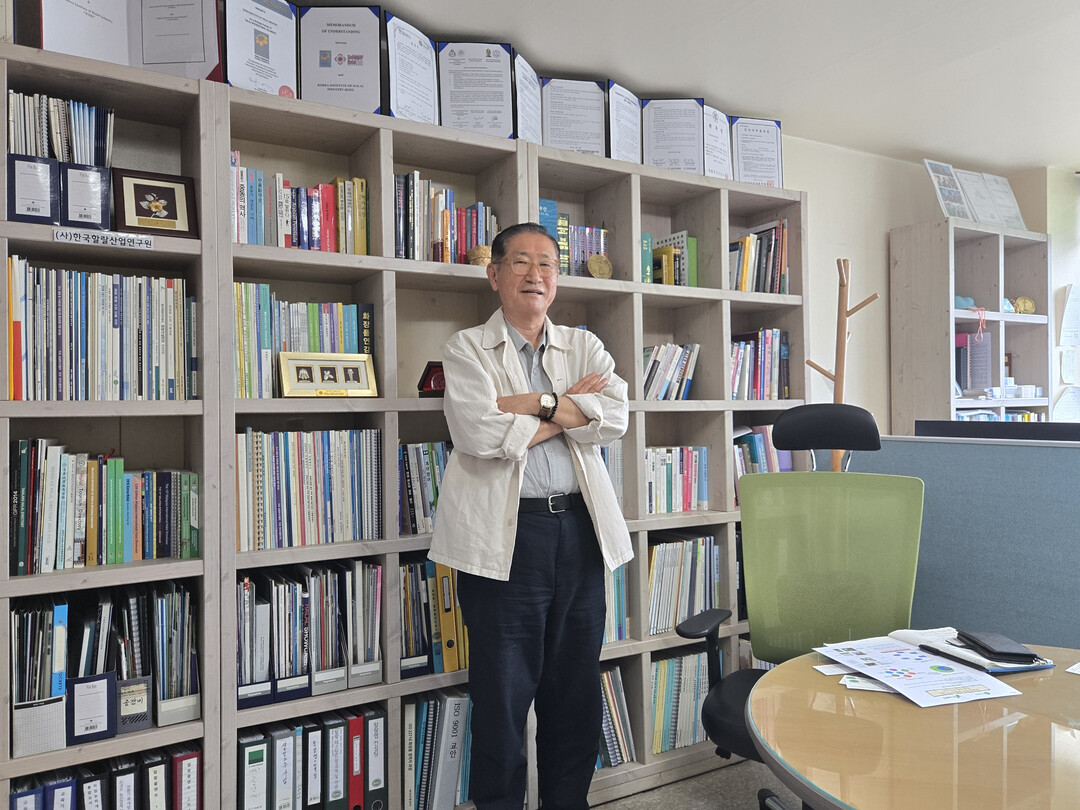
Dr. Geon Jang, President of the Korea Institute of Halal Industry (KIHI) (C) GET
A New Blueprint for the Korean Halal Industry: An Interview with Dr. Geon Jang, President of KIHI
- A veteran scholar with 20 years of expertise in Middle Eastern economics who pioneered South Korea’s first "Halal Economics," warns of an industrial transition "inflection point."
- Moving away from simply executing certifications to declaring a transition into an "AI and digital-based global industrial strategy research platform."
- Launching an all-encompassing field survey across the government, enterprises, and certification bodies, while presenting a new discourse through his upcoming book, The Industry of Trust, K-Halal.
The global Halal market is expanding at an unprecedented, explosive pace and undergoing a profound transformation. However, in the fields of industrial economics and business administration in South Korea, the Halal industry has long remained a largely under-researched domain. While the global market territory expanded rapidly, South Korea faced clear limitations in mounting a systematic response due to a lack of institutional research foundations and dedicated research infrastructure. It was precisely out of this necessity—to analyze the global Halal market from an academic standpoint of economics and business administration and to provide industrial and policy strategies—that the Korea Institute of Halal Industry (KIHI) was launched with the official authorization of the Ministry of Agriculture, Food and Rural Affairs.
Dr. Geon Jang, who has long led KIHI, diagnosed that the South Korean Halal industry has reached a massive turning point, an inevitable inflection point. Dr. Jang is a prominent scholar who has spent over 20 years researching the economic structures of the Middle East and the Islamic world. Having served as a research professor of Middle Eastern economics at Hankuk University of Foreign Studies, he is the nation's foremost expert who published South Korea's very first textbook on Halal Economics about a decade ago and scientifically analyzed the supply, demand, and economic ripple effects of the domestic Halal poultry industry.
"The Korean Halal industry stands at a critical crossroads where we will either build a new system for the trust industry or fail to design a structural blueprint and let this fade away as a passing fad or a distant memory," Dr. Jang emphasized.
Even today, a vast majority of domestic enterprises and citizens narrowly perceive Halal as merely a religious food restriction, such as the prohibition of pork, or as a simple certification stamp meant to provide religious assurance. However, in the actual global market, Halal has already evolved into a universal language of "global consumer trust," encompassing safety, hygiene, transparency, and ethics. Mega-trends dominating the global consumer landscape—such as clean beauty, veganism, sustainability, ESG, safe ingredients, and transparent production management—align perfectly with the core values of the Halal market. This alignment is transforming Halal from a religious concept into a massive, macroscopic, trans-religious infrastructure.
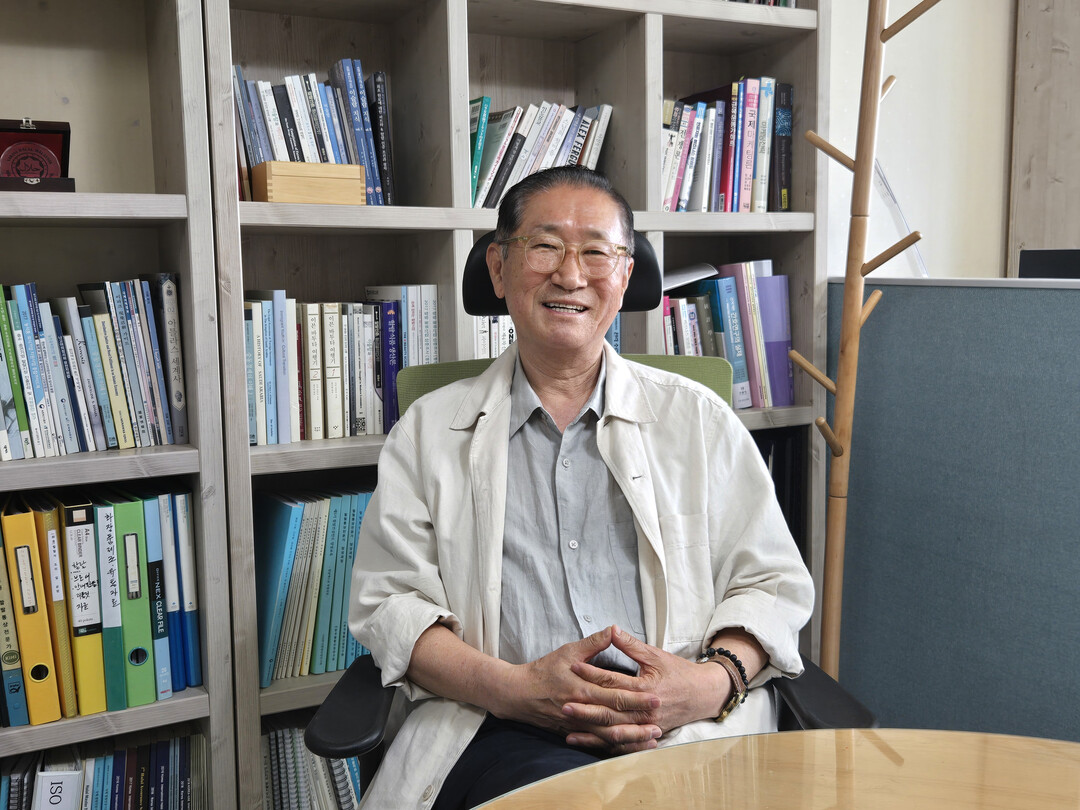
Dr. Geon Jang, a Pioneer of Halal Research in South Korea (C) Global Economic Times
Paradigm Shift: From "Pork Prohibition" to "Global Trust Infrastructure"
Q. Could you share the background behind the establishment of the Korea Institute of Halal Industry (KIHI)? Why has Halal research from an industrial and business perspective become so urgent for South Korea?
"To be frank, Halal has been completely marginalized and under-researched in Korea's industrial economics and business administration circles. The global Halal market, backed by a population of 2 billion Muslims, was exploding and shifting at a frightening pace, but South Korea possessed virtually zero systematic data or research foundations to deal with it. Domestic companies threw themselves into the market blindly, and academic research remained fragmented at best.
The urgent historical demand for a specialized institution to academically analyze the global Halal market through the lens of economics and business administration—and to tie those findings into national industrial and policy strategies—led to the launch of our institute under the approval of the Ministry of Agriculture, Food and Rural Affairs. Halal is no longer just a religious doctrine or a set of dietary rules. It has fully evolved into a 'global trust-based cultural network industry' that encapsulates the safety, hygiene, transparency, and ethical values demanded by the global consumer market. Because its strategic national value is exceptionally high, if we fail to build a systematic infrastructure right now, our place in this massive global blue ocean will completely vanish."
Q. You are widely recognized as the pioneer of Halal research in South Korea. What personal motivations and professional background drove you to dedicate yourself to this field?
"While analyzing the Middle Eastern economy for over two decades at universities and research institutes, I naturally realized that the central axis driving the economic mechanisms of the Islamic world is 'Halal.' About ten years ago, I collaborated with like-minded fellow scholars to publish the nation’s first Halal Economics book. Since then, I have continuously pursued field-oriented research, including a scientific analysis of the supply-demand status and ripple effects of the domestic Halal poultry industry.
European countries and advanced nations in Southeast Asia have already nurtured Halal into a massive, standardized industry. It was always deeply frustrating to watch South Korea—a nation possessing world-class manufacturing capabilities—miss out on this market. A profound sense of duty to bridge the global market’s macro-trends with the magnificent latent potential of Korean industries is what brought me to this position. Currently, we are fully immersed in research while maintaining tight coordination with the Korea Halal Export Association and relevant government ministries."
The Present State of Korean Halal: Structural Bottlenecks and the "K-Halal" Alternative
Q. Assessing the situation objectively, at what stage does South Korea’s Halal industry currently stand in terms of global positioning and advancement?
"To put it bluntly, we are in the 'initial entry phase.' Aside from a few major corporations exporting instant noodles or specific food items, our foundations are weak across almost all metrics—including national-level integrated certification systems, precise industrial statistics, master's and doctoral-level professional personnel, and global hub networks. While international certification standards vary completely by country and institution, South Korea lacks a centralized control tower to integrate, coordinate, or standardize these discrepancies.
However, a crisis is always an opportunity in disguise. If our brilliant young researchers and technologically capable small and medium-sized enterprises (SMEs) aggressively leap into this space backed by a systematic support structure, South Korea’s manufacturing technologies and digital capabilities are sophisticated enough to secure world-class competitiveness within a short period."
Q. What are the most agonizing difficulties that companies voice on the ground when entering the Halal market, and how is the institute working to solve them?
"The greatest hurdles they face on the ground are the 'asymmetry of information' and the 'absence of a trust network.' SMEs are completely in the dark regarding why the certification standards required by Jakarta in Southeast Asia differ so vastly from those required by the Gulf Cooperation Council (GCC) states in the Middle East, or how they are supposed to verify their raw ingredients. Furthermore, finding a trustworthy local buyer and penetrating distribution channels without falling victim to fraud is nearly impossible for an individual enterprise acting alone.
Our institute goes far beyond the basic level of simply assisting companies in acquiring a certification stamp. We conduct comprehensive certification counseling, provide customized market intelligence tailored to specific countries, arrange local network matchmaking, and offer tailored policy consulting. In essence, we have taken on the role of a 'business sherpa' to ensure companies can safely cross global entry barriers."
Q. You recently championed the "K-Halal" model as a brand-new paradigm. How does this differ from traditional approaches to Halal?
"If the previous approach was 'Halal on Korea'—meaning we merely slapped a Halal certification mark onto an existing Korean product—the 'K-Halal' model I am proposing is 'Korea as a Halal Standard.' This means halalifying the unique, peerless industrial systems that South Korea already excels at.
Our cosmetics and food industries possess world-class quality control capabilities, smart factories, and highly agile digital systems. The core strategy is to fuse these systems with the unique cultural assets of the Korean people—namely 'sincerity, diligence, honesty, and hygiene'—alongside the global affinity for K-culture.
What is fascinating here is our historical cultural legacy of Hongik Ingan (弘益人間)—the philosophy of 'broadly benefiting humanity.' Our societal DNA, which seeks to benefit all mankind and pursues that which is clean, pure, and good, aligns astonishingly well with the intrinsic Islamic value of Tayyib (pure, wholesome, and beneficial). A premium trust model born from the marriage of traditional commercial ethics and state-of-the-art technology—that is the true essence of K-Halal."
KIHI’s Future Innovation: Leaping into a Data Hub and Global Research Platform
Q. What are the institute's core projects for this year, and what is your mid-to-long-term vision?
"Our slogan for this year is 'The Network Industrialization of Halal.' We plan to completely break away from past fragmented, piecemeal certification support operations. We have reached an inflection point where failing to transform means falling behind. Moving forward, KIHI will transcend its role as a mere information clearinghouse to leap forward into a 'global industrial strategy research platform' and a 'data hub' that seamlessly weaves together domestic field data and national industrial policies.
Malaysia has already designated Halal as a core national strategic industry and is pivoting toward a digital-based global trust system, while the Middle East is rapidly expanding Halal across the entirety of the lifestyle spectrum, including cosmetics and healthcare. We must prepare for a competition of systems and ecosystems. To achieve this, our institute has already initiated a massive, comprehensive industrial field survey encompassing the government, enterprises, and domestic and international certification bodies. This is not a superficial status check; it is a pragmatic, actionable piece of research designed to precisely analyze the structural bottlenecks plaguing companies through hard statistics and data, thereby providing immediate market-entry tactics for businesses and concrete policy alternatives for the government."
Q. Your upcoming book, tentatively titled The Industry of Trust, K-Halal, is currently in the works. What core messages will it deliver?
"This book will serve as a 'manifesto of a new paradigm' to shatter our society's narrow, claustrophobic understanding of Halal. The volume consists of five distinct parts. It begins with a macro-strategic analysis of global Halal industrial trends and proceeds to realistically examine the disruptive power that K-Halal can wield across the entire spectrum of industries—including K-beauty, K-food, bio-healthcare, and tourism content. It will also candidly address painful, unresolved domestic challenges, such as the fragmentation of domestic certification agencies and the lack of a unified policy governance structure. Ultimately, the book will lay down a concrete, actionable blueprint for constructing a future-ready Halal ecosystem by integrating AI and digital technologies."
Recommendations: "Government Policy Decisions and Youth Challenge Will Reshape the Future"
Q. To conclude, could you share a word of advice for government authorities, businesses aiming to challenge the Halal market, and young researchers?
"For the Halal industry to become a robust future economic engine for South Korea, the government must now step up to the front lines and approach it from the dimension of meticulous national industrial policy. Only when field-comprehending data is accumulated and backed by powerful government support policies will the massive Islamic market truly become our territory. A decisive policy commitment from the government is more urgent than ever before.
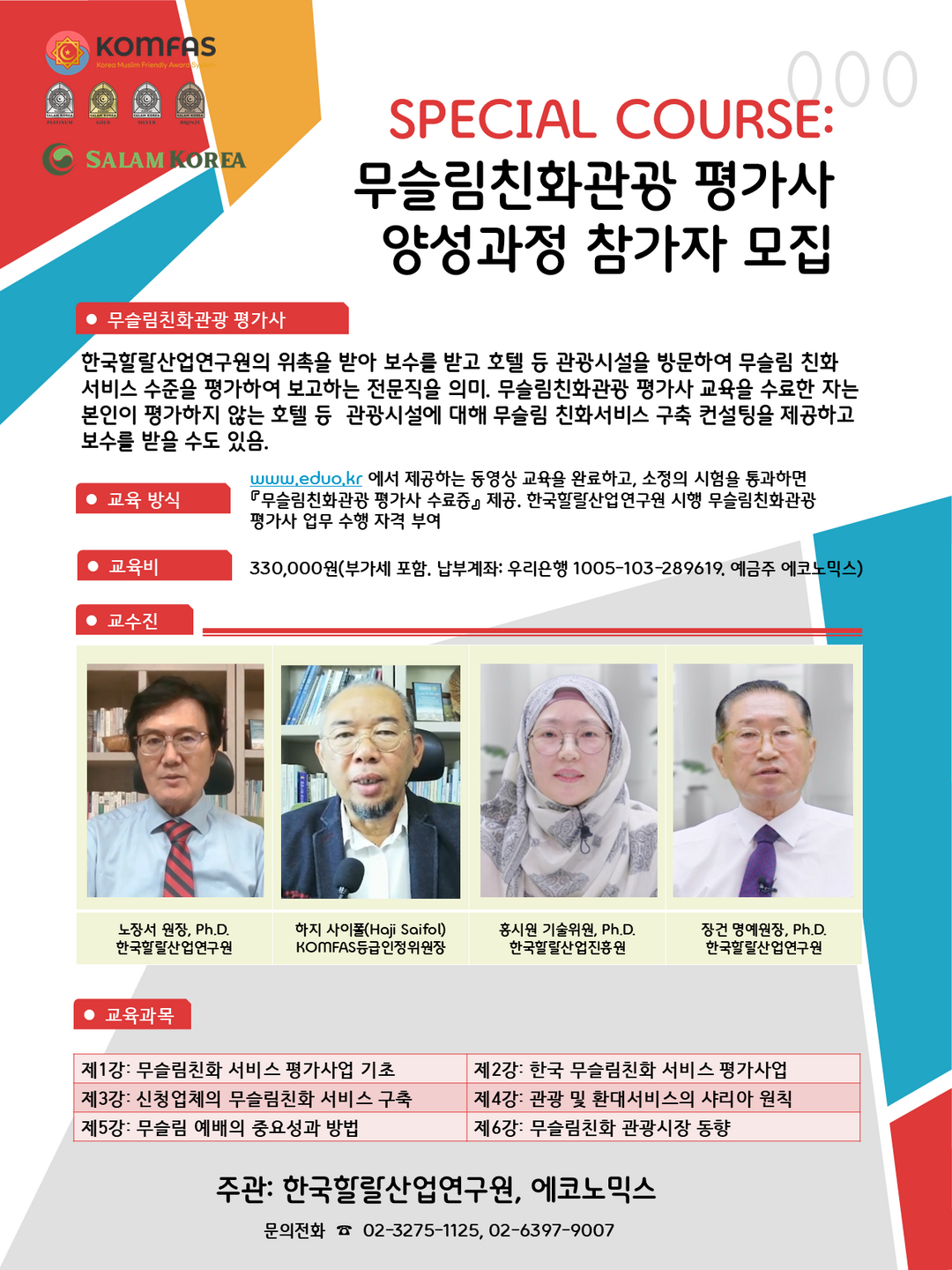
Currently, our institute is actively running proprietary initiatives, such as training Halal Tourism Evaluators and operating a Muslim-Friendly Facility (restaurants and hotels) rating recognition program. We are also demonstrating our deep institutional expertise by executing entrusted preliminary screening operations for Halal certifications on behalf of the Korea Testing & Research Institute (KTR), a major national testing and certification body. Furthermore, we scientifically compile and analyze K-beauty export figures to the Islamic bloc every quarter, serving as an invaluable compass for the industry.
Because the Halal industry is still in its pioneering stage, it remains a pristine blue ocean with infinite value left to explore. If sharp, sensible young researchers and innovative entrepreneurs unite under the banner of K-Halal and challenge this market, the trust systems we create can become the global standard. On that lonely, fierce path of pioneering a new frontier, the Korea Institute of Halal Industry will stand as your most dependable partner and walk right beside you. Let us expand the new territory of Korean industry together."
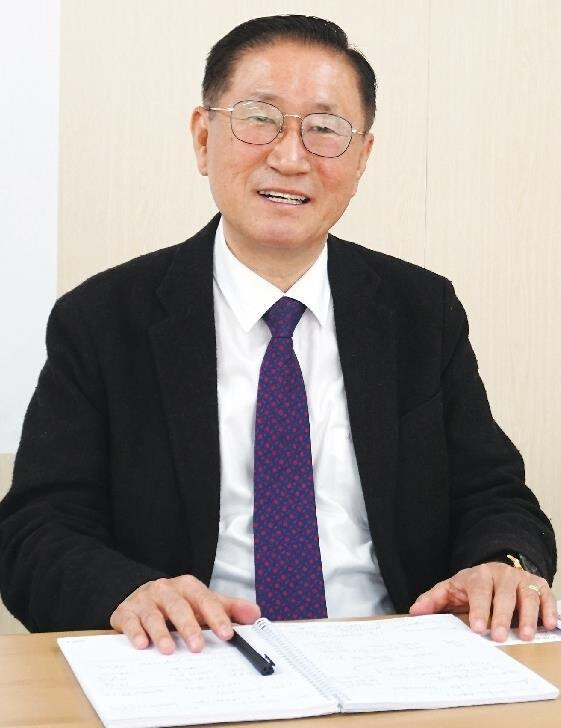
Dr. Geon Jang, leading the Korea Institute of Halal Industry (C) Global Economic Times
Conclusion: Opening a Sustainable Future through Data and Governance
Conclusively, the ultimate success or failure of South Korea’s Halal industry hinges not on a short-sighted expansion of individual certification counts, but on whether the country can firmly anchor Halal as an advanced "industrial ecosystem" and a "global trust infrastructure." To resolve the information asymmetry, the barriers of disparate national regulations, and the lack of global networks currently suffocating field enterprises, a national-level standardization effort and the expansion of Mutual Recognition Agreements (MRAs) among major international certification bodies are urgently required. Such monumental tasks cannot be accomplished through the isolated struggles of individual enterprises alone; they demand the prior deployment of meticulously engineered industrial policies and multifaceted policy governance support from the government before any visible territorial expansion can be expected.
The infrastructural innovations spearheaded by the Korea Institute of Halal Industry (KIHI) are in precise alignment with these contemporary historical demands. The large-scale field survey initiated by KIHI will serve as a critical compass, diagnosing structural bottlenecks and deriving concrete business tactics based on live, empirical field statistics. Furthermore, advanced platform functions—such as research into trust infrastructures integrating AI and digital technologies, the establishment of a global data hub, and the scientific analysis of quarterly K-beauty exports to the Islamic world—are projected to serve as the core gravity that organically unites the domestic and international industrial ecosystems, which have long remained fragmented.
Halal is no longer the exclusive property of a specific religion, but a core ethical framework and a premium quality benchmark traversing the entirety of the global consumer market. At this critical juncture, South Korea must aggressively strengthen its organic, tripartite cooperation system among the public, private, and academic sectors and execute sustained strategic policy investments, ensuring that the "K-Halal" model—born from the fusion of our accumulated technological trust and cultural assets—can triumphantly establish itself as a global standard in the world market.
[Copyright (c) Global Economic Times. All Rights Reserved.]