![[등록] 2026-09-01 15:48:31](/support/_updata/banner2/tl181982910_6749.png)


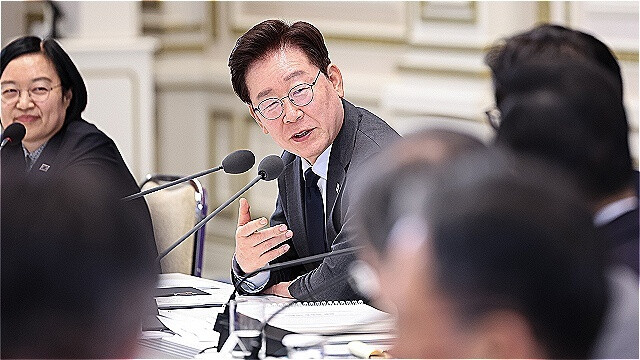
SEOUL — In a sweeping policy directive, President Lee Myung-yeo urged financial authorities to implement swift and aggressive debt write-off programs for individuals facing unpayable debts, declaring that the persistent failure to offer timely financial redemptions actively cripples national economic potential. He strongly rebuked critics who argue that such sweeping relief measures encourage "moral hazard," labeling their rhetoric as "irresponsible demagoguery" that ignores both basic economic mechanics and humanitarian imperatives.
The presidential remarks were delivered during a high-profile policy briefing convened on Wednesday morning at the Blue House Guest House (Yeongbingwan). The session, which brought together key officials from the Financial Services Commission (FSC) and other core economic ministries, was aimed at refining the administration's macroeconomic priorities amidst shifting domestic credit conditions.
"If a debtor lacks the fundamental capacity to repay their obligations, we must forgive those debts as quickly as possible," President Lee emphasized. "This is not merely an act of charity, but an economic necessity. Only when these individuals are cleared of unviable burdens can they return to normal economic activities, which in turn allows the broader national economy to function effectively and dynamically."
President Lee drew sharp comparisons between South Korea’s rigid rehabilitation systems and those of other advanced economies, noting that Western jurisdictions manage financial insolvency with far greater efficiency. "In many leading nations, personal bankruptcy, restructuring, and debt discharge are treated as routine, streamlined, and relatively swift administrative processes. In contrast, our domestic legal and financial systems make this transition incredibly difficult, trapping individuals in a perpetual cycle of distress."
The Rebuttal of "Moral Hazard" Arguments
Addressing the long-standing debate over whether public debt forgiveness encourages borrowers to intentionally default, the President was unsparing in his criticism of the financial sector and conservative commentators. He argued that the severe social and economic penalties associated with delinquency far outweigh any perceived incentive to default.
"Some claim that aggressive debt write-offs lead to moral hazard. This is nothing but irresponsible demagoguery," President Lee asserted. "Let us look at reality. Who would willingly choose to live as a credit-delinquent—unable to secure employment, open a simple deposit account, rent a decent home, or protect their personal belongings from seizure—just to avoid paying off a few tens of millions of won? The lived reality of a long-term delinquent is far too punishing for any rational person to choose it voluntarily."
In a striking shift of perspective, the President redirected the ethical critique toward creditors themselves. "If we must speak of moral hazard, it is the financial institutions that should be scrutinized. When banks and financial firms aggressively and relentlessly track down long-term delinquent debtors who clearly have zero capacity to repay, that is where the true moral hazard lies. By keeping these individuals permanently marginalized, they cause immense harm to the community as a whole."
"If our administration shrinks away from doing what is necessary simply to avoid political criticism or populist demagoguery, what will become of our society?" President Lee asked rhetorically. He urged officials to press forward with structural reforms, emphasizing that keeping unpayable debt on the books benefits neither the creditor, who will never collect it, nor the state, which loses productive tax-paying citizens.
Economic Analysis & Institutional Context
To understand the weight of President Lee's address, it is essential to analyze the structural backdrop of South Korea's credit system. South Korea has long grappled with one of the highest household debt-to-GDP ratios among OECD member nations, stubbornly hovering near the 100% threshold. For decades, the nation’s financial culture has heavily prioritized creditor protection over debtor rehabilitation, leaving a significant portion of the population vulnerable to permanent financial exclusion after a single commercial failure.
Under existing frameworks—such as the court-administered personal rehabilitation (reorganization) process or the Credit Counseling & Recovery Service (CCRS) programs—debtors are subjected to highly bureaucratic, rigorous, and lengthy repayment schedules. These plans often span three to five years, during which individuals must survive on a strictly defined, bare-minimum cost of living. For many, any minor financial shock during this period leads to a default on the rehabilitation plan itself, forcing them back to the beginning of a painful cycle.
Economic experts note that keeping uncollectible, nominal assets on the balance sheets of financial institutions is a form of economic inefficiency. It creates a class of "ghost citizens" who cannot participate in formal labor or financial markets, forcing them into the underground economy or informal labor sectors to avoid wage garnishments. Consequently, the state suffers from a double loss: a reduction in income tax revenue and an increase in social welfare dependency costs.
The Path Forward for Financial Policy
Following the President’s strong directive, the Financial Services Commission (FSC) is expected to introduce a series of overhauled measures designed to accelerate debt write-offs. Expected policy updates include:
Accelerated Extinguishment of Long-term Bonds: Hastening the process by which public clearing entities, such as the Korea Asset Management Corporation (KAMCO), purchase and permanently extinguish stale, uncollectible debts from private lenders.
Expansion of Special Debt Relief Eligibility: Relaxing requirements for low-income and elderly debtors who have no realistic pathways to labor-force reentry.
Streamlining Court-to-Workplace Transitions: Improving collaboration between the judiciary and credit recovery services to shorten the period of financial probation.
"We must fundamentally change our national perspective on debt," President Lee concluded in his address. "No citizen should be driven to extreme despair, self-harm, or permanent social exile because of an insurmountable financial setback. Protecting our people's capacity to participate actively in the market economy is the ultimate, shared responsibility of both our financial institutions and the state."
[Copyright (c) Global Economic Times. All Rights Reserved.]