![[등록] 2026-09-01 15:48:31](/support/_updata/banner2/tl181982910_6749.png)


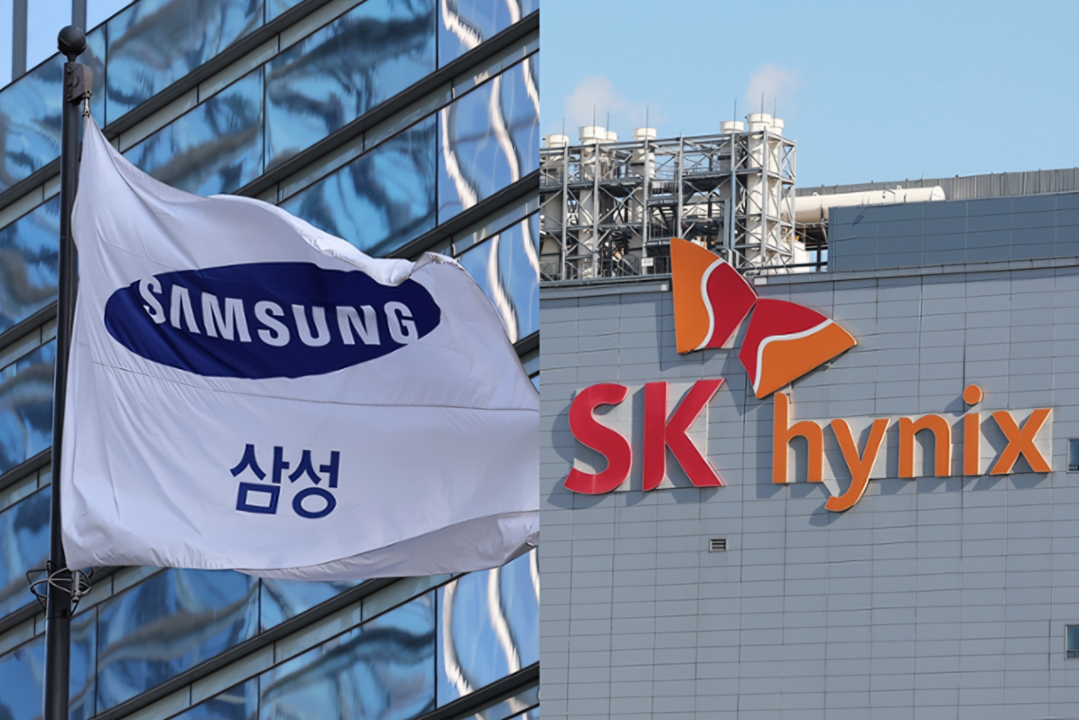
SEOUL — Despite a shift to net buying by foreign investors for the first time in 14 trading days, South Korea’s benchmark KOSPI plunged more than 5% on Wednesday. The sharp decline was driven by intense sell-offs of the country’s top two tech giants, Samsung Electronics and SK Hynix, as mounting concerns over a peak in the semiconductor cycle and a wave of target price cuts severely battered market sentiment.
According to the Korea Exchange, the KOSPI closed at 7,246.79, plummeting 409.52 points, or 5.35%, from the previous session. Opening over 2% lower, the index extended its losses in the afternoon after a sell-side trading curb (sidecar) was triggered, dragging the benchmark down to its lowest level in about a month and a half.
The day's downward spiral was primarily driven by domestic institutions and retail investors, reversing recent market dynamics where foreign selling usually clashed with retail buying. On Wednesday, foreign investors turned net buyers for the first time in 14 sessions, purchasing a net 330.0 billion won ($238.5 million) worth of shares. In contrast, institutional and retail investors net sold 347.0 billion won and 35.0 billion won, respectively.
However, the foreign capital influx completely bypassed large-cap semiconductor stocks. Samsung Electronics and SK Hynix topped the foreign net selling list. Foreign investors dumped 1.82 trillion won worth of Samsung Electronics shares and 1.16 trillion won worth of SK Hynix shares.
Market analysts attribute the steep decline to the market's heightened expectations, which Samsung Electronics failed to satisfy despite reporting record-breaking preliminary earnings the previous day. Fears that the memory semiconductor supercycle fueled by artificial intelligence (AI) infrastructure expansion may have hit its ceiling further accelerated the sell-off.
"The aftershocks of the market crash that followed Samsung Electronics' earnings surprise are continuing," said Han Ji-young, a researcher at Kiwoom Securities. "The liquidity and supply-demand knot has tightened, centering around single-stock leverage in domestic semiconductor shares."
Kim Seok-hwan, a researcher at Mirae Asset Securities, added, "Since semiconductors have been the core engine driving the KOSPI's rally this year, controversies over a semiconductor peak immediately translated into heightened volatility for the entire index."
Shaky sentiment was further exacerbated by a downbeat outlook from local brokerages warning of a deceleration in profit growth for the second half of the year. On the same day, Kiwoom Securities lowered its target price for Samsung Electronics from 430,000 won to 390,000 won. While maintaining its "Buy" rating and keeping the tech giant as its top pick for the semiconductor sector, the brokerage adjusted its expectations to reflect a potential slowdown in memory prices and profit growth moving forward.
"As the growth rate of memory prices gradually slows down and further memory procurement by PC and smartphone manufacturers becomes limited, the growth of earnings per share (EPS) will likely decelerate starting in the second half," projected Park Yu-ak, a researcher at Kiwoom Securities. Although Park positively evaluated Samsung’s strengthening competitiveness in sixth-generation High Bandwidth Memory (HBM4) and enterprise Solid State Drives (eSSD), he stressed that investors must account for structural shifts in market conditions.
Meanwhile, global investment banks (IBs) are adding pressure by issuing cautionary notes on Korean chipmakers. Morgan Stanley recently raised red flags regarding the memory semiconductor sector, assessing that the narrow rally led by tech hardware is entering its final stages. The Wall Street firm advised clients to reduce exposure to companies like Samsung Electronics, SK Hynix, and Micron, and instead reallocate capital toward hyperscalers like Alphabet and Amazon, which operate robust AI cloud businesses.
Separately, the sales and trading desk at UBS Group recommended in a client note that investors buy SK Hynix’s new American Depositary Receipts (ADRs) while selling its domestic shares, citing that the ADRs are highly likely to trade at a premium.
UBS pointed out that investors are focusing on the lack of foreign ownership headroom in Korea, which could persist until a future migration to a secondary U.S. ADR program occurs. The investment bank noted that without such elasticity in foreign limits, the structural lack of accessibility will likely cause the U.S.-listed line to trade at a distinct and sustained premium.
[Copyright (c) Global Economic Times. All Rights Reserved.]