![[등록] 2026-09-01 15:48:31](/support/_updata/banner2/tl181982910_6749.png)


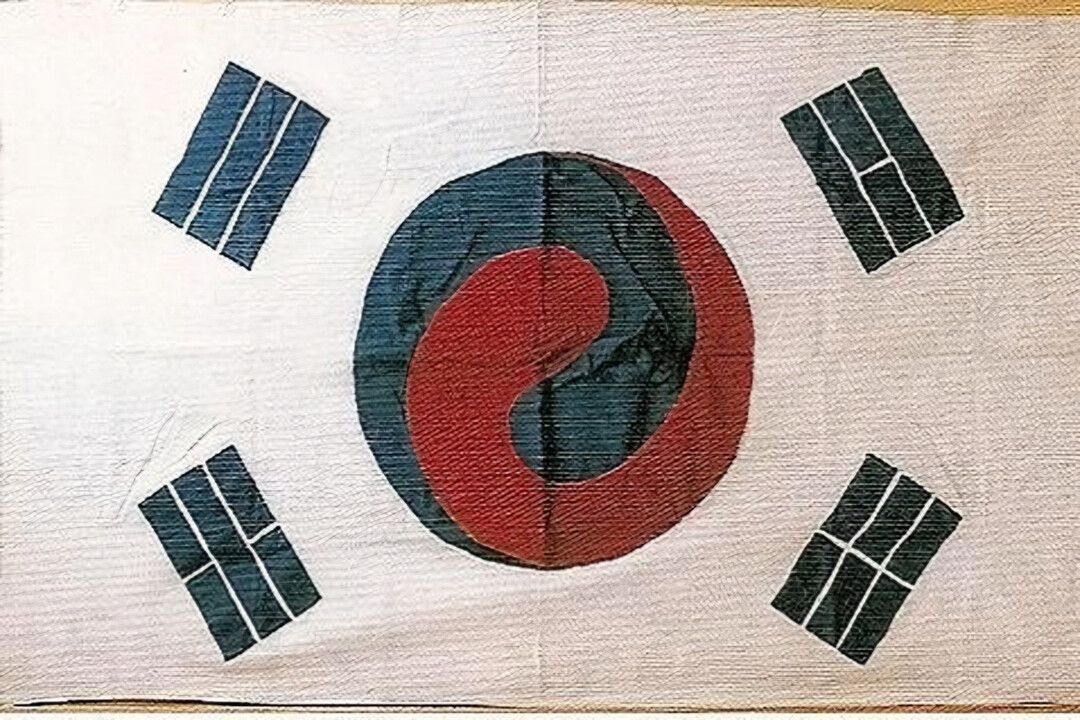
SEOUL — A historic South Korean national flag (Taegeukgi), which bore witness to the fierce diplomatic struggle for independence on the global stage, has successfully been restored to its original state, shedding decades of wear and tear.
The Cultural Heritage Conservation Science Center, under the National Research Institute of Cultural Heritage, announced on Thursday that it has completed a comprehensive conservation process on the "Taegeukgi Hoisted at the Waldorf Astoria Hotel in New York"—an artifact officially designated as a National Registered Cultural Heritage.
A Silent Witness to Diplomacy and Hope
This particular Taegeukgi holds immense historical and symbolic value. It was proudly displayed in 1942 when Syngman Rhee (1875–1965), who would later become South Korea's first president, hosted a Korean Independence Banquet at the prestigious Waldorf Astoria Hotel in New York City.
During the dark years of the Japanese colonial rule (1910–1945), such gatherings were crucial for rallying international support, securing financial aid, and asserting Korea's sovereignty to the Western world.
In the wake of the Pearl Harbor attack in late 1941, Korean independence activists in the U.S. seized the opportunity to align their cause with the Allied war effort. The 1942 banquet served as a critical diplomatic stage to lobby the U.S. government and international dignitaries for the official recognition of the Provisional Government of the Republic of Korea.
The flag is highly regarded as a vital historical resource, revealing how Korean national flags were manufactured abroad during the early 20th century. Research confirmed it was manufactured in the 1930s by the Copeland Co., a prominent American flag-making enterprise of that era.
Unlocking the Secrets of 1930s Craftsmanship
Through meticulous scientific analysis, conservators uncovered the sophisticated fabrication techniques used to create the flag nearly a century ago:
Precision Needlework: The central Taegeuk (yin-yang) motif and the four trigrams (Gwae) were intricately stitched onto a white field. For the Taegeuk circle, the blue fabric was secured first, and the red fabric was carefully layered and sewn on top.
Distinct Weaving Methods: Different weaving techniques were applied to different parts of the flag:
The Hoist (Header): Woven using a sturdy twill weave (neungjik), characterized by diagonal ribbing, to withstand hanging.
The Fly (Field) & Symbols: Made using a plain weave (pyeongjik) consisting of double-twisted yarns (ihap-yeonsa) crossed one by one to ensure a lightweight yet durable drape.
Hardware: Two brass grommets were installed at the top and bottom of the hoist to allow the flag to be securely fastened to a flagpole.
The Delicate Path to Restoration
Over the decades, time took a heavy toll on the artifact. The white background had turned a dull, yellowed hue, and moisture exposure had left noticeable water stains across the fabric. Furthermore, parts of the Taegeuk and trigrams were severely creased, with some of the original stitching unraveling.
To breathe new life into the flag, the Cultural Heritage Conservation Science Center executed a highly specialized, multi-step restoration process:
Disassembly & Adhesive Removal: The flag was carefully detached from its display frame, and old, degrading adhesives on the back were gently removed.
Crease Relaxation: To smooth out deep wrinkles, conservators applied a micro-mist of purified water and subjected the fabric to controlled, uniform pressure to stabilize its shape.
Surface Cleaning: Loose surface contaminants were cleared using ultra-soft brushes and micro-vacuum suction.
Stain Remediation (Agarose Gel): To treat the stubborn yellowing and water stains without damaging the delicate fibers, experts utilized agarose gel—a highly purified substance extracted from red algae. The gel absorbs impurities by minimizing the diffusion of excess moisture, preventing the fabric from shrinking or bleeding.
Structural Reinforcement: The unraveled seams of the trigrams were meticulously reinforced along the original stitching lines, preserving the flag's structural integrity while strictly respecting its original form.
A Legacy Preserved for the Future
Following its successful rejuvenation, the restored Taegeukgi will be transferred to the National Assembly Archives of Korea, its official custodian, where it will be safely preserved and utilized for research, public exhibitions, and educational programs.
"Through scientific analysis and customized conservation treatment tailored to the unique materials of this cultural asset, we have laid a solid foundation to safely preserve and utilize our national heritage," a representative from the center stated.
The successful restoration of the Waldorf Astoria Taegeukgi ensures that this tangible symbol of Korea's relentless pursuit of freedom will continue to inspire generations to come, standing as a proud testament to the global scale of the Korean independence movement.
[Copyright (c) Global Economic Times. All Rights Reserved.]