![[등록] 2026-09-01 15:48:31](/support/_updata/banner2/tl181982910_6749.png)


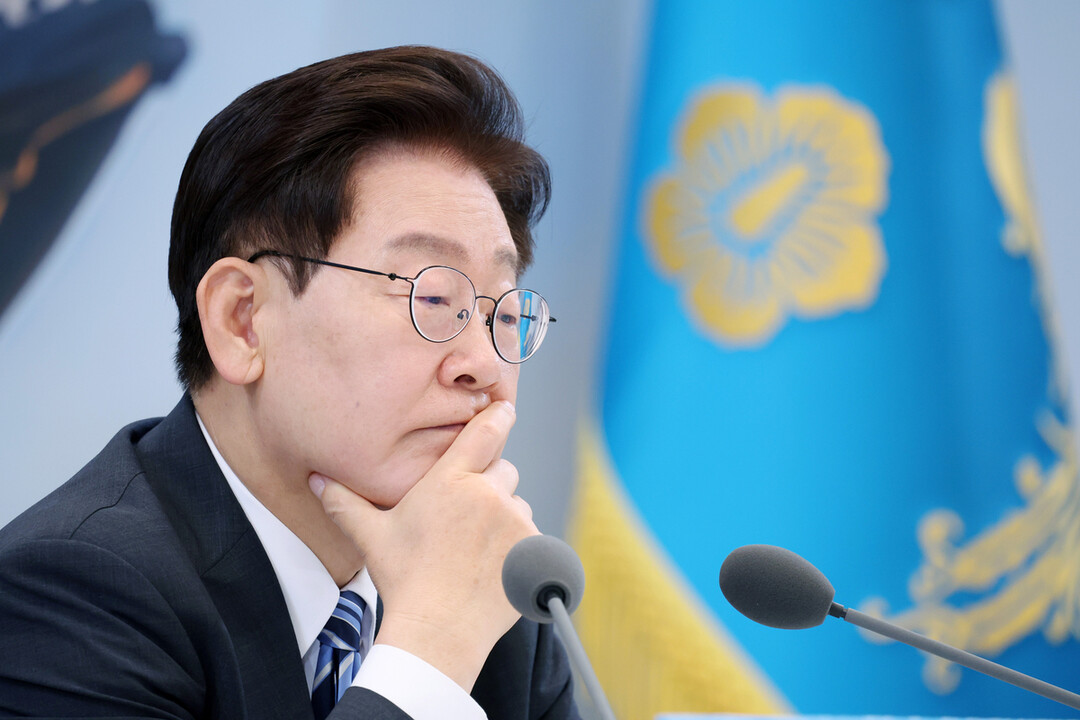
SEOUL — President Lee Jae-myung has issued a strong directive to regulatory bodies to overhaul South Korea’s financial frameworks, targeting speculative financial products that fuel stock market volatility and calling for aggressive debt relief to rescue low-income citizens from financial ruin.
During an annual economic briefing held on July 15 at the Blue House Guesthouse (Yeongbinguand), President Lee directly addressed the escalating public concern over "single-stock leveraged Exchange-Traded Funds (ETFs)." These financial instruments, which amplify gains and losses on volatile individual mega-cap stocks like Samsung Electronics and SK Hynix, have recently been blamed for exacerbating wild swings in the domestic bourse.
Turning directly to Jeong Eun-bo, Chairman of the Korea Exchange (KRX), President Lee ordered the immediate formulation of policy safeguards. "We must swiftly prepare complementary regulatory measures to stabilize the market," the President said, emphasizing that speculative instruments should not undermine the integrity of the broader stock market.
Financial Authorities Face Heat Over Market Volatility
The President also held a candid exchange with Financial Supervisory Service (FSS) Governor Lee Chan-jin. Pointing to the public backlash over the retail investor losses tied to these products, President Lee remarked, "It seems like [retail investors] have been taking a heavy beating lately because of this."
In response, Governor Lee admitted the agency’s oversight failures, stating, "As the market regulator, we bear heavy responsibility and take this criticism very seriously."
Governor Lee had previously expressed deep professional regret during a press conference last month, admitting he "should have lain down on the tracks" to block the introduction of single-stock leveraged ETFs in the first place. The FSS and the Financial Services Commission (FSC) are currently holding emergency market review meetings to design a robust structural reform package for these leveraged assets.
Dismissing "Moral Hazard" Concerns: A Plea for Bold Debt Relief
In a move that drew immediate attention from the political and financial sectors, President Lee also championed sweeping debt forgiveness for economically marginalized groups, firmly dismissing critics who argue that debt write-offs encourage moral hazard.
"If someone has fallen into debt and genuinely lacks the capacity to pay it back, the most socially beneficial course of action is to guide them through bankruptcy and exemption, allowing them a fresh start," President Lee argued. "We must forgive these debts quickly so that these individuals can return to normal economic activity, which in turn keeps our national economy running smoothly."
He criticized South Korea’s debt restructuring and rehabilitation procedures for being excessively rigid compared to other advanced economies. "We must prevent situations where citizens die or are completely isolated from society and economic activities due to unpayable debts. That is a tragic loss for our entire community," he added.
Addressing the conservative and financial sectors' warnings that generous debt relief programs could breed "moral hazard" (where borrowers intentionally default), the President did not mince words, calling such rhetoric "irresponsible demagoguery."
"Who on earth would willingly become a credit delinquent—losing the ability to find a job, open a simple bank account, sign a housing lease, or avoid asset seizure—just to escape a debt of tens of millions of won?" President Lee asked rhetorically. "Rather, the true moral hazard lies with financial institutions that ruthlessly harass and exploit long-term delinquent debtors."
Targeting Root Structural Issues: Bourse Reforms and Real Estate
Beyond immediate financial relief, the President outlined a vision to redirect the country’s capital flow away from the bloated real estate market and into productive corporate investment.
"The concentration of wealth in our society is still heavily biased toward real estate. This is a very primitive structure, and no other advanced country is as desperately fixated on property as we are," President Lee pointed out.
To combat this, he urged the National Assembly to rapidly pass key capital market legislation, including the "Stock Depressing Prevention Act." This proposed amendment to the Inheritance and Gift Tax Act is designed to block majority shareholders or controlling family dynasties from intentionally keeping their company's stock prices artificially low in order to minimize their tax burden during corporate succession.
Finally, the President touched upon South Korea's continued failure to secure a spot on the Morgan Stanley Capital International (MSCI) Developed Markets Watchlist.
"While our domestic stock market has experienced unprecedented, historic surges, stabilizing this rapid growth takes time," President Lee observed. "Had we been included in the MSCI Developed Markets Index, it would have greatly aided in stabilizing the bourse. It is highly regrettable, but we will continue to lay the groundwork for long-term market matureness."
[Copyright (c) Global Economic Times. All Rights Reserved.]