SEOUL — South Korea’s Fair Trade Commission (FTC) has intensified its crackdown on anti-competitive practices within the domestic construction and ready-mixed concrete sectors, signaling that even informal exchanges of bidding data now carry severe legal and financial risks.
Under tightened enforcement standards, regulators no longer require proof of explicit price-fixing to penalize companies. Simply agreeing to share sensitive competitive information—or arranging "cover bidders" to artificially sustain a tender—is sufficient to trigger massive fines.
Sweeping Probes Across Concrete and Housing Sectors
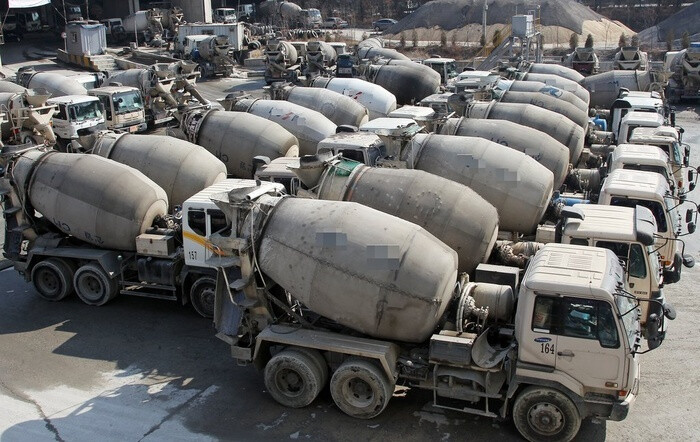
Recent regulatory actions underscore this aggressive stance. Between the 16th and 18th, FTC investigators conducted on-site raids at eight ready-mixed concrete suppliers in Yangju, Gyeonggi Province, following a similar sweep of 14 suppliers in Gunsan earlier this summer.
The scrutiny extends to major builders as well. Last month, the watchdog investigated six construction firms—including Kumho E&C, Kolon Global, and ChinHung International—over suspected collusion in apartment projects commissioned by the Korea Land and Housing Corporation (LH). Regulators are focusing on whether these builders formed informal working groups to share bidding strategies under the Comprehensive Evaluation Bidding System (CEBS). Given typical investigation timelines of roughly two years, final rulings on the LH cases could emerge by late next year.
Closing the "Information Exchange" Loophole
Historically, proving collusion without a smoking-gun price agreement was difficult in South Korea. In 2014, the Supreme Court overturned a 27.2 billion won fine against soju distillers, ruling that merely exchanging price-hike plans did not equate to an illegal cartel. To close that legal gap, the government amended the Fair Trade Act in 2021, explicitly outlawing agreements to share competitively sensitive information.
The FTC recently demonstrated how strictly it intends to apply this rule by slapping a record 1.63 trillion won ($1.18 billion) fine on financial firms involved in Korea Treasury Bond (KTB) bid-rigging. Regulators ruled that sharing expected bid rates undermined independent competition, noting that prolonged, unopposed participation in information-sharing channels constitutes tacit agreement.
Industry analysts note that the KTB ruling mirrors the mechanics of construction bidding. Under CEBS, contracts are often decided by how closely a firm’s bid aligns with an average "balanced price" calculated from all submissions. Sharing even rough bid ranges or participation intentions in peer groups directly distorts this mechanism. Similarly, concrete suppliers sharing discount rates or price-hike schedules risk automatic presumptions of collusion if their pricing moves in tandem.
Rising Penalties and Calls for Reform
Companies also face heightened scrutiny over "cover bidding"—a practice where firms recruit allies to submit dummy bids to prevent tenders from being canceled due to a lack of competition. Earlier this month, nine firms were penalized for using this tactic in a software procurement bid, serving as a warning to builders participating in specialized technical tenders.
Compounding the risk is a steeper penalty framework. Revised FTC guidelines enacted in April raised the baseline fine rate for serious collusion from 3% to 15%. Because the suspected LH bidding irregularities allegedly occurred after procurement oversight shifted to the Public Procurement Service in 2025, builders could face unprecedented fines surpassing the recent treasury bond record.
While the industry braces for impact, corporate leaders are calling for clearer boundaries and structural reform. Businesses argue that routine interactions—such as forming joint ventures or attending trade association meetings—create gray areas regarding permissible communication.
Furthermore, construction executives contend that the bidding system itself incentivizes misconduct. Because CEBS rewards firms that best predict competitors' pricing rather than superior engineering, industry voices are urging authorities to overhaul the evaluation criteria to prioritize technical merit over price-guessing.
[Copyright (c) Global Economic Times. All Rights Reserved.]