![[등록] 2026-09-01 15:48:31](/support/_updata/banner2/tl181982910_6749.png)


(C) BYD USA
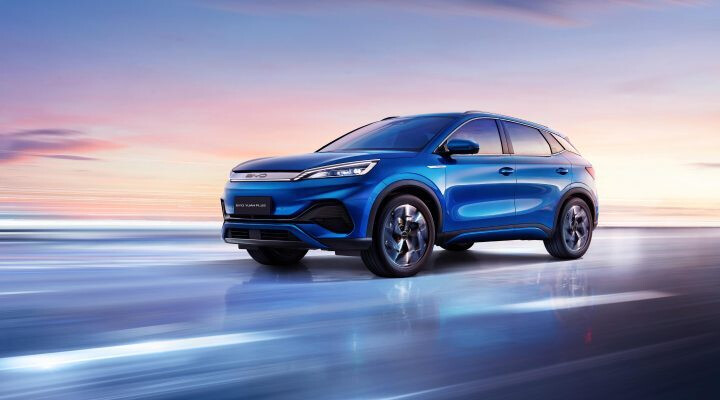
SEOUL — BYD Korea has achieved a historic milestone in the South Korean automotive landscape, surpassing 10,000 cumulative units sold just 12 months after its official passenger vehicle brand launch. This achievement marks the fastest timeline for any foreign automaker to reach the 10,000-unit mark in the domestic market, signaling a tectonic shift in a region traditionally dominated by local giants and premium German marques.
According to data released on April 8, 2026, BYD Korea’s rapid ascent is bolstered by a stellar first-quarter performance. The company sold approximately 3,968 units between January and March, representing a 20% increase compared to the fourth quarter of 2025. In March alone, sales surged past 1,600 units, propelling BYD to the fourth-place spot in overall import rankings—trailing only industry titans Tesla, BMW, and Mercedes-Benz.
Product Power and Strategic Pricing
Industry analysts attribute this growth to BYD’s "dual-track" strategy: pairing high-performance specifications with aggressive, consumer-friendly pricing. The initial momentum was sparked by the Atto 3, a compact SUV that introduced Korean consumers to BYD's Blade Battery technology.
The growth trajectory steepened following the launch of the Sealion 7, a high-performance SUV that has become a flagship favorite. Adding more fuel to the fire, the recently launched Dolphin—a compact hatchback priced in the early 20-million-won range—sold 652 units in March alone. The Dolphin’s entry has successfully captured "practicality-first" consumers who were previously hesitant about the high entry barriers of electric vehicles (EVs).
Infrastructure: Breaking the "Chinese Brand" Stigma
Beyond the vehicles themselves, BYD Korea’s success is rooted in its rapid infrastructure expansion. To combat the common criticism regarding the lack of maintenance networks for imported cars, the company currently operates 33 showrooms and 17 service centers nationwide. Plans are already in motion to expand these to 35 showrooms and 26 service centers by the end of 2026. This localized "trust-building" approach has been pivotal in dismantling long-standing prejudices against Chinese-manufactured automobiles.
Challenges and Future Outlook
Despite the record-breaking start, the road ahead is not without obstacles. Global supply chain volatility—exacerbated by ongoing geopolitical tensions in the Middle East—remains a concern. Rising global demand for EVs may lead to headquarters-level supply constraints for the Korean market.
Furthermore, changes in government policy loom on the horizon. The Ministry of Climate, Energy, and Environment is set to introduce new "Electric Vehicle Distribution Project Performance Criteria" in the second half of the year. This shift in subsidy calculations could potentially impact the price competitiveness of imported EVs depending on battery efficiency and recycling capabilities.
"Despite external supply variables and shifting policies, BYD’s current product competitiveness and aggressive marketing make the '10,000-unit annual club' almost a certainty," said an industry insider. "2026 will likely be remembered as the year the imported EV market, once dominated solely by Tesla, was fundamentally reshaped by the rise of BYD."
A Global Context
BYD Korea’s local success mirrors the brand's global dominance. Last year, BYD solidified its position as the world's leading EV manufacturer, selling approximately 2.25 million battery electric vehicles (BEVs) globally, outpacing Tesla’s 1.63 million units.
Looking forward, BYD Korea plans to further diversify its portfolio in the second half of 2026 by introducing Plug-in Hybrid (PHEV) models based on its DM-i (Dual Mode-intelligent) platform. This move is expected to broaden the brand’s appeal to consumers not yet ready to make the full leap to pure electric mobility.
[Copyright (c) Global Economic Times. All Rights Reserved.]