![[등록] 2026-09-01 15:48:31](/support/_updata/banner2/tl181982910_6749.png)


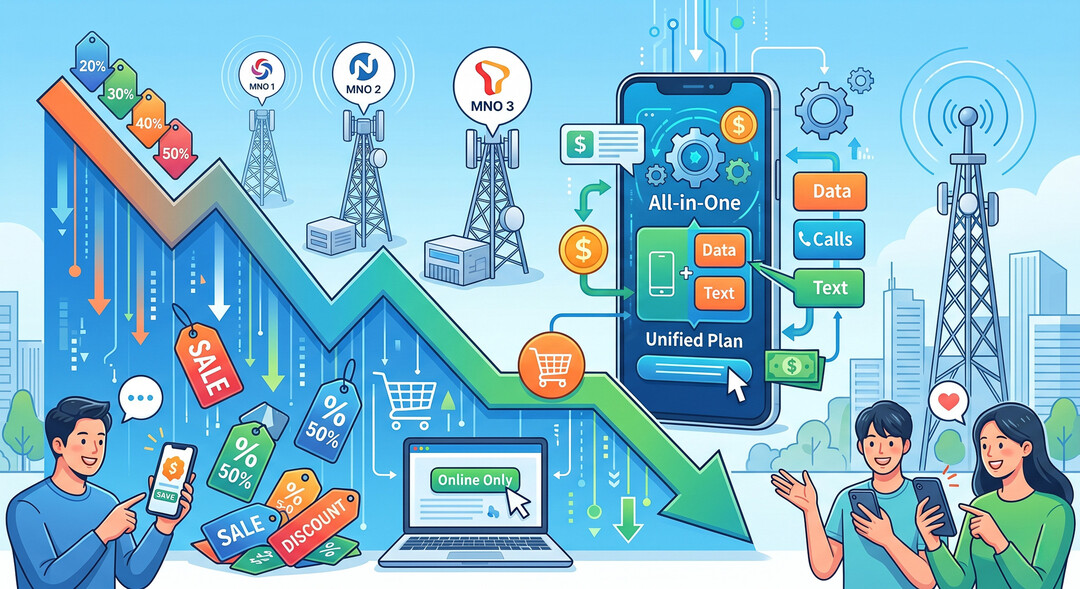
SEOUL — South Korea’s major mobile carriers are drastically streamlining their online-exclusive service plans, reducing their lineups by 20% to 50%. This sweeping reorganization comes closely on the heels of the newly introduced "Unified 5G-LTE tariff plans."
The strategic shift is largely driven by two factors: the enhanced benefits of the new unified plans and the upcoming abolition of the Mobile Device Distribution Act. The latter has led to increased subsidies across traditional offline retail channels. As a result, the once-clear price advantage of contract-free, online-only plans has rapidly diminished, prompting carriers to simplify their complex product portfolios.
According to telecom industry sources on June 4, LG Uplus took the lead by slashing its online-exclusive options by 52% simultaneously with the launch of its unified tariff plans.
Originally, online-exclusive plans were designed as contract-free options sold only through digital channels. While they skipped device subsidies and selective contract discounts, they offered monthly rates roughly 30% cheaper than standard packages. However, following the launch of the unified 5G-LTE frameworks, telecom operators have actively begun eliminating redundant digital products to enhance consumer clarity and maximize user benefits.
LG Uplus restructured its 25 existing digital plans by halting new subscriptions for 15 of them, while introducing two newly designed options, effectively condensing its core lineup to 12.
The company stated that this reorganization aims to sharply define the unique identity and advantages of online-only plans compared to standard options. While traditional data and "plus" plans are often notoriously difficult for consumers to evaluate due to complex webs of contract terms, combining discounts, and optional perks, the newly revamped online plans focus strictly on transparency. They feature simple monthly rates and straightforward data caps with zero contract commitments.
As a prime example of this new strategy, LG Uplus debuted the "Nerget 49" plan, which provides 120GB of data for 49,000 KRW per month. This is notably cheaper than its closest offline counterpart, the "Data Plan 125GB," which costs 70,000 KRW per month (or 52,500 KRW even after a two-year contract discount). The new plan is aimed squarely at data-heavy users who refuse to be locked into long-term contracts.
"This revamp is tailored for customers who prefer to easily evaluate and select a mobile plan based simply on the monthly rate and data allowance, rather than calculating complex contract discounts," an LG Uplus official explained.
SK Telecom (SKT) is poised to follow suit next month to coincide with the launch of its own unified tariff system. SKT plans to downsize its digital product structure by approximately 20%, phasing out older legacy online options to focus exclusively on mainstream "Direct Plans" that enjoy clear market demand. The carrier will suspend new sign-ups for five out of its 23 current online plans, including the "5GX Prime+ Direct Plan."
"We intend to overhaul our online-exclusive plans so that consumers can recognize and receive better benefits in a far more intuitive manner," an SK Telecom representative said.
KT is also reportedly reviewing a similar scale of online product restructuring as it prepares to roll out its own version of the unified tariff system, targeting a release within the second half of this year.
Market analysts note that while online-only plans initially gained popularity for their low price points and flexible terms, they have increasingly clashed with the target demographic of budget tech-savvy consumers migrating to MVNOs (Mobile Virtual Network Operators). Furthermore, as off-line retail stores have begun ramping up phone purchase subsidies recently, the competitive edge of these digital-only plans has naturally eroded.
Ultimately, South Korea's telecom giants are looking to eliminate low-demand, inefficient plans that fragment the market, while maximizing operational efficiency around highly targeted products. By aligning with the overarching spirit of the unified tariff reform, the carriers aim to significantly improve user experience through straightforward pricing and intuitive choice.
[Copyright (c) Global Economic Times. All Rights Reserved.]