![[등록] 2026-09-01 15:48:31](/support/_updata/banner2/tl181982910_6749.png)


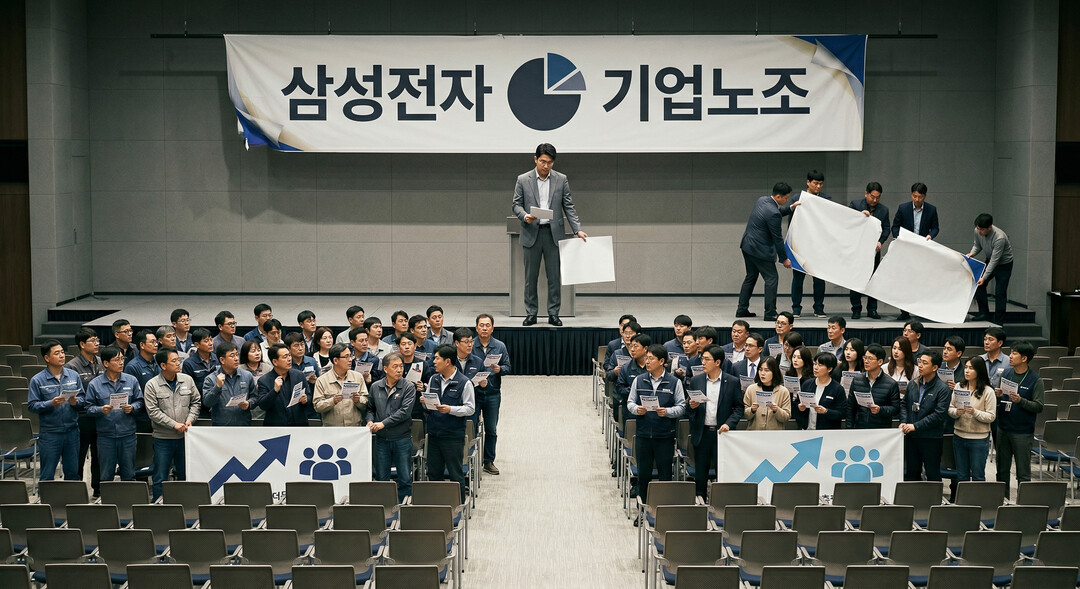
SEOUL — The Super-Enterprise Labor Union’s Samsung Electronics branch, previously the largest labor union at Samsung Electronics, has officially lost its majority status. This shift comes as a massive wave of member defections disrupts the labor landscape inside South Korea's tech giant.
According to union data released on June 4, the Super-Enterprise Union’s membership plummeted to 58,270 as of 3:00 PM. Given that Samsung Electronics employs a total of 128,881 workers, the union’s strength has fallen well below the critical 50% threshold of 64,440 members.
The union's membership had previously peaked at over 76,000 during intense wage negotiations. However, an exodus began immediately after a tentative agreement was reached on May 20. The union saw its numbers drop below 70,000 on May 28, followed by a loss of over 10,000 more members in just one week.
Analysts attribute the mass departures to the 19.4% of members (10,727 workers) who voted against the agreement during the ratification poll that closed on May 27. The core issue driving the anger is the massive disparity in bonuses between business divisions.
Under the approved deal, assuming Samsung Electronics reaches an annual operating profit of 300 trillion won, employees in the Device Solutions (DS) semiconductor memory division could receive up to 600 million won each. This includes 550 million won in stock-based special performance bonuses and a 50 million won Overall Performance Incentive (OPI). In stark contrast, workers in the Device eXperience (DX) smartphone and appliance division are projected to receive only about 6 million won in stock.
Even within the DS semiconductor division, internal friction is growing. Workers in the loss-making non-memory sectors—such as System LSI and Foundry—are leaving the union because their bonuses will capped at 160 million won due to a different corporate profit-sharing formula.
As the Super-Enterprise Union shrinks, rival groups are expanding rapidly. Membership in the National Samsung Electronics Union (NSEU) rose from 16,000 to 20,968, while the Donghaeng Union saw an explosive surge from 2,600 to 21,015 members.
Losing its majority status strips the Super-Enterprise Union of its legal power to independently appoint employee representatives to the labor-management council. It will also weaken its leverage during upcoming collective bargaining counter-talks with rival unions. In response to the crisis, the Super-Enterprise Union plans to propose a "two-track negotiation" strategy to separate the DX and DS divisions, and will hold a vote of confidence for its leadership on June 17.
[Copyright (c) Global Economic Times. All Rights Reserved.]