![[등록] 2026-09-01 15:48:31](/support/_updata/banner2/tl181982910_6749.png)


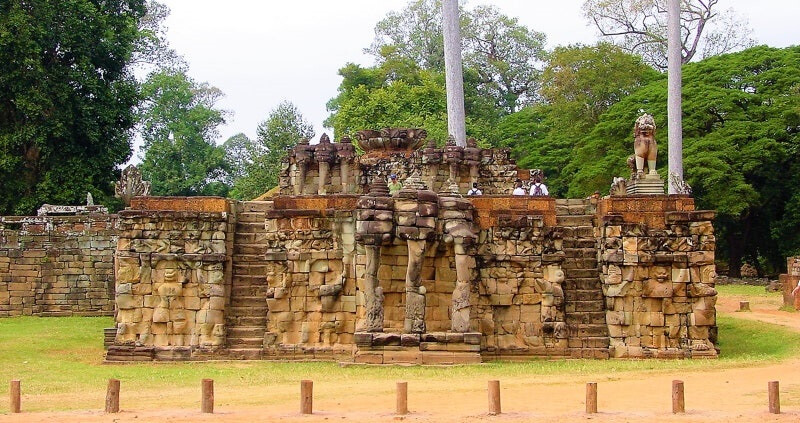
The iconic Elephant Terrace within Cambodia's sprawling Angkor Archaeological Park is undergoing a remarkable transformation, thanks to the meticulous conservation and restoration efforts spearheaded by South Korean experts. The National Heritage Administration of Korea (NHA) recently announced significant progress in the project, a collaborative endeavor with the Korea International Cooperation Agency (KOICA) initiated in 2019. This ambitious undertaking is gradually restoring the grandeur of the late 12th-century Khmer Empire, offering a tangible glimpse into its past glory.
Constructed during the reign of King Jayavarman VII (circa 1181-1220 AD), a pivotal figure who oversaw the zenith of the Khmer Empire, the Elephant Terrace served as a monumental public space. Stretching an impressive 330 meters (over 1000 feet) in length and rising to a height of 3.5 meters (approximately 11.5 feet), the terrace’s laterite walls are adorned with an intricate parade of life-sized elephant carvings, alongside depictions of mythical creatures like lions and garudas. These carvings are not merely decorative; they served as powerful symbols of the empire's strength, royal authority, and the king's connection to the divine.
Historical accounts and archaeological evidence suggest the Elephant Terrace was a vibrant hub for royal ceremonies, processions, military parades, and public announcements. Situated strategically in front of the Baphuon temple and flanked by other significant structures like the Leper King Terrace, it formed a crucial axis of the royal city of Angkor Thom. The sheer scale and elaborate ornamentation of the terrace were designed to awe visitors and reinforce the power and prestige of the Khmer rulers.
However, centuries of tropical climate, monsoonal rains, and natural weathering had taken a severe toll on the structure. The once-imposing terrace faced significant structural instability and the gradual erosion of its intricate carvings, threatening the loss of this invaluable historical and cultural landmark. Recognizing the urgency, the NHA and KOICA embarked on a comprehensive conservation and restoration project, initially focusing on two particularly vulnerable sections, designated A and C, which exhibited critical structural issues.
The restoration project is a testament to the multidisciplinary expertise of the South Korean team. Architects, archaeologists, civil engineers, and conservation scientists have collaborated closely, employing a systematic and scientifically rigorous approach. The delicate process involved meticulously dismantling the leaning sections of the terrace, carefully cataloging and preserving each original stone block. These blocks were then reassembled, utilizing traditional Khmer construction techniques where possible, while incorporating modern engineering principles to ensure long-term stability. The team also undertook the painstaking task of identifying and reintegrating scattered stone fragments, piecing together the original fabric of the terrace like an intricate puzzle. Crucially, the foundations of the structure were significantly reinforced to prevent future collapse.
A groundbreaking aspect of this restoration effort has been the first-ever in-depth archaeological excavations conducted along the east-west axis of the terrace. These excavations have yielded invaluable insights into the original construction methods, the types of materials used, and potentially even the chronological sequence of the terrace's construction and modifications over time. The findings from these excavations are expected to contribute significantly to the broader understanding and future conservation strategies for the entire Angkor complex.
An official spokesperson for the National Heritage Administration emphasized the significance of this achievement, stating, "The successful conservation and restoration of these sections of the Elephant Terrace underscore South Korea's advanced capabilities in cultural heritage preservation on an international stage. We are deeply honored to play a role in safeguarding the historical and cultural legacy of the Khmer Empire, ensuring its transmission to future generations."
Beyond the Elephant Terrace, the NHA is also actively involved in the restoration of the Preah Pithu Group of temples within the Angkor complex, with this project slated for completion by January of next year. To further showcase South Korea's conservation expertise, the ongoing restoration work at the Angkor site will be open to public viewing until December 15th, offering a unique opportunity to witness this intricate process firsthand.
The successful restoration of the Elephant Terrace is more than just the preservation of stones; it represents a strengthening of cultural ties and cooperation between South Korea and Cambodia. The Angkor Archaeological Park, a UNESCO World Heritage site since 1992, holds immense global historical and cultural significance. South Korea's proactive involvement in its preservation is a vital contribution to ensuring the long-term sustainability of this remarkable site.
Looking ahead, the National Heritage Administration is committed to leveraging its accumulated experience and technical expertise to participate in the restoration and conservation of other areas within the Angkor complex. This ongoing dedication aims to ensure that the splendor and historical significance of the Khmer Empire are fully conveyed to future generations, allowing the world to continue to marvel at the grandeur of Angkor, revitalized in part by the skilled hands of South Korea.
[Copyright (c) Global Economic Times. All Rights Reserved.]