![[등록] 2026-09-01 15:48:31](/support/_updata/banner2/tl181982910_6749.png)


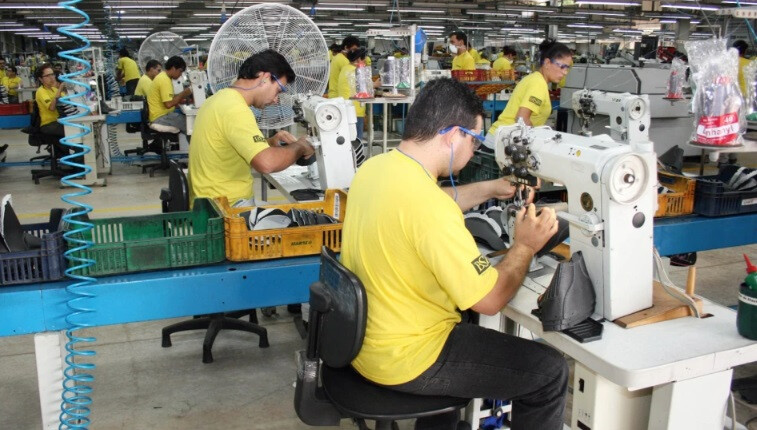
A recently published report argues that Paraguay urgently needs to establish a long-term national industrial policy, independent of government cycles, to achieve sustainable economic growth and the creation of quality jobs. The report, titled "Designing a Roadmap for Industrial Development and Quality Jobs," prepared by the Economic Research Center of the Paraguayan Industrial Union (UIP) with support from the International Labour Organization (ILO), highlights the structural problems of Paraguay's industrial policy and emphasizes the need for a new industrial strategy encompassing innovation, quality employment, regional integration, sustainability, and balanced regional development.
The report notes that Paraguay has demonstrated steady economic growth and remarkable macroeconomic stability over the past decades. However, it analyzes that this dynamism has not been sufficient to address structural gaps such as productivity, formal economic inclusion, economic diversification, and the creation of quality jobs.
"Without a clear industrial policy, Paraguay has experienced premature tertiarization without building a solid manufacturing base," the report points out, emphasizing that "a modern industrial policy can reverse this trend by leveraging resources towards high value-added sectors, promoting innovation, and strengthening productive linkages."
The UIP Economic Research Center identified structural challenges hindering Paraguay's industrial development, including infrastructure improvement, increased energy utilization (efficiency improvement and energy supply expansion), increasing the added value of export goods, increasing technology utilization, and improving productivity and access to finance. Additionally, the report highlighted the need to address the training of skilled workers, the removal of trade barriers, and the reduction of bureaucracy.
The report proposes a systematic strategy to promote a technological and progressive multi-sectoral industrial policy focused on productivity, sustainability, and labor market inclusion.
In particular, it presents five key sectoral work directions crucial for Paraguay:
Agro-Industry 2.0: Expanding from soybean, rice, and meat production to bioplastics, feed, gelatin, and plant-based proteins.
Cables and Electrical Components Industry: Integrating regional industrial networks in automotive, medical, and energy sectors.
Light Manufacturing and Basic Electronics Industry: Medical devices, circuits, chemical-pharmaceutical industry.
Metal and Power-Intensive Industry: Aluminum, batteries, green hydrogen, and data centers (utilizing domestic clean energy).
Functional Textile Industry: High-performance clothing for medical, sports, defense, and industrial uses (high potential for SMEs and female employment).
Based on its findings, the UIP presented the following roadmap:
Identification of Priority Sectors: Evaluating the feasibility and desirability of sectors based on criteria such as production capacity, technological gaps, costs, synergies, export potential, employment, and value-added multipliers.
Classification of Sectoral Development Stages and Capabilities: Categorizing sectors into existing sectors with potential, linked new sectors, and entirely new sectors.
Diagnosis of Technological Capability Development Gaps: Assessing technological capability development gaps for priority sectors based on criteria such as skill levels and labor availability, infrastructure, access to finance, logistics, and geographical location.
Design and Implementation of Public Policies.
Experts emphasize that for Paraguay to achieve sustainable economic growth and secure international competitiveness, it must establish and consistently pursue a long-term industrial policy that transcends short-term political considerations. In particular, addressing the structural problems identified in the report and designing and implementing concrete policies based on the proposed roadmap are seen as critical turning points for Paraguay's future economic development.
[Copyright (c) Global Economic Times. All Rights Reserved.]