![[등록] 2026-09-01 15:48:31](/support/_updata/banner2/tl181982910_6749.png)


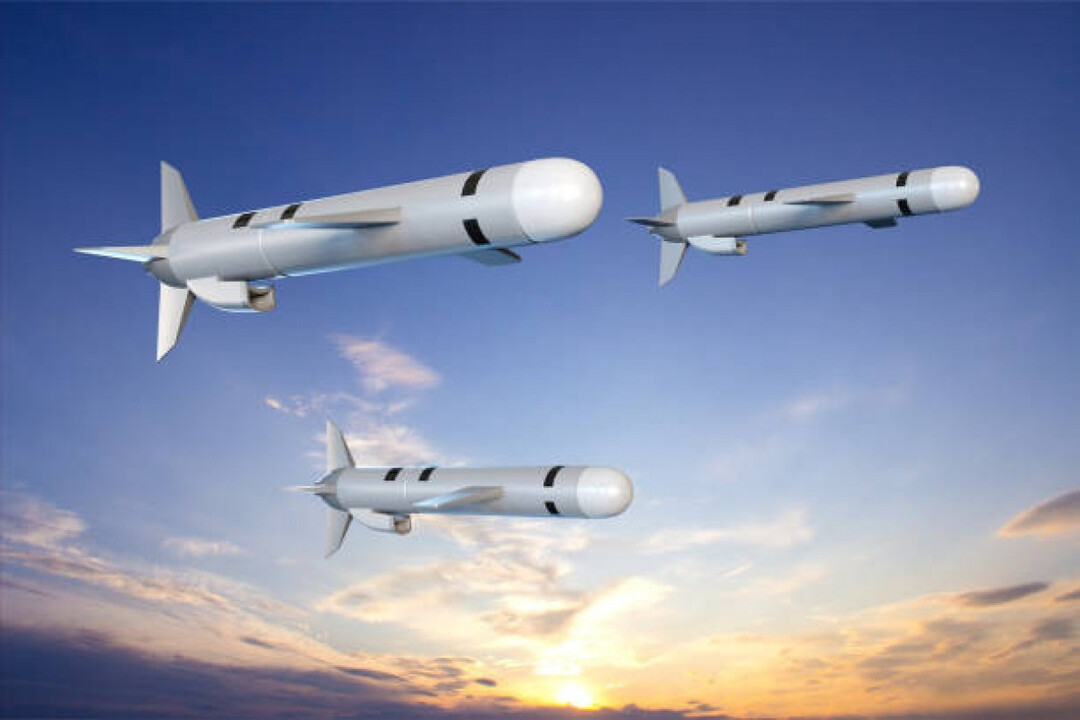
WASHINGTON — The United States Department of War is moving aggressively to secure a
massive arsenal of 10,000 low-cost cruise missiles over the next three years. This strategic
shift comes in response to mounting concerns over depleted munitions stockpiles following the recent intensive conflict with Iran, according to a report by the Wall Street Journal(WSJ) on Wednesday.
Facing a potential "missile gap" and the soaring costs of conventional high-end weaponry,
the Pentagon has shifted its focus toward rapid production and affordability. The new
initiative, officially designated the "Low-Cost Containerized Missile" (LCCM) program, aims
to bridge the gap between high-precision, multi-million dollar assets and the need for sheer volume in modern sustained warfare.
"The goal is not just to replace what was lost, but to redefine how we project
power in a cost-effective manner. These missiles will complement our high-end
systems while providing the mass necessary for large-scale deterrence." — Senior
Defense Official.
To execute this ambitious plan, the U.S. government has reportedly finalized contracts with four key defense technology firms: Corvusfire, Zone 5, Leidos, and Anduril Industries.
These companies represent a mix of established defense contractors and venture-backed
startups specializing in agile manufacturing and autonomous systems.
Affordability Meets Scalability
The LCCM program centers on a missile design that is significantly cheaper than the
existing flagship cruise missile, the Tomahawk. While a single Tomahawk missile launched
from ships or submarines typically costs upwards of $2 million (approx. 3 billion KRW), the
new low-cost variants are expected to be priced at only a few hundred thousand dollars per unit.
This price disparity is critical, as the U.S. has historically purchased fewer than 100
Tomahawks annually—a rate that proved insufficient during the recent hostilities in the
Middle East, where thousands of cruise missiles and various munitions were expended in a
matter of months.
These new missiles are designed for versatility. Unlike traditional systems that require
specialized vertical launch cells on naval vessels, these "containerized" missiles can be
transported and launched from a variety of platforms, including standard cargo trucks.
This mobility ensures that U.S. forces can deploy significant strike capabilities quickly
across various terrains without relying solely on large, vulnerable platforms.
The Rise of Defense Tech Startups
The Pentagon’s reliance on startups like Anduril and Corvusfire signals a pivot in the
defense industrial base. These companies utilize modern manufacturing techniques, such
as 3D printing and modular software architectures, to bypass the lengthy development
cycles characteristic of traditional defense procurement.
Corvusfire, a firm specialized in 3D-printed cruise missiles, told the WSJ that they are
capable of developing new missile variants within months rather than years. Meanwhile,
Anduril Industries has announced plans to scale up its production infrastructure. By the
end of this year, Anduril aims to have the facilities in place to produce thousands of its
"Barracuda-500" missiles annually.
Strategic Implications
Military analysts suggest that the LCCM program is a direct lesson learned from the Iran
conflict. The war demonstrated that even the world’s most advanced military can face
logistical strain when forced to use "silver bullet" weapons against numerous, less
expensive targets. By saturating the battlefield with 10,000 low-cost missiles, the U.S. hopes
to present an "unsolvable math problem" for enemy air defenses.
As the U.S. looks toward future potential conflicts, the ability to rapidly replenish stocks via
3D printing and modular manufacturing may become as important as the technology of the
missiles themselves. This 10,000-unit goal represents one of the largest and fastest
munitions procurement efforts since the Cold War, marking a new era of "attritable"
warfare where quantity has a quality all its own.
[Copyright (c) Global Economic Times. All Rights Reserved.]