• 2026.03.08 (Sun)
  • All articles
  • LOGIN
  • JOIN
Global Economic Times
fashionrunwayshow2026
  • Synthesis
  • World
  • Business
  • Industry
  • ICT
  • Distribution Economy
  • Well+Being
  • Travel
  • Eco-News
  • Education
  • Korean Wave News
  • Opinion
  • Arts&Culture
  • Sports
  • People & Life
    • International Student Report
    • With Ambassador
  • Column
    • Cho Kijo Column
    • Cherry Garden Story
    • Ko Yong-chul Column
    • Kim Seul-Ong Column
    • Lee Yeon-sil Column
  • Photo News
  • New Book Guide
MENU
 
Home > Distribution Economy

Bitcoin mining difficulty hits record high... promote price increases

Desk / Updated : 2024-10-26 17:16:16
  • -
  • +
  • Print


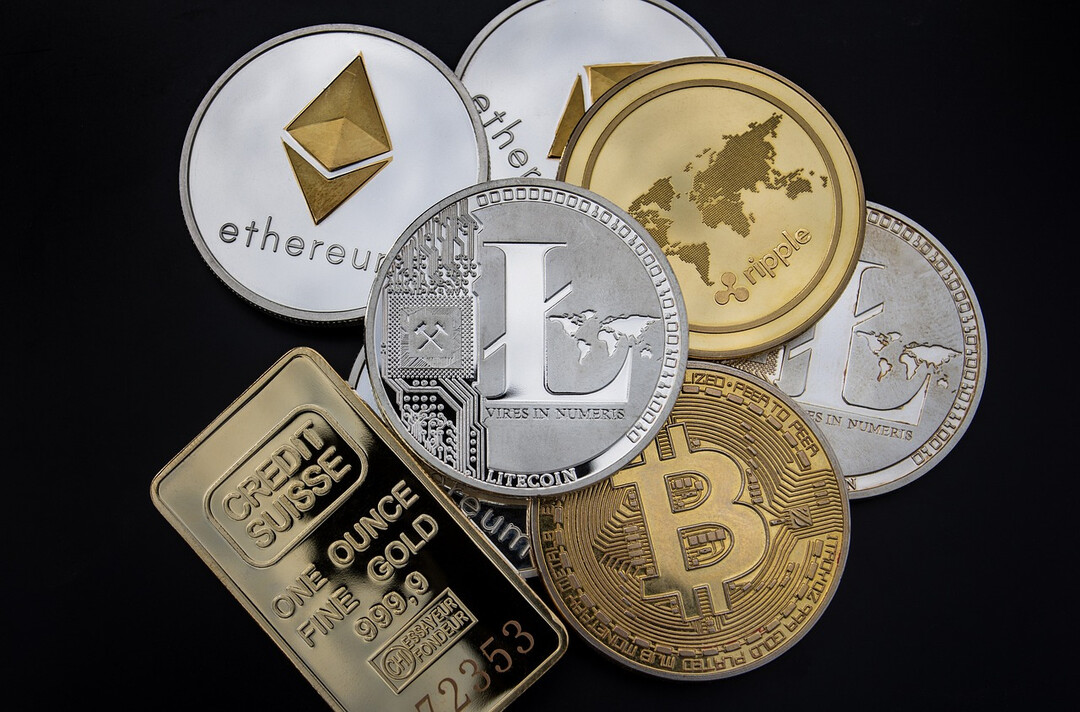
[GLOBAL ECONOMIC TIMES]  According to Clover Pool (formerly BTC.com) on the 25th, the Bitcoin mining difficulty was adjusted to 95.7 trillion won. This is a new highest figure, surpassing the previous high of 92.7 trillion won. According to CoinGecko, a virtual asset market platform, on the same day, Bitcoin is trading at $67,000, up 5.7% from a month ago.

When the virtual asset market is in a bad situation, an increase in mining difficulty is interpreted as bad news. This is because the price of Bitcoin has fallen relative to the cost of mining, making it difficult to guarantee profitability. Additionally, small-scale mining companies put their Bitcoins on the market to resolve worsening profits. This becomes a factor that worsens the market situation.

When the price of Bitcoin is on the rise, an increase in mining difficulty can be interpreted as good news. This is because the cost of producing Bitcoin increases due to the increase in mining difficulty, so there is no reason for miners to sell Bitcoin. In November 2021, when Bitcoin reached an all-time high, the MPI fell to -0.5. MPI increases as the amount of Bitcoin sold by miners increases.

According to CryptoQuant on this day, the Miner Position Index (MPI) is recording -1.0. This year, the MPI has never exceeded 2.

As the difficulty of Bitcoin mining increases, there is a greater possibility that mining by small mining companies will be halted. This is because as mining difficulty increases, it becomes difficult to pay maintenance costs such as electricity bills.

According to CoinDesk, a media outlet specializing in virtual assets, “As Bitcoin mining difficulty reaches a new high, small-scale Bitcoin miners are being pushed out of the market, so potential selling pressure is expected to ease.” As small mining companies are pushed out of the mining competition, the supply of Bitcoin is expected to decrease.

CryptoQuant CEO Joo Ki-young said on his “It dominates,” he said.

He continued, “As entry barriers increase due to increased institutional participation, Bitcoin volatility is decreasing, making it less attractive as an investment asset. However, until the halving in 2028, Bitcoin’s potential as a low-volatility currency will further increase.”

[Copyright (c) Global Economic Times. All Rights Reserved.]

Desk
Desk

Popular articles

  • Samsung TV Plus Surpasses 100 Million Monthly Active Users, Solidifying Leadership in Global FAST Market

  • Mixed U.S. Employment Data Sparks Wall Street Retreat; Fed Shifts Focus to Inflation

  • HJ Industries Lands First Mega-Container Ship Order Worth 353.2 Billion Won

I like it
Share
  • Facebook
  • X
  • Kakaotalk
  • LINE
  • BAND
  • NAVER
  • https://globaleconomictimes.kr/article/1065600873400402 Copy URL copied.
Comments >

Comments 0

Weekly Hot Issue

  • The Death of the Architect's Draft? New AI Engine 'Nano Banana 2' Turns Rough Sketches into Professional 3D Walk-throughs
  • President Lee Celebrates Milestone for ‘The Man Living with the King,’ Pledges to Bolster Cultural Pride
  • Namyangju Targets Gwacheon Racecourse Relocation: A Vision for a "Blue-Green" Mega-Complex Linked to GTX and 3rd Generation New Towns
  • Korean Air Extends Suspension of Incheon–Dubai Route Through March 15 Amid Ongoing Disruptions
  • Genetic 'Molecular Mirror': Blood Tests Challenge Biopsy Limits in Ovarian Cancer Diagnosis
  • Samsung to Revolutionize Health Tracking: Galaxy Watch to Adopt Contact-Based Temperature Sensors for Enhanced Precision

Most Viewed

1
Adwa’s Echo in Korea: A Shared Story of Dignity and Freedom
2
2026, The Grand Year of Hangeul Celebration — The River of History Where Five Streams Converge
3
A New Milestone for Ukraine’s Post-War Reconstruction: The Birth of ISVP
4
Mexican currency and the powerful history behind its designs
5
Revised and Expanded Edition of ‘Failure of Negotiations with North Korea: Truth and Solutions’ Published
광고문의
임시1
임시3
임시2

Hot Issue

The $100 Oil Threshold: Wall Street Braces for a Paradigm Shift as Middle East Conflict Drags On

The Death of the Architect's Draft? New AI Engine 'Nano Banana 2' Turns Rough Sketches into Professional 3D Walk-throughs

Oppo Bridges the Great Divide: Find X9 to Support AirDrop Connectivity

China’s Strategic Gold Rush: Beijing Amasses Reserves for 16th Straight Month Amid Dollar Uncertainty

Let’s recycle the old blankets in Jeju Island’s closet instead of incinerating them.

Global Economic Times
korocamia@naver.com
CEO : LEE YEON-SIL
Publisher : KO YONG-CHUL
Registration number : Seoul, A55681
Registration Date : 2024-10-24
Youth Protection Manager: KO YONG-CHUL
Singapore Headquarters
5A Woodlands Road #11-34 The Tennery. S'677728
Korean Branch
Phone : +82(0)10 4724 5264
#304, 6 Nonhyeon-ro 111-gil, Gangnam-gu, Seoul
Copyright © Global Economic Times All Rights Reserved
  • 에이펙2025
  • APEC2025가이드북TV
  • 독도는우리땅
Search
Category
  • All articles
  • Synthesis
  • World
  • Business
  • Industry
  • ICT
  • Distribution Economy
  • Well+Being
  • Travel
  • Eco-News
  • Education
  • Korean Wave News
  • Opinion
  • Arts&Culture
  • Sports
  • People & Life 
    • 전체
    • International Student Report
    • With Ambassador
  • Column 
    • 전체
    • Cho Kijo Column
    • Cherry Garden Story
    • Ko Yong-chul Column
    • Kim Seul-Ong Column
    • Lee Yeon-sil Column
  • Photo News
  • New Book Guide
  • Multicultural News
  • Jobs & Workers