![[등록] 2026-09-01 15:48:31](/support/_updata/banner2/tl181982910_6749.png)


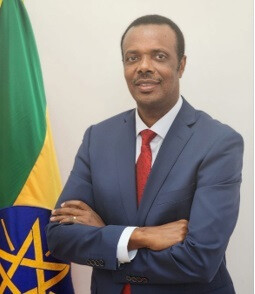
Dessie Dalkie Dukamo, Ambassador Extraordinary and Plenipotentiary, the Federal democratic Republic of Ethiopia to the Republic of Korea.
On a chilly morning in early March 1896, in northern Ethiopia's challenging highlands, thousands of farmers, herders, artisans, priests, and merchants stood shoulder to shoulder. They had walked for weeks in worn sandals, armed with traditional weapons and carrying only basic food, and held a common belief: their land would not be seized.
A modern European army advanced quietly and confidently across the hills, approaching the little village of Adwa. During the era of the empire, virtually all of Africa had already been divided and conquered. Many people outside Ethiopia assumed this was just another chapter in a classic story: the strong expanding and the weak submitting.
But Ethiopia refused to be written in that manner.
Emperor Menelik II and Empress Taytu Betul had spent years reading the world, studying maps and treaties, and uniting various territories for a common goal. Taytu, sharp-eyed and uncompromising, refused to accept any arrangement that implied subordination. When the threat could no longer be denied, a clear warning echoed across the mountains and valleys: stand together or lose everything.
On March 1, the message was tested. The combat was violent and puzzling; dust and smoke covered the hills. However, as the day progressed, what had seemed unbelievable became reality: the invading force collapsed. Its lines broke down, and its soldiers dispersed in retreat. An African nation had overwhelmingly defeated a European power, resulting in formal recognition of its independence.
Adwa's word spread far and wide. People whispered, "They did it," in African villages under foreign flags. Ethiopia's victory became a silent spark of hope in colonised Asia, where other countries were bracing themselves against foreign authority. Adwa demonstrated to Black populations in the Americas and Europe that empire was not destiny.
On the other side of the continent, Koreans experienced a different version of the same global drama. Fifteen years after Adwa, Korea was seized, and its language and culture were suppressed; its people claimed that history went only one way: toward the powerful's dominion. However, in 1919, the March 1st Movement erupted across the peninsula, declaring that a nation's soul could not be destroyed by order.
Adwa and March 1st were born on different continents and under different flags. Still, they share a common heartbeat: an unwillingness to accept that some nations are born to dominate and others to obey. Both events demonstrated how ordinary people, assembled in fields and streets, can speak louder than empires.
Decades later, this relationship became tangible. During the Korean War, Ethiopian soldiers crossed oceans to fight for the UN Command. They came from a country that had previously stood alone against imperial ambition, and they poured blood on Korean soil so that another nation could remain free. It is a quiet but powerful thread: those who had defended their own independence helped defend Korea’s.
Today, 130 years after Adwa, the battlefield has changed. Markets, technology, information, and finance exercise as much influence as soldiers. However, the basic question remains: can nations decide their own course while maintaining their dignity?
In Ethiopia, many people consider this occasion as more than just a remembrance; it is a continuation. Just as Korea rebuilt and rose after colonial rule and war by mobilising its own people, skills, and determination, Ethiopia is attempting to "rewrite Adwa" in economic and social terms: to transform the spirit of victory into sustainable development led by its own resources, innovators, and citizens. The same drive that once defended the highlands of Adwa now seeks to construct dams, factories, schools, and digital networks — not as gifts from others, but as the work of Ethiopian hands and brains.
Adwa is more than just a distant African legend for readers in Seoul, Busan, Incheon, and beyond. It is a mirror that reflects Korea's own transition from colonialism and conflict to democracy and prosperity. It serves as a reminder that true independence entails not just winning a fight or signing a treaty, but also the hard, patient effort of standing on one's own two feet.
Remembering Adwa at 130 isn't only about the past. It is about seeing a common future: Korea and Ethiopia, among many other countries, are using their histories of resistance not as sources of resentment, but as foundations for bold, self-directed development.
Ordinary people long ago overturned their era's "certainties" in the hills of Adwa. Their message continues to resonate across continents and generations: the future is not written just in distant capitals. It is written repeatedly by those who are determined not to give up their freedom or their dreams.
[Copyright (c) Global Economic Times. All Rights Reserved.]