• 2026.07.22 (Wed)
  • All articles
  • LOGIN
  • JOIN
Global Economic Times
fashionrunwayshow2026
  • Synthesis
  • World
  • Business
  • Industry
  • ICT
  • Distribution Economy
  • Well+Being
  • Travel
  • Eco-News
  • Education
  • Korean Wave News
  • Opinion
  • Arts&Culture
  • Sports
  • People & Life
    • International Student Report
    • With Ambassador
  • Column
    • Cho Kijo Column
    • Cherry Garden Story
    • Ko Yong-chul Column
    • Kim Seul-Ong Column
    • Lee Yeon-sil Column
  • Photo News
  • New Book Guide
MENU
 
Home > Distribution Economy

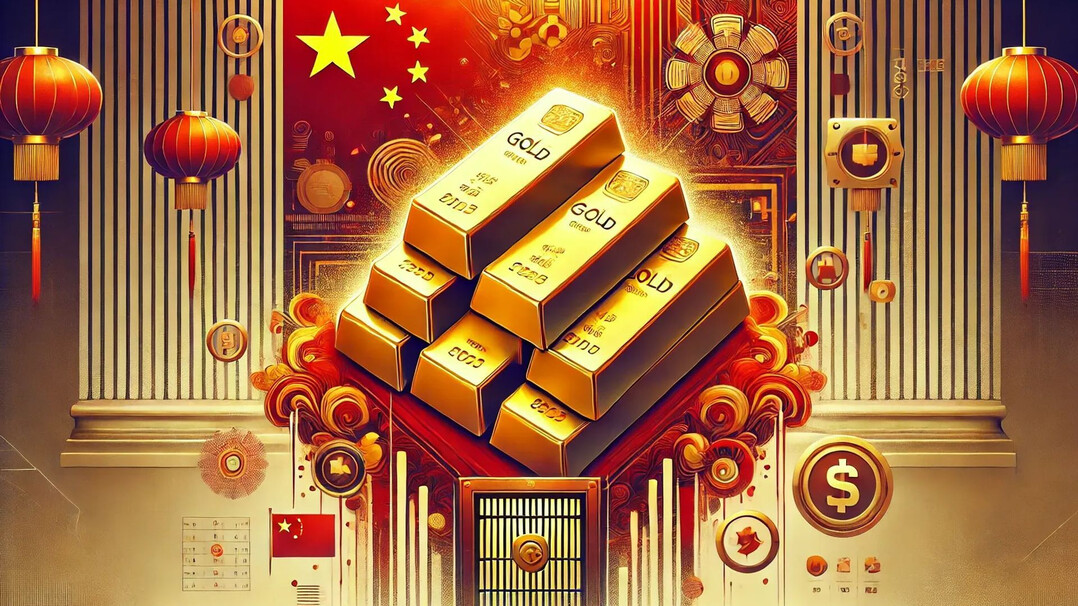
China’s Strategic Gold Rush: Beijing Amasses Reserves for 16th Straight Month Amid Dollar Uncertainty

Eugenio Rodolfo Sanabria Reporter / Updated : 2026-03-08 09:49:29
  • -
  • +
  • Print


BEIJING — As geopolitical tensions simmer in the Middle East and global financial markets grapple with shifting alliances, the People’s Bank of China (PBOC) has once again signaled its commitment to diversifying away from the U.S. dollar. According to data released by the State Administration of Foreign Exchange (SAFE) on Saturday, China extended its gold-buying spree for the 16th consecutive month in February, reflecting a calculated shift in the world’s second-largest economy’s reserve strategy.

The Numbers Behind the Accumulation
As of the end of February 2026, China’s gold reserves reached 74.22 million ounces, an increase of 30,000 ounces from the previous month. While the monthly increment may seem modest compared to previous surges, it marks a steady, unwavering trend. This follows a notable 18-month buying streak that concluded in early 2024, only to be resumed in November of that same year.

Due to the recent rally in global gold prices—driven largely by safe-haven demand—the valuation of China’s gold holdings has surged. The total value of the PBOC’s gold reserves stood at approximately $387.59 billion at the end of February, up significantly from $369.58 billion in January.

De-dollarization and Economic Sovereignty
Market analysts suggest that China’s aggressive appetite for gold is a direct response to the perceived fragility of the U.S. dollar-centric financial system. Several factors are fueling this "de-dollarization" sentiment:

U.S. National Debt: Concerns regarding the sustainability of the massive U.S. fiscal deficit have led many central banks to question the long-term stability of Treasury bonds.
Geopolitical Weaponization of Finance: The freezing of Russian foreign reserves following the Ukraine conflict served as a wake-up call for Beijing, highlighting the risks of over-reliance on Western-controlled financial infrastructure.
Policy Independence: Ongoing debates regarding the political independence of the U.S. Federal Reserve have introduced a layer of uncertainty that makes tangible assets like gold more attractive.

Foreign Exchange Reserves on the Rise
Parallel to its gold accumulation, China’s total foreign exchange reserves also saw growth. SAFE reported that reserves climbed to $3.4278 trillion at the end of February, a 0.85% increase from January. This marks the seventh consecutive month of growth in foreign currency holdings.

Authorities attributed this rise to a complex interplay of a strengthening U.S. Dollar Index and fluctuations in the prices of global financial assets. "The combination of exchange rate conversion and asset price changes contributed to the slight increase in the scale of foreign exchange reserves," a SAFE official noted in a statement.

The Broader Implications
The continuous "gold rush" by the PBOC is not merely a hedge against inflation; it is a structural repositioning. By increasing the ratio of gold within its total reserves, China aims to bolster the international credibility of the Yuan and shield its economy from potential external shocks or sanctions.

As the Middle East crisis continues to pressure global energy supply chains and investor sentiment, gold remains the ultimate "insurance policy." For Beijing, the message is clear: in an era of high-stakes geopolitics and mounting debt, physical gold offers a level of security that paper currency simply cannot match.

[Copyright (c) Global Economic Times. All Rights Reserved.]

  • #globaleconomictimes
  • #micorea
  • #mykorea
  • #nammidonganews
  • #singaporenewsk
  • #Samsung
  • #Daewoo
  • #Hyosung
  • #Apple
  • #korea
Eugenio Rodolfo Sanabria Reporter

Popular articles

  • The Hidden Link: Indian Ocean 'Rossby Waves' Behind Yangtze River’s Biennial Floods

  • K-Beauty Sets Its Sights on Southeast Asia: A Market Projected to Reach $11.1 Billion by 2035

  • International Oil Prices Hit Four-Month Low as Shipping Resumes in Strait of Hormuz

I like it
Share
  • Facebook
  • X
  • Kakaotalk
  • LINE
  • BAND
  • NAVER
  • https://globaleconomictimes.kr/article/1065574088082245 Copy URL copied.
Comments >

Comments 0

Weekly Hot Issue

  • KCCI Jeju Forum Opens: Chairman Chey Tae-won Urges Businesses to Catch the AI Wave Before It Becomes an Insurmountable Wall
  • AI Drones Take to the Skies in Revolutionary Hunt for Mosquitoes
  • The Gopher Miracle: How a 24-Hour Experiment Transformed a Volcanic Wasteland into a Lush Forest
  • Hyundai Motor Group to Acquire 100% Stake in Boston Dynamics, Accelerating Humanoid and Physical AI Commercialization
  • South Korea to Tighten Rules on Single-Stock Leveraged Products; Minimum Deposit Raised to 30 Million Won
  • TSMC Hits Record $40 Billion in Q2 Revenue Amid AI Boom, Pledges Additional $100 Billion for US Expansion

Most Viewed

1
Foreign Investors Return But Sell Off 'Samsung & Hynix' as Price Target Cuts Fuel KOSPI Peak Concerns
2
[Special Feature] Laying the Foundation for Korea's Informatization: Looking Back at the 1st Administrative Computer Network Project - Part 1
3
Baek Geum-ja Wooriot to Host 'Musical Costume Fashion Gala Show' at DDP
4
Hanwha Aerospace Forges Alliance with 49 Partners to Boost South Korea's Aviation Engine Ecosystem
5
Samsung Electronics Surpasses NVIDIA to Become Global Leader in Quarterly Operating Profit
광고문의
임시1
임시3
임시2

Hot Issue

OpenAI Rebounds in Secondary Market as Valuation Surges 20% in Three Months

South Korea to Tighten Rules on Single-Stock Leveraged Products; Minimum Deposit Raised to 30 Million Won

KCCI Jeju Forum Opens: Chairman Chey Tae-won Urges Businesses to Catch the AI Wave Before It Becomes an Insurmountable Wall

Hyundai Motor Group to Acquire 100% Stake in Boston Dynamics, Accelerating Humanoid and Physical AI Commercialization

Fashion Runway Show 2026

Global Economic Times
korocamia@naver.com
CEO : LEE YEON-SIL
Publisher : KO YONG-CHUL
Registration number : Seoul, A55681
Registration Date : 2024-10-24
Youth Protection Manager: KO YONG-CHUL
Singapore Headquarters
5A Woodlands Road #11-34 The Tennery. S'677728
Korean Branch
Phone : +82(0)10 4724 5264
#304, 6 Nonhyeon-ro 111-gil, Gangnam-gu, Seoul
Copyright © Global Economic Times All Rights Reserved
  • 향기네무료급식
  • BCB부천방송
  • 반달곰 프로젝트
Search
Category
  • All articles
  • Synthesis
  • World
  • Business
  • Industry
  • ICT
  • Distribution Economy
  • Well+Being
  • Travel
  • Eco-News
  • Education
  • Korean Wave News
  • Opinion
  • Arts&Culture
  • Sports
  • People & Life 
    • 전체
    • International Student Report
    • With Ambassador
  • Column 
    • 전체
    • Cho Kijo Column
    • Cherry Garden Story
    • Ko Yong-chul Column
    • Kim Seul-Ong Column
    • Lee Yeon-sil Column
  • Photo News
  • New Book Guide
  • Multicultural News
  • Jobs & Workers