![[등록] 2026-09-01 15:48:31](/support/_updata/banner2/tl181982910_6749.png)


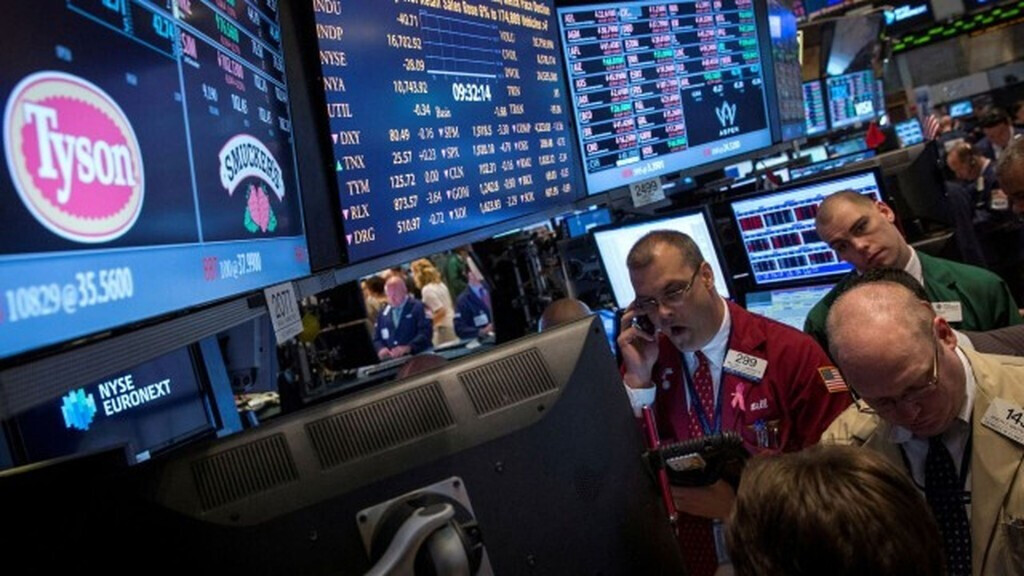
(C) HK Standard
NEW YORK — The geopolitical landscape of the Middle East has shifted into a volatile new gear. As the United States and Israel intensify military operations against Iranian interests, the global financial theater is no longer merely watching from the sidelines. What began as localized tension has transformed into a high-stakes economic standoff, with the $100-per-barrel oil mark acting as the "tripwire" that could redefine the trajectory of the global economy in 2026.
The Shadow of the Strait
On Friday, West Texas Intermediate (WTI) closed at $90.90, a staggering 36% jump within a single week—the sharpest climb since 1983. Brent crude followed suit, settling at $92.69. While the numbers are jarring, the true anxiety lies in geography: the Strait of Hormuz.
As the artery for 20% of the world’s petroleum and liquefied natural gas (LNG), any prolonged disruption to the strait represents an existential threat to energy stability. With maritime insurance premiums skyrocketing and shipping lanes under direct threat, the "risk premium" is no longer a theoretical calculation but a daily reality for traders.
Non-Linear Shocks and GDP Erosion
Wall Street’s primary concern is that inflation, which many hoped was firmly under control, may be reignited by an energy spark. Claudio Irigoyen, a global economist at Bank of America (BofA), warned in a recent client note of "non-linear effects." This suggests that once oil crosses the $100 threshold, the resulting economic damage does not just increase—it accelerates.
BofA estimates that if oil remains above $100, U.S. GDP growth could be shaved by at least 0.6% points. Should prices double from their pre-conflict levels, the specter of a full-blown recession moves from the "tail risk" category into the baseline forecast.
From AI Infrastructure to the Kitchen Table
The ripple effects of $100 oil extend far beyond the gas pump. In the tech sector, the burgeoning AI revolution faces an unexpected headwind. Giants like Microsoft and Alphabet are currently in a multi-billion dollar arms race to build massive data centers. These facilities are notoriously energy-intensive; a sustained spike in power costs could delay project timelines and erode the profit margins of the very companies driving the current bull market.
On the consumer side, the "K-shaped" recovery is under pressure. While high-income earners may feel the pinch through stock market volatility, lower-income households are facing a direct hit to their purchasing power. U.S. gasoline prices have seen their fastest three-day rise since 2008, hitting $3.25 per gallon. "When energy consumes a larger share of the wallet, we see immediate spikes in credit card and auto loan delinquencies," Irigoyen noted.
Strategic Pivots: Value and Defense
Despite the grim headlines, some corners of Wall Street remain pragmatically optimistic. Historical data shows that the S&P 500 often posts gains in the 12 months following the onset of a geopolitical conflict, provided the broader economy remains resilient.
Morgan Stanley analysts suggest a tactical shift in portfolios. In environments defined by high energy costs and military escalation, Value stocks and Dividend-payers typically outperform. Specifically, energy firms—benefiting from higher margins—and defense contractors—buoyed by increased military spending—are becoming the preferred hedges for institutional investors.
The Verdict: Stay the Course, but Watch the Clock
Investment bank Barclays advises against "panic-selling" or drastic portfolio overhauls. Their recommendation is a balanced approach: maintaining a core exposure to U.S. equities while diversifying into international markets and fixed-income assets to buffer against volatility.
The "New Normal" of 2026 is a race against time. If diplomacy or a swift military conclusion can stabilize the energy markets, the global economy may dodge a bullet. However, if $100 oil becomes the floor rather than the ceiling, the "Goldilocks" era of growth and low inflation may officially be over.
[Copyright (c) Global Economic Times. All Rights Reserved.]