• 2026.06.07 (Sun)
  • All articles
  • LOGIN
  • JOIN
Global Economic Times
fashionrunwayshow2026
  • Synthesis
  • World
  • Business
  • Industry
  • ICT
  • Distribution Economy
  • Well+Being
  • Travel
  • Eco-News
  • Education
  • Korean Wave News
  • Opinion
  • Arts&Culture
  • Sports
  • People & Life
    • International Student Report
    • With Ambassador
  • Column
    • Cho Kijo Column
    • Cherry Garden Story
    • Ko Yong-chul Column
    • Kim Seul-Ong Column
    • Lee Yeon-sil Column
  • Photo News
  • New Book Guide
MENU
 
Home > Distribution Economy

South Korea 'Trapped': OECD Shock as Tax Revenue Plummets

Desk / Updated : 2025-10-19 16:52:16
  • -
  • +
  • Print


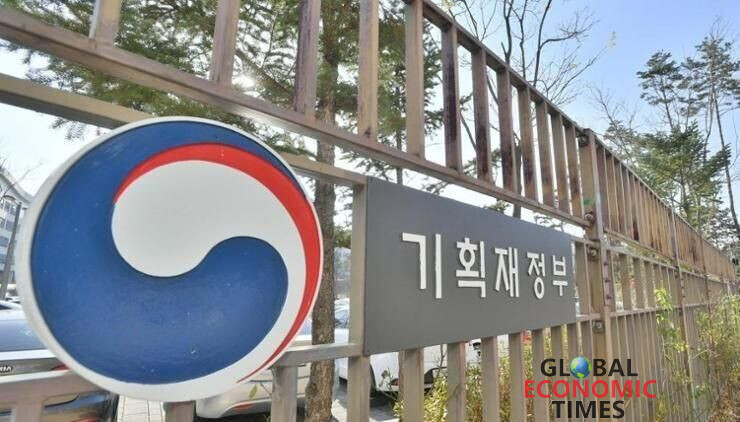
SEOUL—South Korea faces a dire economic warning, with its ratio of tax revenue to Gross Domestic Product (GDP) plummeting to 17.6% in 2024, ranking it 30th out of 38 OECD member nations. This figure is significantly lower than the 2023 OECD average of 25.9%, and even trails countries like the United States (19.1%) and Japan (21.2%).

The shocking results have triggered alarms from international organizations like the International Monetary Fund (IMF), which warns of a potential "low-tax, low-growth trap." International bodies, including the UN, recommend maintaining a tax revenue ratio of at least 15% for sustainable economic growth and effective policy implementation. The IMF specifically noted that countries exceeding the 15% threshold saw their per capita GDP grow about 10 percentage points faster than those below it.

The nation's tax revenue ratio has been unstable, reaching a high of 22.1% in 2022 before sharply dropping. Experts attribute the weak tax base to a system of "high statutory rates but a narrow tax base." For instance, the top income tax rate is the sixth-highest in the OECD, yet the effective tax rate ranks only 30th. This discrepancy is largely due to excessive income deductions, which result in 33% of wage earners paying no income tax at all. Furthermore, 54% of corporations are exempt from corporate tax, and the Value Added Tax (VAT) rate of 10% is far below the OECD average of 18%.

To address this, the IMF and domestic experts are urging the government to expand the tax base rather than simply raising already high statutory tax rates. Recommendations include rationalizing tax reduction and exemption schemes, raising the VAT, and reducing tax-free benefits. Experts emphasize establishing a tax policy that "broadens the tax base while lowering the tax rate" to secure the necessary funding for future welfare and growth initiatives.

[Copyright (c) Global Economic Times. All Rights Reserved.]

  • #globaleconomictimes
  • #micorea
  • #mykorea
  • #Lifeplaza
  • #nammidonganews
  • #singaporenewsk
  • #Samsung
  • #Daewoo
  • #Hyosung
  • #A
Desk
Desk

Popular articles

  • Banking War 2.0: South Korean Banks Race to Transition into 'AI-First' Institutions

  • Celltrion’s Zymfentra Sees Explosive 300% Growth, Hits Record Quarterly Prescriptions in the U.S.

  • China’s Foundry Offensive: Chasing Samsung’s No. 2 Spot via ‘Mature Node’ Dominance

I like it
Share
  • Facebook
  • X
  • Kakaotalk
  • LINE
  • BAND
  • NAVER
  • https://globaleconomictimes.kr/article/1065599470900070 Copy URL copied.
Comments >

Comments 0

Weekly Hot Issue

  • Tesla and BYD Penetrate South Korea’s Stronghold as Domestic Auto Sales Stumble
  • Incheon Semiconductor High School Partners with Chungnam National University to Foster Next-Gen Tech Talent
  • Murata Unveils Next-Gen Resin Electrode MLCC for Automotive Applications
  • L&F Plus Secures KRW 220 Billion from National Growth Fund to Anchor South Korea’s First Mass LFP Cathode Production
  • Nvidia CEO Jensen Huang to Arrive in South Korea for "Sam-So" Meeting with Tech Tycoons
  • Samsung Electronics Super-Enterprise Union Loses Majority Status Amid Backlash Over Bonus Disparities

Most Viewed

1
From a moment of collective sacrifice to a moment of collective democracy: The Timing of the Election in Ethiopia and Korea
2
[Interview] "Halal is Not a Religious Regulation, but a 'Trust Infrastructure'… Creating a Premium 'K-Halal' Centered on Data and Platforms"
3
Bomb Attack Targets Moving Train in Pakistan: At Least 29 Dead, 102 Injured
4
Business Sentiment Hits 43-Month High as Supply Chains Ease and Exports Surge
5
KOSPI Smashes Through 8,400 Barrier for First Time in History
광고문의
임시1
임시3
임시2

Hot Issue

Murata Unveils Next-Gen Resin Electrode MLCC for Automotive Applications

Samsung to Embed Vital Signs and Heart Health Scores in Upcoming Galaxy Watch9 Lineup

L&F Plus Secures KRW 220 Billion from National Growth Fund to Anchor South Korea’s First Mass LFP Cathode Production

Samsung Electronics Super-Enterprise Union Loses Majority Status Amid Backlash Over Bonus Disparities

Fashion Runway Show 2026

Global Economic Times
korocamia@naver.com
CEO : LEE YEON-SIL
Publisher : KO YONG-CHUL
Registration number : Seoul, A55681
Registration Date : 2024-10-24
Youth Protection Manager: KO YONG-CHUL
Singapore Headquarters
5A Woodlands Road #11-34 The Tennery. S'677728
Korean Branch
Phone : +82(0)10 4724 5264
#304, 6 Nonhyeon-ro 111-gil, Gangnam-gu, Seoul
Copyright © Global Economic Times All Rights Reserved
  • 에이펙2025
  • APEC2025가이드북TV
  • 반달곰 프로젝트
Search
Category
  • All articles
  • Synthesis
  • World
  • Business
  • Industry
  • ICT
  • Distribution Economy
  • Well+Being
  • Travel
  • Eco-News
  • Education
  • Korean Wave News
  • Opinion
  • Arts&Culture
  • Sports
  • People & Life 
    • 전체
    • International Student Report
    • With Ambassador
  • Column 
    • 전체
    • Cho Kijo Column
    • Cherry Garden Story
    • Ko Yong-chul Column
    • Kim Seul-Ong Column
    • Lee Yeon-sil Column
  • Photo News
  • New Book Guide
  • Multicultural News
  • Jobs & Workers