![[등록] 2026-09-01 15:48:31](/support/_updata/banner2/tl181982910_6749.png)


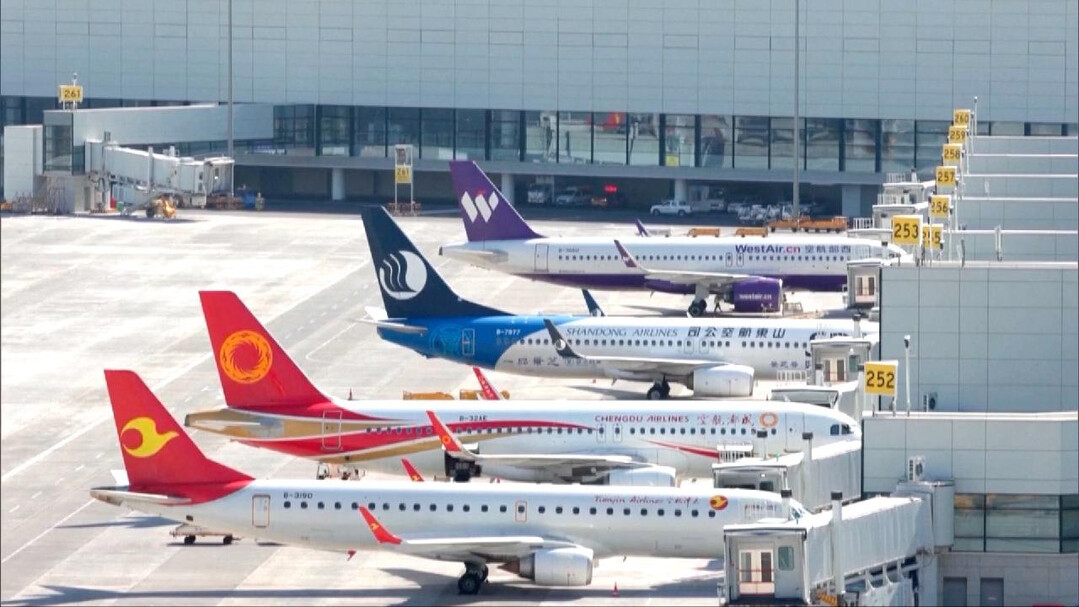
(C) CGTN
BEIJING/TOKYO - Major Chinese airlines have extended their policy of allowing free cancellations and changes for flights to and from Japan, a move that signals a prolonged period of strained relations and restricted travel between the two nations. Originally set to expire on December 31 of this year, the exceptional policy has been prolonged until March 28 of next year.
The extension, announced by leading carriers including Air China (China International Airlines), China Eastern Airlines, and China Southern Airlines, is widely seen as a continuation of a travel advisory issued by Chinese authorities. This advisory, which cautions Chinese citizens against non-essential travel to Japan, was a direct response to controversial remarks made by Japanese Prime Minister Sanae Takaichi. Takaichi had indicated a potential Japanese intervention in the event of a "Taiwan contingency," a statement that drew sharp rebuke and countermeasures from Beijing.
Extension Covers Peak Travel Season
The decision effectively stretches the period of restricted travel for Chinese nationals over a significant portion of the international travel peak season, including the Lunar New Year (Spring Festival or Chun Jie) in early 2026. This period is one of the busiest for overseas travel, and the extension grants travelers scheduled to fly between January and March next year a crucial flexibility that was previously set to expire at the end of December.
Under the new terms, tickets purchased or reissued before noon on December 5, 2025, for flights (including code-share flights) departing, arriving, or transiting through Japan before March 28, 2026, are eligible for penalty-free cancellation or rebooking.
Chinese media outlets, including Cailian News, China Business Network (CBN), and 21st Century Business Herald, along with Taiwan’s Central News Agency (CNA), reported the airlines' unified announcement on December 5. They interpret this move as a three-month extension of the travel restrictions initially put in place in mid-November.
Diplomatic Trigger and Initial Response
The diplomatic friction escalated after PM Takaichi’s comments, prompting the Chinese Ministry of Foreign Affairs and the Chinese Embassy in Japan to issue a "travel notice" on November 14, urging citizens to exercise caution when visiting Japan.
In immediate succession, major Chinese airlines announced their initial free cancellation policy on November 15, covering flights up to December 31. Simultaneously, several large Chinese travel agencies suspended the sale of package tours to Japan.
The extension is a substantial benefit for passengers who had planned trips during the first quarter of next year, allowing them to adjust their itineraries without financial penalty. Had the deadline remained December 31, travelers would have been forced to make a definitive cancellation or rebooking decision without full clarity on the geopolitical situation.
Impact on Air Traffic and Capacity
The travel advisory has already had a measurable impact on flight capacity. Chinese media reports indicate that the number of Japan-bound flights operated by Chinese carriers in December had already been reduced by over 20%.
Further adjustments and capacity cuts are anticipated following this extension. Bloomberg reported on November 25 that Chinese authorities had specifically instructed domestic airlines to continue capacity reductions on Japanese routes until March next year. While some carriers, such as Air China and Capital Airlines, have publicly confirmed that their flight adjustments will continue through March, the overall capacity plans of other major airlines for the entire three-month period remain ambiguous. It is currently unclear if all carriers will proceed with a full three-month reduction in Japanese flight capacity beyond the initial December cuts.
This prolonged measure underscores the depth of the current Sino-Japanese disagreement and suggests that a normalization of bilateral travel and diplomatic relations may not occur until the conclusion of the first quarter of 2026. The aviation and tourism sectors in both countries, particularly in Japan, are bracing for continued financial and logistical headwinds.
[Copyright (c) Global Economic Times. All Rights Reserved.]