![[등록] 2026-09-01 15:48:31](/support/_updata/banner2/tl181982910_6749.png)


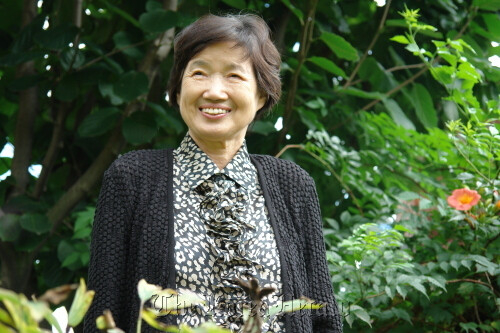
SEOUL – The scent of earth and the quiet scratch of a pen once felt in a private garden in Guri have found a new, permanent home at South Korea’s most prestigious academic institution. On February 9, 2026, Seoul National University (SNU) officially inaugurated the "Park Wan-suh Archive," a dedicated space within the Central Library honoring the late novelist Park Wan-suh (1931–2011) on the 15th anniversary of her passing.
The archive is more than a mere collection of books; it is a meticulous reconstruction of the spiritual and physical landscape where Park, often hailed as the "eternal matriarch" of Korean letters, spent her final years.
A Garden Replanted in the Heart of the Library
The archive, spanning approximately 165 square meters (50 pyeong) within the newly remodeled "Heritage Library," features a stunning recreation of Park’s Achuiul House in Guri, Gyeonggi Province. For the last 13 years of her life, this home served as her sanctuary.
Visitors are greeted by a vivid reproduction of her garden, complete with actual trees and soil. For Park, who spent much of her adulthood in cramped apartments, the garden was a return to her childhood roots. She was known to tend to the earth personally with a hoe, once remarking that the mere thought of her garden made her "smile uncontrollably."
From the Dining Table to the Writer’s Desk
Perhaps the most moving aspect of the exhibit is the display of Park’s original furniture. The archive features the actual desk, chair, and computer used to pen masterpieces such as A Very Old Joke and The Man’s House.
The desk holds significant symbolic weight in the history of Korean women's literature. As a mother of five who debuted late in life at age 40, Park did not have a "room of one's own" for decades. She famously wrote her debut novel, The Naked Tree, while hunched over or leaning against family furniture. It wasn't until 1985—fifteen years after her debut—that she finally acquired her own desk.
"She showed us through her life how joyful it is to be alive day by day," said Ho Won-sook, Park’s eldest daughter and a writer herself, during the opening ceremony. "She wrote her stories as if she were weeding a field—with diligence and care."
A Treasure Trove of 6,000 Artifacts
The archive is the result of a massive donation by Park's bereaved family, consisting of over 6,000 items. Of these, 470 select pieces are currently on public display, including:
Handwritten Manuscripts: Original drafts showing the author’s revisions and thought processes.
Personal Libraries: Thousands of books ranging from classic poetry to works by Goethe and Tolstoy.
Life Artifacts: Her personal sewing machine, camera, and the famous "delivery bowl" (haesan sabal), offering a glimpse into her domestic life.
"A Truly Surprising and Beautiful Thing"
The opening marks the beginning of a special commemorative exhibition titled "A Truly Surprising and Beautiful Thing," which will run through April 30, 2026. The exhibit aims to connect a new generation of readers with Park’s philosophy—one that found profound meaning in the mundane and documented the scars of Korean history with startlingly honest prose.
For scholars and fans alike, the Park Wan-suh Archive at SNU serves as a reminder that literature is not just found in the finished book, but in the physical space, the daily labor, and the resilient spirit of the creator.
[Copyright (c) Global Economic Times. All Rights Reserved.]