![[등록] 2026-09-01 15:48:31](/support/_updata/banner2/tl181982910_6749.png)


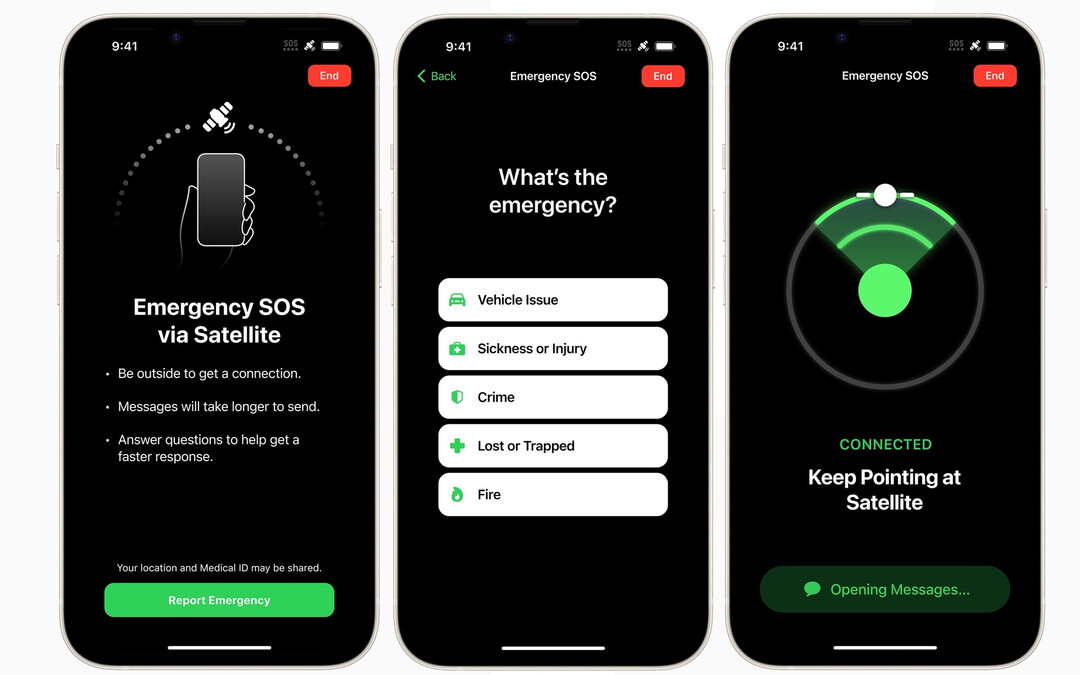
SEOUL – In a significant move to enhance public safety, Apple has agreed to extend the duration of emergency location information sharing for iPhone users in South Korea. Following intensive consultations with the Korea Communications Commission (KCC), the tech giant will now provide location data to emergency responders for up to 30 minutes, a sixfold increase from the previous 5-minute window.
The KCC announced on Wednesday, April 1, 2026, that this update is now active, marking a major milestone in the government's efforts to modernize emergency response systems. Previously, when an iPhone user dialed emergency services (such as 112 for police or 119 for fire and medical emergencies), location data was only transmitted during the call and for five minutes after the call ended. This brief window often proved insufficient for rescue operations in complex urban environments or remote areas.
Closing the "Golden Time" Gap
The decision comes after sustained pressure from South Korea’s National Fire Agency and the National Police Agency. Rescue officials have long argued that the 5-minute limit hindered their ability to track victims who might be moving, unconscious, or unable to maintain a continuous call. In many kidnapping or missing person cases, the initial few minutes are critical, but the subsequent 30 minutes—often referred to as the "Golden Time"—are where most successful rescues are coordinated.
"Securing precise and continuous location data is the backbone of modern rescue operations," stated a representative from the National Fire Agency. "This extension ensures that even if a victim loses consciousness or their phone call is disconnected, our teams have a much higher probability of locating them."
A Result of Strategic Collaboration
This policy change is the fruition of the Emergency Rescue Location Quality Consultation Body, a task force established by the KCC last year. The group includes representatives from:
Apple Inc.
The National Police Agency
The National Fire Agency
The Korea Internet & Security Agency (KISA)
The task force focused on overcoming technical and privacy-related hurdles to ensure that location sharing remained secure yet effective for life-saving purposes. Apple integrated the extended tracking capability into its most recent iOS software update, ensuring that the feature is available to the vast majority of iPhone users in the country immediately.
Strengthening Global Partnerships
Kim Jong-cheol, Chairman of the Korea Communications Commission, expressed strong approval of the development. He noted that the cooperation of global tech companies is essential in an era where mobile devices are the primary tool for emergency communication.
"We welcome Apple's decision to prioritize the safety of our citizens," Chairman Kim said. "The KCC will continue to strengthen its partnership with global service providers and relevant domestic agencies to improve the quality of emergency location information and eliminate 'blind spots' where rescue signals might fail."
Technical Implementation and Future Outlook
The update utilizes a combination of GPS, Wi-Fi, and cellular tower data to provide the most accurate coordinates possible to the dispatch centers. By extending the transmission to 30 minutes, dispatchers can now monitor the real-time movement of a device, allowing for more dynamic response strategies.
Industry experts believe this move by Apple might set a new standard for other smartphone manufacturers and service providers operating in South Korea. As the government continues to refine its "Smart City" and public safety infrastructures, the integration of high-precision, long-duration location tracking is expected to become a mandatory baseline for mobile technology.
This development is viewed as a successful example of "soft-touch" regulation, where the government achieves public interest goals through dialogue and technical collaboration with multinational corporations rather than through purely punitive measures. For iPhone users in South Korea, the update provides a renewed sense of security, knowing that in their most vulnerable moments, their devices are better equipped to help them be found.
[Copyright (c) Global Economic Times. All Rights Reserved.]