![[등록] 2026-09-01 15:48:31](/support/_updata/banner2/tl181982910_6749.png)


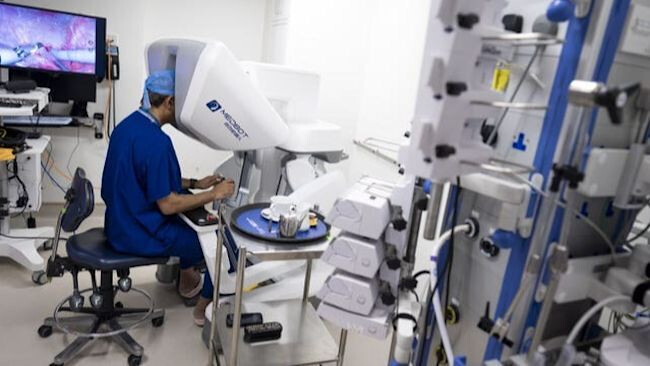
(C) ITVX
London, UK — In a landmark achievement for telemedicine, a surgeon based in London has successfully performed a complex cancer surgery on a patient located over 2,400 kilometers away. The procedure, which marks a significant leap in medical technology, demonstrated a nearly instantaneous response time, bridging the vast physical gap between the doctor and the operating theater.
A 1,500-Mile Digital Bridge
On March 5th, 2026, Professor Prokar Dasgupta, a renowned urologist, sat at a high-tech console in St. Bernard’s Hospital, London. His hands moved with precision, but his patient was not in the room. Instead, the patient, Paul Buxton, was lying in an operating theater in Gibraltar, a British Overseas Territory located approximately 1,500 miles (2,410 km) away—a distance more than double the length of the Korean Peninsula.
Using a sophisticated robotic system equipped with a 3D HD camera and four mechanical arms, Professor Dasgupta successfully performed a radical prostatectomy (the surgical removal of the prostate gland). The success of the operation hinged on an extraordinary technical feat: a latency (signal delay) of just 0.06 seconds (60 milliseconds).
"At this speed, the delay is virtually imperceptible to the human hand," experts noted. "It allows for the same level of delicacy and real-time adjustment as if the surgeon were standing right at the bedside."
The Technology Behind the Feat
The operation was made possible through a collaboration with technology service provider Presidio. To ensure maximum safety and reliability:
Primary Connection: The surgeon’s console was linked to the robot in Gibraltar via a dedicated high-speed fiber-optic network.
Redundancy: A robust 5G connection was established as a secondary backup to prevent any loss of control.
On-site Support: A full medical team remained on standby in Gibraltar, ready to intervene instantly should any technical failure occur.
A Life-Changing "Fantastic" Recovery
The patient, Paul Buxton, expressed immense pride in being part of this medical milestone. Before this technology was available, patients in Gibraltar requiring major surgeries often faced grueling logistics, including flights to London or Madrid and weeks of recovery away from home.
"If I had done this the traditional way, I would have had to fly out, join a long NHS waiting list, and spend at least three weeks in London," Buxton shared. When asked about his current condition following the robotic procedure, he described his health as "fantastic" and noted his desire to contribute to the advancement of medical science.
The Future of Global Healthcare
Professor Dasgupta highlighted the profound humanitarian implications of this breakthrough. Remote surgery could revolutionize healthcare for people living in isolated or underserved regions, eliminating the massive financial and physical burdens of travel.
"This is about more than just a technical showcase," Dasgupta stated. "It is about bringing world-class surgical expertise to the patient, regardless of where they are on the map."
[Copyright (c) Global Economic Times. All Rights Reserved.]