![[등록] 2026-09-01 15:48:31](/support/_updata/banner2/tl181982910_6749.png)


(C) IBT
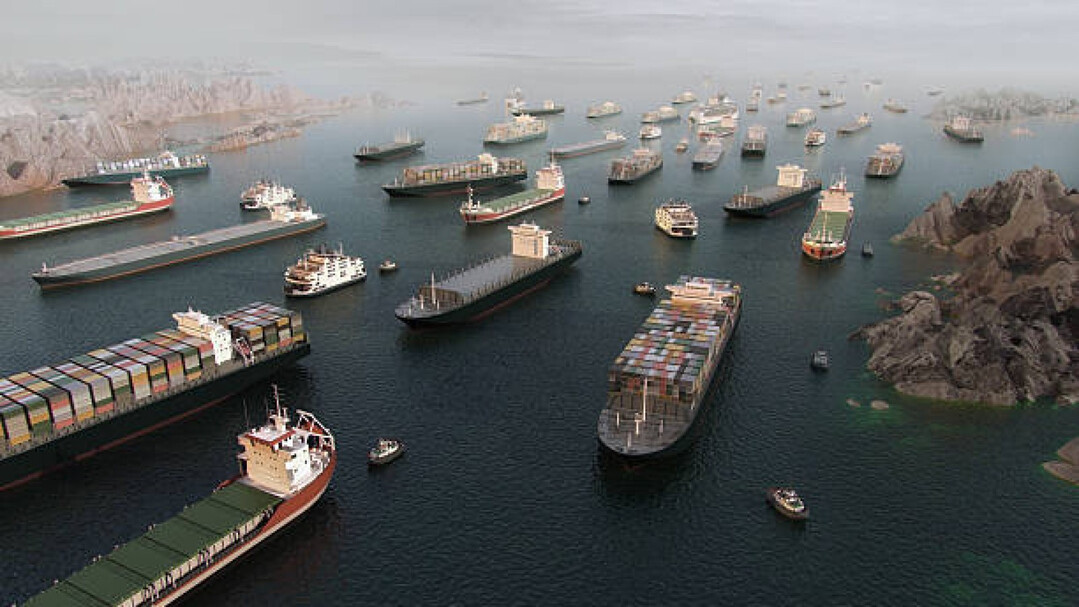
ISLAMABAD — As delegations from Washington and Tehran converge in Islamabad this Friday for high-stakes direct negotiations, the fragile two-week ceasefire mediated by Pakistan faces a staggering new obstacle: a proposed "transit fee" that could fundamentally alter global trade.
The ceasefire, announced by U.S. President Donald Trump on April 7, just hours before a deadline for strikes on Iranian infrastructure, has temporarily reopened the Strait of Hormuz. However, the "10-Point Proposal" submitted by Iran as a framework for a permanent peace deal includes a demand that has sent shockwaves through the global energy market—a mandatory $2 million (approx. 2.6 billion KRW) toll for every vessel transiting the waterway.
The "Economic Warfare" Proposal
The 10-point plan, conveyed via Pakistani mediators, seeks to leverage Iran’s geographic control over the world’s most critical energy artery. While the first six points focus on traditional security guarantees—including a permanent end to U.S. strikes, the lifting of all sanctions, and the withdrawal of U.S. combat forces from the region—items 8 through 10 outline a new "economic protocol" for the Strait.
Iran proposes that the Islamic Revolutionary Guard Corps (IRGC) oversee a safe-passage program where every transiting ship pays a fee, with revenues shared between Iran and Oman. Tehran frames the fee as "reconstruction funds" to repair civilian infrastructure damaged by recent U.S. and Israeli air campaigns.
A "Red Line" for Global Supply Chains
Economic analysts warn that the proposed toll is not merely a temporary war tax but an attempt to institutionalize a "global tax" on energy. With the Strait of Hormuz handling over 20% of the world’s daily oil trade, a $2 million fee per tanker would trigger an immediate spike in global inflation.
For energy-dependent economies like South Korea, which relies on the Middle East for over 70% of its crude oil, the impact would be catastrophic.
Surging Costs: A $2 million fee translates to roughly $1 extra per barrel for a Very Large Crude Carrier (VLCC).
Logistics Crisis: Shipping giants like Maersk have already signaled a cautious approach, noting that a permanent toll system would make the route economically unviable for many operators.
Domestic Impact: Experts predict that if these terms are accepted, domestic gasoline prices in Seoul—already exceeding 2,000 KRW per liter—could see another record-breaking surge.
The Trump Administration’s Dilemma
President Trump described the Iranian proposal as a "workable basis" for negotiation, but he faces immense domestic pressure. Accepting a deal that cedes control of the Strait to the IRGC would be viewed by critics as a strategic surrender. Furthermore, with the November mid-term elections approaching, the administration cannot afford to appear weak on its core ally, Israel, whose security is directly challenged by Iran’s demands for an end to strikes on "Resistance Axis" groups like Hezbollah.
"The 10-point plan is a maximalist opening gambit," said one diplomatic source in Islamabad. "The security demands are difficult, but the Hormuz toll is the true poison pill. It turns a public international waterway into a private Iranian toll booth."
Uncertain Outlook
As Vice President J.D. Vance and Iranian Speaker Mohammad Bagher Ghalibaf prepare to meet face-to-face, the "Islamabad Dialogue" represents the first real chance for diplomacy since the conflict began in late February. However, with Iran already reportedly testing the toll system by requesting payments in Chinese Yuan and cryptocurrencies, the battle for the Strait of Hormuz has evolved from a military skirmish into a profound struggle for the future of the global economic order.
The ceasefire remains "fragile," and with prediction markets giving the talks low odds of a total breakthrough, the world remains on edge. The question is no longer just when the guns will fall silent, but at what price the world’s oil will be allowed to flow.
[Copyright (c) Global Economic Times. All Rights Reserved.]