![[등록] 2026-09-01 15:48:31](/support/_updata/banner2/tl181982910_6749.png)


SEOUL — The technological stronghold held by South Korean semiconductor giants is facing an unprecedented challenge as China’s leading memory manufacturer, ChangXin Memory Technologies (CXMT), aggressively accelerates its roadmap. Just three years after entering the market, CXMT has announced plans to begin mass production of 12-layer High Bandwidth Memory (HBM) by next year, signaling that the technical disparity between South Korea and China has narrowed to a critical threshold.
Rapid Ascension into the Mainstream Market
According to industry sources on April 8, 2026, CXMT is currently coordinating with global and domestic semiconductor equipment and material suppliers to finalize investment directions for its 12-layer HBM production lines. While the company is set to stabilize the mass production of 4th-generation HBM (HBM3 8-layer) this year, it is simultaneously jumping into the 12-layer segment—the current "gold standard" for AI accelerators.
The 12-layer HBM represents the highest density currently commercialized in the global market, primarily dominated by HBM3E. Until recently, this tier was considered the exclusive domain of the "Big Three": SK Hynix, Samsung Electronics, and Micron. By targeting this high-spec product, CXMT is positioning itself to supply the mainstream AI chip market, effectively ending its era of producing legacy-tier memory.
Closing the Technical Gap
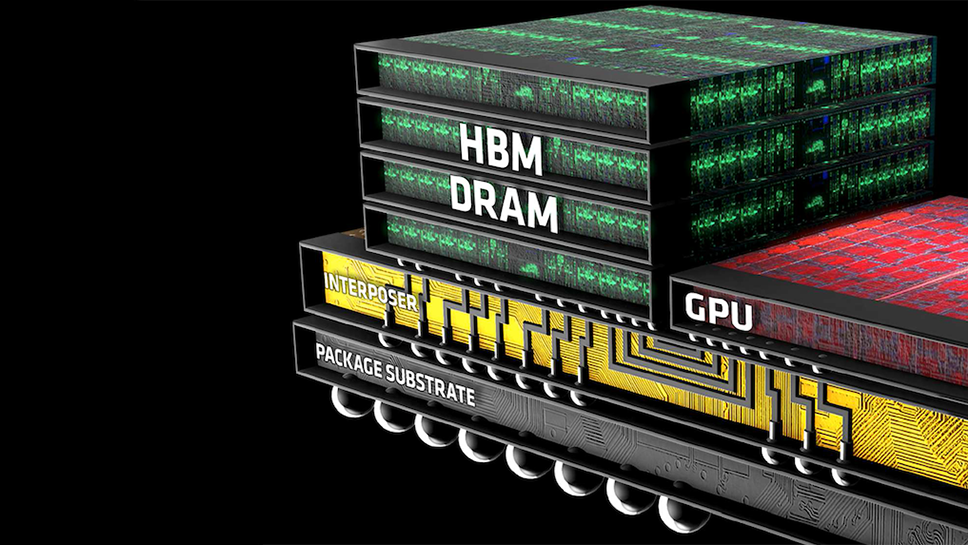
The complexity of HBM lies in vertical stacking. Connecting DRAM chips through micro-bumps and Ensuring precise alignment while managing thermal output requires sophisticated packaging capabilities. Historically, South Korean firms maintained a significant lead. In late 2024, when CXMT began producing 2nd-generation HBM2 (4-layer), SK Hynix was already rolling out HBM3E (12-layer).
However, industry experts now estimate that the technical gap has shrunk to less than three years. > "CXMT is prioritizing volume and market presence over immediate yield optimization, bolstered by massive government subsidies and a robust domestic demand," an industry insider noted. "As their supply scale grows, improvements in yield and technical stability will naturally follow."
Financial Muscle and Strategic Pivot
CXMT’s aggressive expansion is fueled by significant capital. Following a successful IPO that secured approximately $4.2 billion, the company is reallocating its resources. Reports suggest that CXMT plans to convert nearly 20% of its total DRAM capacity—roughly 60,000 wafers per month—specifically for HBM production to meet the needs of Chinese AI firms facing trade restrictions.
The Korean Response: A Race for 16-Layer Dominance
The rapid catch-up by Chinese firms has placed Samsung Electronics and SK Hynix on high alert. To maintain their market leadership, Korean manufacturers are pivoting toward "super-gap" technologies.
The next battlefield is the 16-layer HBM. Both Samsung and SK Hynix aim to complete the development of 16-layer HBM by the end of 2026. Furthermore, they are investing heavily in Hybrid Bonding, a next-generation stacking technology that eliminates traditional bumps to reduce thickness and improve heat dissipation.
Conclusion
While South Korea still holds the crown for the most advanced HBM4 products, the "China Risk" in the semiconductor sector is no longer a distant possibility but a present reality. With CXMT breathing down their necks, the survival of the Korean memory industry will depend on how quickly it can commercialize 16-layer HBM and maintain its edge in the high-end AI supply chain.
[Copyright (c) Global Economic Times. All Rights Reserved.]