![[등록] 2026-09-01 15:48:31](/support/_updata/banner2/tl181982910_6749.png)


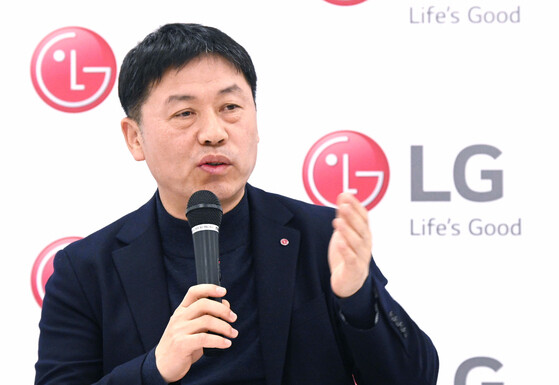
SEOUL — Amidst global economic headwinds and persistent geopolitical uncertainty, LG Electronics has achieved a historic second-quarter performance. Under the leadership of CEO Jae-Chul Ryu, the company’s "profit-driven growth" strategy has begun to bear fruit, with first-half operating profits already surpassing the company’s entire annual profit for the previous year.
A Transformation into a High-Performance Portfolio
LG Electronics reported its provisional results for the second quarter of 2026, posting 23.83 trillion KRW in revenue and 1.58 trillion KRW in operating profit—a remarkable year-on-year increase of 14.9% and 146.9%, respectively. Both figures represent the highest quarterly records in the company’s history for a second quarter.
The cumulative first-half revenue reached 47.56 trillion KRW, with an operating profit of 3.25 trillion KRW, far exceeding the annual operating profit of 2.48 trillion KRW recorded in 2025. This success is widely attributed to CEO Ryu’s aggressive pivot toward a "high-performance portfolio."
Since taking the helm, Ryu has emphasized transitioning the company from a traditional home appliance manufacturer into a diversified tech powerhouse. By expanding into Business-to-Business (B2B) sectors, platform-based services, and subscription models, LG has successfully diversified its income streams, reducing its historical reliance on cyclical consumer hardware sales.
The Pillars of Future Growth
The company’s growth is currently anchored by four strategic pillars, each of which has gained significant traction:
B2B and HVAC Solutions: Leveraging the rising demand for high-efficiency heating, ventilation, and air conditioning (HVAC) systems in Europe and the growing need for AI data center cooling solutions, LG has positioned itself as a critical player in industrial infrastructure.
Automotive Solutions (VS): The vehicle component business has secured a robust order backlog, collaborating with global automakers to provide high-end infotainment systems and electric vehicle components.
webOS Platform: By expanding its proprietary operating system (webOS) to third-party TV manufacturers and smart home devices, LG is shifting toward a recurring revenue model, transforming itself into a media and software service provider.
Subscription Services: LG has successfully introduced a subscription model for its premium home appliances, ensuring long-term customer loyalty and steady cash flow, moving beyond one-off hardware sales.
"The Strength of Fundamental Competitiveness"
CEO Ryu’s management philosophy, often dubbed the "Jae-Chul Ryu Magic," focuses on "fundamental competitiveness." In his public remarks earlier this year, Ryu noted that traditional business models are insufficient to guarantee sustainable growth in an era of intense competition and global instability.
"The size of a problem is the size of the opportunity for improvement," Ryu emphasized during a recent all-hands town hall meeting. He has mandated that the company move away from complacency, encouraging staff to find innovative solutions rather than focusing on the obstacles to success. To support this, he established a direct CEO-led innovation task force aimed at streamlining manufacturing, optimizing cost structures, and accelerating R&D cycles.
Market Outlook and Strategic Significance
Analysts suggest that LG’s performance is particularly impressive because it was achieved by improving core profitability rather than relying solely on market conditions. While the second-quarter results included some one-time gains—such as tariff rebates on exports to the U.S.—the underlying growth in high-margin sectors like B2B and software platforms remains the primary driver of this trend.
As the industry faces a cooling consumer market, LG’s focus on "non-hardware" business models and premium market penetration is being closely watched by global competitors. By successfully executing its transition, LG Electronics is proving that a legacy manufacturer can reinvent itself as a data-driven, service-oriented entity, setting a new benchmark for the global electronics industry.
[Copyright (c) Global Economic Times. All Rights Reserved.]