• 2026.06.05 (Fri)
  • All articles
  • LOGIN
  • JOIN
Global Economic Times
fashionrunwayshow2026
  • Synthesis
  • World
  • Business
  • Industry
  • ICT
  • Distribution Economy
  • Well+Being
  • Travel
  • Eco-News
  • Education
  • Korean Wave News
  • Opinion
  • Arts&Culture
  • Sports
  • People & Life
    • International Student Report
    • With Ambassador
  • Column
    • Cho Kijo Column
    • Cherry Garden Story
    • Ko Yong-chul Column
    • Kim Seul-Ong Column
    • Lee Yeon-sil Column
  • Photo News
  • New Book Guide
MENU
 
Home > Synthesis

Tech Tensions Flare: DeepSeek Allegedly Smuggles Banned NVIDIA Blackwell Chips for New AI Model

Ana Fernanda Reporter / Updated : 2025-12-11 08:29:36
  • -
  • +
  • Print

(C) ZAWYA

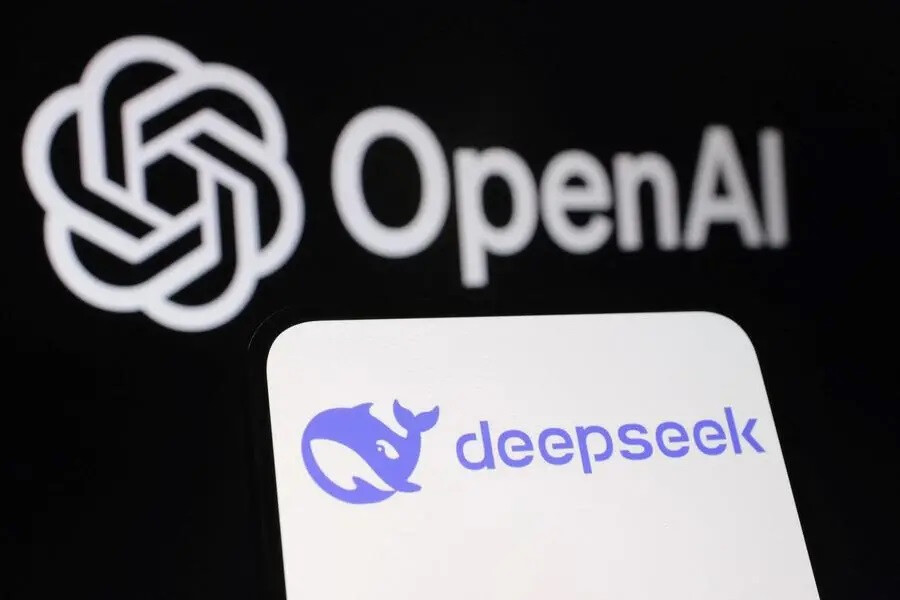
BEIJING/SANTA CLARA — A report has stirred the global tech industry, alleging that Chinese artificial intelligence (AI) startup DeepSeek has engaged in an elaborate smuggling operation to acquire thousands of NVIDIA's top-tier, export-restricted Blackwell chips to develop its next-generation AI model. The claims have been vehemently denied by NVIDIA, igniting a new debate over the effectiveness and enforcement of U.S. technology export controls aimed at curbing China's advancements in critical AI hardware.

 
Allegations of an Elaborate Smuggling Scheme

According to The Information, citing multiple sources, DeepSeek has secured thousands of NVIDIA Blackwell GPUs over the past two years, utilizing a circuitous route through third-party countries where the sale of the advanced chips is still permitted.

The alleged scheme involves setting up non-Chinese data centers, reportedly in Southeast Asia, where the chips and servers are initially installed. This stage includes mandatory inspections by equipment developers like NVIDIA, Dell, and Supermicro to ensure compliance with export regulations. However, once the inspection is complete, DeepSeek is accused of dismantling the servers, shipping the components back to China through misdeclaration to customs, and reassembling them in Chinese data centers.

This alleged operation is a direct response to the stringent U.S. export bans. While U.S. President Donald Trump recently authorized the export of the previous-generation Hopper architecture's H200 chip to approved customers in China (with a reported 25% revenue fee to the U.S. government), the newer, more powerful Blackwell and the upcoming Rubin chips remain strictly prohibited.

 
NVIDIA Denies 'Phantom Data Center' Claims

NVIDIA has strongly pushed back against the allegations. A company spokesperson stated, "We haven't seen any substantiation or received tips of 'phantom data centers' constructed to deceive us and our OEM partners, then deconstructed, smuggled, and reconstructed somewhere else." While calling the alleged smuggling "farfetched," the spokesperson confirmed that the company investigates all tips it receives.

In a move to strengthen enforcement, NVIDIA has reportedly developed a new, optional location-verification software that will ship with its Blackwell chips. If activated by customers, this tool will help track the physical location and operational status of its GPUs, making large-scale smuggling operations significantly harder to execute.

 
DeepSeek’s Technical Edge: Sparse Attention

The controversy comes as DeepSeek prepares to launch its new model, which is rumored to incorporate Sparse Attention technology. This technique, also dubbed DeepSeek Sparse Attention (DSA) in the company's experimental models like DeepSeek-V3.2-Exp, significantly reduces the computational cost of AI model inference by only utilizing a fraction of the model for a given question. Sources indicate that while this technology promises substantial efficiency gains, scaling it for large models remains a challenge. DeepSeek employees are reportedly aiming for a launch before the Lunar New Year holiday in February, though founder Liang Wenfeng is said to be prioritizing performance over strict deadlines.

DeepSeek has yet to issue a public statement regarding the smuggling allegations. The incident underscores the escalating geopolitical tensions in the global AI race and the lengths to which Chinese tech firms may go to secure the essential hardware required to compete with their U.S. rivals.

[Copyright (c) Global Economic Times. All Rights Reserved.]

  • #Globaleconomictimes
  • #Korea
  • #Seoul
  • #Samsung
  • #LG
  • #Bitcoin
  • #Meta
  • #Business
  • #Economic
  • #The Woori Bank
Ana Fernanda Reporter

Popular articles

  • World’s Largest IP Event ‘INTA 2026’ Concludes in London: Discussing AI Transformation and the Future of Intellectual Property

  • "The Beast" Lands in Beijing: Massive Security Detail Precedes Trump’s High-Stakes Visit

  • U.S. to Fast-Track Acquisition of 10,000 Low-Cost Cruise Missiles to Replenish War-Depleted Stocks

I like it
Share
  • Facebook
  • X
  • Kakaotalk
  • LINE
  • BAND
  • NAVER
  • https://globaleconomictimes.kr/article/1065569226987511 Copy URL copied.
Comments >

Comments 0

Weekly Hot Issue

  • Samsung Electronics Super-Enterprise Union Loses Majority Status Amid Backlash Over Bonus Disparities
  • Samsung to Embed Vital Signs and Heart Health Scores in Upcoming Galaxy Watch9 Lineup
  • Apple Honors Digital Excellence: 12 Exceptional Apps and Games Celebrated at the 2026 Design Awards
  • Nexon Revamps Signature Youth Coding Competition into AI-Driven 'Nexon Young Programmers Cup'
  • Tech University of Korea Gathers 200 Game and AI Researchers to Discuss Industrial Expansion
  • Major Korean Telcos Trim Online-Exclusive Plans by Up to 50% Amid Shift to Unified Mobile Tariffs

Most Viewed

1
From a moment of collective sacrifice to a moment of collective democracy: The Timing of the Election in Ethiopia and Korea
2
U.S. Holds Off on Immediate Comprehensive Semiconductor Tariffs, but Pressure Mounts for Samsung and SK Hynix to Accelerate Domestic Investments
3
[Interview] "Halal is Not a Religious Regulation, but a 'Trust Infrastructure'… Creating a Premium 'K-Halal' Centered on Data and Platforms"
4
‘600 Million Won Bonus’ at Samsung Electronics Triggers Deep Sense of Relative Deprivation Among Korean Workers
5
Bomb Attack Targets Moving Train in Pakistan: At Least 29 Dead, 102 Injured
광고문의
임시1
임시3
임시2

Hot Issue

Murata Unveils Next-Gen Resin Electrode MLCC for Automotive Applications

Samsung to Embed Vital Signs and Heart Health Scores in Upcoming Galaxy Watch9 Lineup

L&F Plus Secures KRW 220 Billion from National Growth Fund to Anchor South Korea’s First Mass LFP Cathode Production

Samsung Electronics Super-Enterprise Union Loses Majority Status Amid Backlash Over Bonus Disparities

Fashion Runway Show 2026

Global Economic Times
korocamia@naver.com
CEO : LEE YEON-SIL
Publisher : KO YONG-CHUL
Registration number : Seoul, A55681
Registration Date : 2024-10-24
Youth Protection Manager: KO YONG-CHUL
Singapore Headquarters
5A Woodlands Road #11-34 The Tennery. S'677728
Korean Branch
Phone : +82(0)10 4724 5264
#304, 6 Nonhyeon-ro 111-gil, Gangnam-gu, Seoul
Copyright © Global Economic Times All Rights Reserved
  • 에이펙2025
  • APEC2025가이드북TV
  • 반달곰 프로젝트
Search
Category
  • All articles
  • Synthesis
  • World
  • Business
  • Industry
  • ICT
  • Distribution Economy
  • Well+Being
  • Travel
  • Eco-News
  • Education
  • Korean Wave News
  • Opinion
  • Arts&Culture
  • Sports
  • People & Life 
    • 전체
    • International Student Report
    • With Ambassador
  • Column 
    • 전체
    • Cho Kijo Column
    • Cherry Garden Story
    • Ko Yong-chul Column
    • Kim Seul-Ong Column
    • Lee Yeon-sil Column
  • Photo News
  • New Book Guide
  • Multicultural News
  • Jobs & Workers