• 2026.11.23 (Mon)
  • All articles
  • LOGIN
  • JOIN
Global Economic Times
한인동포뉴스(상단)
  • Synthesis
  • World
  • Business
  • Industry
  • ICT
  • Distribution Economy
  • Well+Being
    • Pet Life
    • Halal Horizon
  • Travel
  • Eco-News
  • Education
  • Korean Wave News
  • Opinion
  • Arts&Culture
  • Sports
  • People & Life
    • International Student Report
    • With Ambassador
  • Column
    • Cho Kijo Column
    • Cherry Garden Story
    • Ko Yong-chul Column
    • Kim Bong-seon's Photo Column
    • Kim Seul-Ong Column
    • Lee Yeon-sil Column
    • Professor Lee Soo-young’s Life Essays
  • Photo News
  • New Book Guide
MENU
 
Home > World

Beijing Slams U.S. Over New Telecom Numbering Restrictions, Warning of Retaliation

Yongwon Ko Senior Reporter / Updated : 2026-11-23 08:17:40
  • -
  • +
  • Print
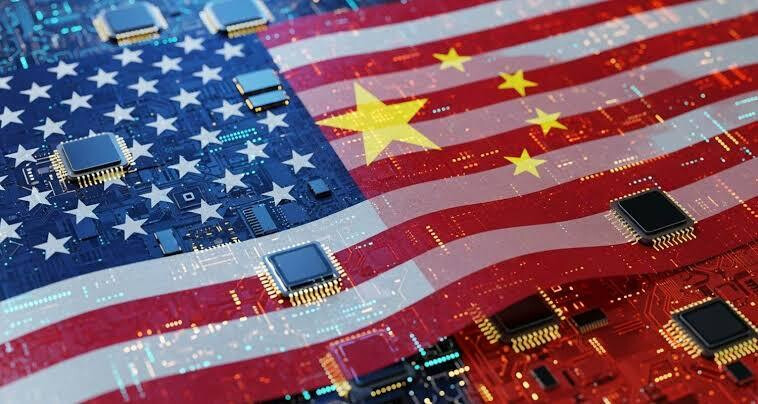
China’s Ministry of Commerce accuses Washington of politicizing trade just days after bilateral summit talks in Shenzhen.


BEIJING — China has strongly condemned a new U.S. regulatory move that bars major Chinese telecommunications carriers from directly obtaining American phone numbers, warning that the decision threatens recent efforts to stabilize bilateral trade relations.

In a statement issued on Sunday, China’s Ministry of Commerce urged the U.S. Federal Communications Commission (FCC) to immediately revoke the directive, accusing Washington of overstretching national security justifications to suppress normal commercial operations.

The dispute stems from an FCC ruling on November 19 that prohibits China Mobile, China Telecom, and China Unicom from directly acquiring U.S. telephone numbers for Voice over Internet Protocol (VoIP) services. While the three state-backed carriers were previously barred from offering international telecom services in the U.S., the FCC stated this latest step is designed to bolster national security and combat fraudulent robocalls.

A commerce ministry spokesperson dismissed the allegations as baseless, noting that the restrictions contradict the consensus reached by both nations' leaders and vow that Beijing will take "necessary measures" to defend the rights of its domestic firms.

Timing Raises Diplomatic Concerns

The regulatory clash comes at a delicate moment in U.S.-China diplomacy. On the very day the FCC announced the ban, the leaders of both countries met during the Asia-Pacific Economic Cooperation (APEC) summit in Shenzhen, agreeing to build a constructive framework for strategic stability. Just days earlier, on November 13, trade officials had convened to negotiate tariff adjustments and agricultural trade.

Despite the diplomatic outreach, the FCC has maintained a hardline stance, having also barred Chinese laboratories from certifying U.S.-bound electronics late last month.

Limited Financial Hit, Potential Backfire for U.S.

Industry observers suggest the immediate financial blow to China's three telecom giants will be negligible, given their minimal footprint in the U.S. market and the fact that cross-border calls remain operational.

However, Chinese analysts argue the policy could inadvertently backfire on the United States:

Higher Costs and Delays: E-commerce firms and exporters forced to route numbering services through U.S. intermediaries will likely face longer setup times and higher fees, costs that could ultimately trickle down to American consumers.
Complicated Fraud Tracking: Telecom analyst Ma Jihua noted that scammers rely on caller ID spoofing and third-party networks, meaning the ban could fragment communication pathways and make tracing illicit calls even more difficult for U.S. regulators.
Stifled Innovation: Zhou Mi, a senior researcher at a commerce ministry-affiliated think tank, warned that excluding market players reduces competition, which may curb innovation and drive up service prices for U.S. users.

Analysts further cautioned that expanding U.S. tech restrictions from physical hardware into foundational telecom resources and computing power risks eroding the global dominance of American technical standards over the long term.

[Copyright (c) Global Economic Times. All Rights Reserved.]

  • #Cherry Garden
  • #HalalFood
  • #Halal
  • #Petlife
  • #Halalhorizone
  • #Hormuz Impasse
  • #Joseon
  • #globaleconomictimes
  • #micore
Yongwon Ko Senior Reporter

Popular articles

  • Why Can't We Use 'Muse' in Korea?… Zuckerberg Says, "Due to a Lack of Data Centers"

  • Meeting Christmas Early!… Busan Dessert Sales Event "Daldal The Market" Held

  • Gyeongbuk Agricultural Research and Extension Services' 'Gloristar' Begins Export to China and Enters Domestic Premium Distribution Network

I like it
Share
  • Facebook
  • X
  • Kakaotalk
  • LINE
  • BAND
  • NAVER
  • https://globaleconomictimes.kr/article/1065568542711478 Copy URL copied.
Comments >

Comments 0

Weekly Hot Issue

  • South Korean Tea Maker Herb & Tea Expands Global Footprint to Nine Countries with Local Produce
  • Timor-Leste Closes Schools Amid Wildfire Smoke; Climate Crisis Halts Early Childhood Learning
  • Incheon Misses Annual Carbon Reduction Target, Prompting Calls for Industrial Cooperation
  • South Korean Court Ruling on Bird Strike Risks Threatens Nationwide Airport Expansion Plans
  • Beyond Tangerines: Warming Climate Transforms Jeju Island into a Hub for Exotic Tropical Crops
  • Washington Weighs Section 301 Trade Probe Over Digital Regulations in South Korea, EU, and Australia

Most Viewed

1
South Korea and Ethiopia Sign Trilateral MOU to Introduce Liquid-Based Cytology (LBC) Technology for Cervical Cancer Diagnosis
2
South Korean Burger Chain Lotteria Expands Singapore Footprint with Halal Certification and New Teriyaki Lineup
3
AI Semiconductor Stocks Plummet: Philadelphia Index Drops 5.28% and Micron Plunges 7.59% Amid Executive Shakeup and Export Restrictions
4
"Stay Out, Get Paid, or Have Police Stay With You": Shenzhen Imposes Strict Security Ahead of APEC Summit
5
AI Music Tops Melon Chart: Is the K-Pop Production Formula Changing?
체리가든 스토리
nutri huevos
로타리
동포저널

Hot Issue

Surge in Chinese-Built EVs Pushes South Korea’s Auto Trade Deficit with China to Record $4.23 Billion

South Korean Tea Maker Herb & Tea Expands Global Footprint to Nine Countries with Local Produce

Urban Sanctuary on Namsan: Banyan Tree Club & Spa Seoul Redefines the Luxury 'K-Staycation'

Fashion Runway Show 2026

Let’s recycle the old blankets in Jeju Island’s closet instead of incinerating them.

Global Economic Times
korocamia@naver.com
CEO : LEE YEON-SIL
Publisher & Editor : KO YONG-CHUL
Registration number : Seoul, A55681
Registration Date : 2024-10-24
Youth Protection Manager: KO YONG-CHUL
Singapore Headquarters
5A Woodlands Road #11-34 The Tennery. S'677728
Korean Branch
Phone : +82(0)10 4724 5264
#304, 6 Nonhyeon-ro 111-gil, Gangnam-gu, Seoul
Copyright © Global Economic Times All Rights Reserved
  • News K
  • 반달곰 프로젝트
  • 광고문의
Search
Category
  • All articles
  • Synthesis
  • World
  • Business
  • Industry
  • ICT
  • Distribution Economy
  • Well+Being 
    • 전체
    • Pet Life
    • Halal Horizon
  • Travel
  • Eco-News
  • Education
  • Korean Wave News
  • Opinion
  • Arts&Culture
  • Sports
  • People & Life 
    • 전체
    • International Student Report
    • With Ambassador
  • Column 
    • 전체
    • Cho Kijo Column
    • Cherry Garden Story
    • Ko Yong-chul Column
    • Kim Bong-seon's Photo Column
    • Kim Seul-Ong Column
    • Lee Yeon-sil Column
    • Professor Lee Soo-young’s Life Essays
  • Photo News
  • New Book Guide
  • Overseas Koreans
  • Multicultural News