
• 2026.11.23 (Mon)
  • All articles
  • LOGIN
  • JOIN
Global Economic Times
한인동포뉴스(상단)
  • Synthesis
  • World
  • Business
  • Industry
  • ICT
  • Distribution Economy
  • Well+Being
    • Pet Life
    • Halal Horizon
  • Travel
  • Eco-News
  • Education
  • Korean Wave News
  • Opinion
  • Arts&Culture
  • Sports
  • People & Life
    • International Student Report
    • With Ambassador
  • Column
    • Cho Kijo Column
    • Cherry Garden Story
    • Ko Yong-chul Column
    • Kim Bong-seon's Photo Column
    • Kim Seul-Ong Column
    • Lee Yeon-sil Column
    • Professor Lee Soo-young’s Life Essays
  • Photo News
  • New Book Guide
MENU
 
Home > World

Ukraine War Front Expands to North Africa as Russian Warship Sinks Off Libya

Greace Nunez Correspondent / Updated : 2026-11-23 08:14:34
  • -
  • +
  • Print


BENGHAZI, Libya — The nearly five-year war between Russia and Ukraine has dramatically expanded its geographic reach into the Mediterranean, following a series of suspected Ukrainian naval drone strikes against Russian vessels off the coast of Libya.

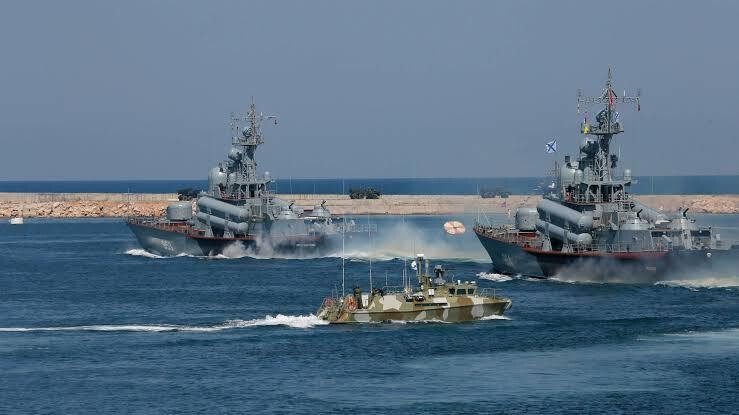
According to Libyan military officials and satellite imagery analysis, the Russian Navy corvette Merkury sustained catastrophic damage and subsequently sank after being struck by maritime drones while docked at a naval base in the eastern city of Benghazi on the 22nd. While local air and naval defenses intercepted at least four incoming drones, two successfully breached the perimeter, triggering a major fire at the port facility.

Hours after the initial strike on the Merkury, a second attack targeted the Askalon, a Russia-linked cargo vessel reportedly transporting military supplies off the Benghazi coast. Video footage circulating from the incident captured a drone slamming directly into the hull of the ship, resulting in a massive explosion. Local media also reported that a Maltese-flagged merchant vessel was struck nearby, while Libyan forces claimed to have neutralized at least a dozen additional maritime drones in the surrounding waters.

A New Theater of Operations

The strikes, occurring more than 1,600 kilometers from southern Ukraine, highlight a significant shift in Kyiv’s operational reach. Preliminary investigations by Libyan authorities indicate that the drones were launched from bases in western Libya operated by Ukrainian specialists. These units, stationed primarily at an airbase in Misrata as well as facilities in Tripoli and Zawiya under a covert arrangement, were previously linked to a March drone strike on a Russian oil tanker near Malta.

For Moscow, the port of Benghazi has grown increasingly vital. Following the collapse of Bashar al-Assad’s regime in Syria and the subsequent loss of its Syrian naval bases, Russia has relied heavily on eastern Libya as a Mediterranean hub to resupply its mercenary forces operating across Africa.

Divided Libya Expresses Alarm

The incident has drawn sharp condemnation from both sides of Libya’s ongoing civil conflict. The eastern-based Libyan National Army (LNA), which controls Benghazi and maintains cooperation agreements with Moscow, confirmed the Russian vessels were docked for routine refueling and resupply. The LNA announced a joint investigation with Russia to trace the origins of the attack, declaring it would not allow Libyan territory to become an arena for "settling foreign scores."

Simultaneously, the UN-recognized Government of National Unity (GNU) in western Tripoli voiced deep concern over the threat posed to civilian infrastructure and port operations, firmly rejecting the transformation of Libya into a battleground for international conflicts. Neither Kyiv nor Moscow has issued an official statement claiming or commenting on the strikes.

Simultaneous Escalation in the Baltic Sea

The Mediterranean strikes coincided with heightened maritime tensions in northern Europe. In the Baltic Sea, firefighting efforts continued through the 22nd aboard the Russian cargo ship Sparta II, which was damaged the previous day in international waters west of Gogland Island while en route to the Russian exclave of Kaliningrad.

Finnish military officials stated that Ukraine is the likely culprit behind the Sparta II strike, noting it follows a suspected drone attack on a Russian warship in the same region last week. As Kyiv intensifies long-range drone operations toward Russia's northwestern Leningrad region—occasionally resulting in airspace violations over neighboring Baltic states—regional commanders are on high alert. Estonian Navy Commander Ivo Värk warned that further maritime attacks in the narrow Gulf of Finland cannot be ruled out, raising fresh concerns that the conflict could spill over into NATO territory.

[Copyright (c) Global Economic Times. All Rights Reserved.]

  • #Cherry Garden
  • #HalalFood
  • #Halal
  • #Petlife
  • #Halalhorizone
  • #Hormuz Impasse
  • #Joseon
  • #globaleconomictimes
  • #micore
Greace Nunez Correspondent

Popular articles

  • Amazon Courts ‘Global No. 1’ K-Beauty

  • Bill Gates: "AI Will Replace Most Human Jobs... Extreme Turmoil Expected Over the Next 20 Years"

  • Lula Pulls Off Runoff Upset to Secure Historic Fourth Term in Brazil

I like it
Share
  • Facebook
  • X
  • Kakaotalk
  • LINE
  • BAND
  • NAVER
  • https://globaleconomictimes.kr/article/1065568393641219 Copy URL copied.
Comments >

Comments 0

Weekly Hot Issue

  • South Korean Tea Maker Herb & Tea Expands Global Footprint to Nine Countries with Local Produce
  • Timor-Leste Closes Schools Amid Wildfire Smoke; Climate Crisis Halts Early Childhood Learning
  • Incheon Misses Annual Carbon Reduction Target, Prompting Calls for Industrial Cooperation
  • South Korean Court Ruling on Bird Strike Risks Threatens Nationwide Airport Expansion Plans
  • Beyond Tangerines: Warming Climate Transforms Jeju Island into a Hub for Exotic Tropical Crops
  • Washington Weighs Section 301 Trade Probe Over Digital Regulations in South Korea, EU, and Australia

Most Viewed

1
South Korea and Ethiopia Sign Trilateral MOU to Introduce Liquid-Based Cytology (LBC) Technology for Cervical Cancer Diagnosis
2
South Korean Burger Chain Lotteria Expands Singapore Footprint with Halal Certification and New Teriyaki Lineup
3
AI Semiconductor Stocks Plummet: Philadelphia Index Drops 5.28% and Micron Plunges 7.59% Amid Executive Shakeup and Export Restrictions
4
"Stay Out, Get Paid, or Have Police Stay With You": Shenzhen Imposes Strict Security Ahead of APEC Summit
5
AI Music Tops Melon Chart: Is the K-Pop Production Formula Changing?
체리가든 스토리
nutri huevos
로타리
동포저널

Hot Issue

Surge in Chinese-Built EVs Pushes South Korea’s Auto Trade Deficit with China to Record $4.23 Billion

South Korean Tea Maker Herb & Tea Expands Global Footprint to Nine Countries with Local Produce

Urban Sanctuary on Namsan: Banyan Tree Club & Spa Seoul Redefines the Luxury 'K-Staycation'

Fashion Runway Show 2026

Let’s recycle the old blankets in Jeju Island’s closet instead of incinerating them.

Global Economic Times
korocamia@naver.com
CEO : LEE YEON-SIL
Publisher & Editor : KO YONG-CHUL
Registration number : Seoul, A55681
Registration Date : 2024-10-24
Youth Protection Manager: KO YONG-CHUL
Singapore Headquarters
5A Woodlands Road #11-34 The Tennery. S'677728
Korean Branch
Phone : +82(0)10 4724 5264
#304, 6 Nonhyeon-ro 111-gil, Gangnam-gu, Seoul
Copyright © Global Economic Times All Rights Reserved
  • News K
  • 반달곰 프로젝트
  • 광고문의
Search
Category
  • All articles
  • Synthesis
  • World
  • Business
  • Industry
  • ICT
  • Distribution Economy
  • Well+Being 
    • 전체
    • Pet Life
    • Halal Horizon
  • Travel
  • Eco-News
  • Education
  • Korean Wave News
  • Opinion
  • Arts&Culture
  • Sports
  • People & Life 
    • 전체
    • International Student Report
    • With Ambassador
  • Column 
    • 전체
    • Cho Kijo Column
    • Cherry Garden Story
    • Ko Yong-chul Column
    • Kim Bong-seon's Photo Column
    • Kim Seul-Ong Column
    • Lee Yeon-sil Column
    • Professor Lee Soo-young’s Life Essays
  • Photo News
  • New Book Guide
  • Overseas Koreans
  • Multicultural News