![[등록] 2026-09-01 15:48:31](/support/_updata/banner2/tl181982910_6749.png)


(C) Seoul City
SEOUL – Mapo-gu District, led by Mayor Park Kang-su, announced on the 23rd a comprehensive plan to modernize and repurpose the 50-year-old Mangwon and Mapo catchment basins. The initiative aims to shift these aging flood-control infrastructures from "hidden necessities" into vibrant cultural and recreational hubs for local residents.
The Legacy of Flood Control
The Mangwon Catchment Basin (54,000 $m^2$) and the Mapo Catchment Basin (26,115 $m^2$) were established in 1973 and 1979, respectively. For half a century, these facilities have served as critical disaster prevention infrastructure, protecting low-lying areas from flooding during South Korea’s intense summer monsoon seasons.
However, as the facilities hit the 50-year mark, several urban challenges have emerged:
Environmental Decay: Aging infrastructure has led to persistent odors and the accumulation of dredged soil.
Inefficient Land Use: While the Mangwon area currently hosts a park golf course and soccer fields, these are frequently submerged during heavy rain, requiring significant time and taxpayer money for post-flood restoration.
Underutilization: Despite their prime locations near the Han River, the sites have remained largely utilitarian and inaccessible for daily leisure.
A Paradigm Shift: Modernization Meets Recreation
The district’s new vision focuses on a "Dual-Track" strategy: reinforcing the original disaster prevention function while maximizing land efficiency through modern engineering.
To achieve this, the district plans to install sump pits and high-efficiency pumping systems. This structural overhaul will allow for "direct drainage," ensuring that water can be managed constantly rather than just sitting in open basins. By condensing the space required for water storage, Mapo-gu expects to secure significant "idle land" for development.
"We are turning these spaces from 'places to avoid' into 'places to stay,'" said a district official. "The goal is to ensure that even if a storm hits, the facilities can be cleaned and returned to the public faster than ever before."
The Blueprint: Culture, Sports, and the '365' Vision
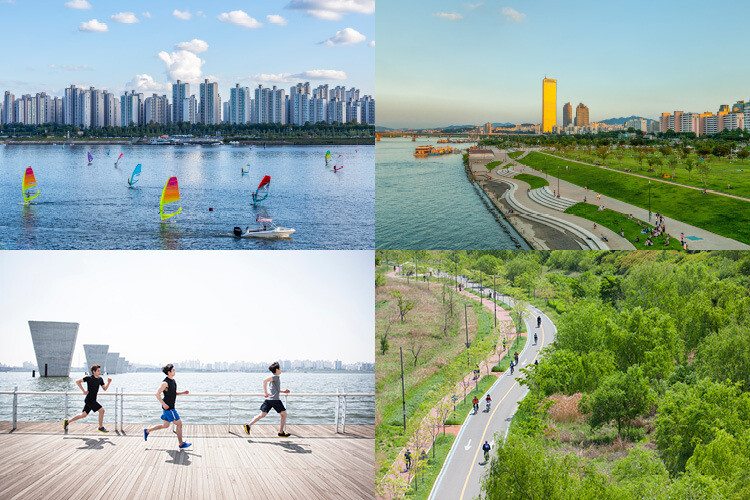
The redevelopment is currently moving through several administrative stages. Mapo-gu is presently conducting a "Feasibility Study and Basic Plan for the Development of the Mangwon Catchment Basin." The vision for this site includes a complex harmony of culture, sports, and leisure facilities that can withstand the environmental demands of the Han River's edge.
Simultaneously, at the Mapo Catchment Basin—specifically on the site of the public parking lot, for which the district recently secured management rights from the Seoul Metropolitan Government—plans are underway to build the 'Mapo 365 Cultural and Sports Center.' This facility is intended to be a year-round landmark, providing residents with indoor activities that were previously unavailable in the area.
Leadership Perspective
Mayor Park Kang-su emphasized that this project is about restoring the rights of the citizens to enjoy their natural environment.
"Despite the excellent location along the Han River, these catchment basins have not been fully utilized for decades," Mayor Park stated. "By innovating the management system of these facilities, we will maintain a watertight defense against flooding while creating an urban model that substantially improves the quality of life for our residents."
Looking Ahead
As Seoul continues to grapple with high population density and limited green space, the Mapo-gu project is being watched as a potential blueprint for other districts. If successful, the transformation of these "gray infrastructures" into "green-blue complexes" could redefine how the city balances safety with social welfare.
The district expects that once the feasibility studies are concluded, a clearer timeline for construction and the specific layout of the sports and cultural complexes will be revealed to the public.
[Copyright (c) Global Economic Times. All Rights Reserved.]