![[등록] 2026-09-01 15:48:31](/support/_updata/banner2/tl181982910_6749.png)


(C) The Australian
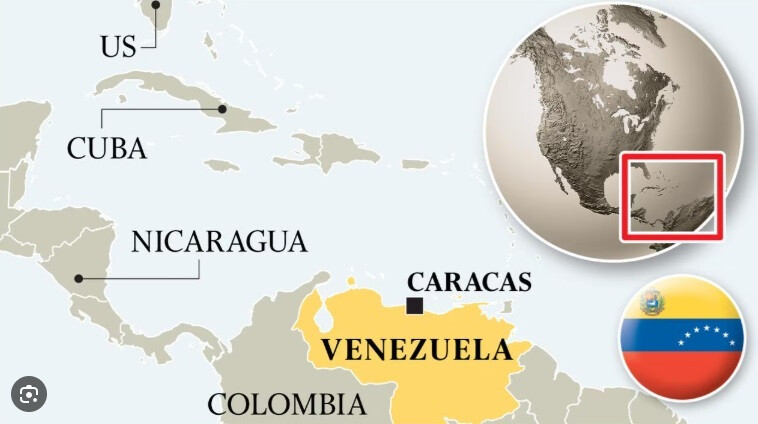
In 2018, the first Donald Trump administration designated Venezuela, Nicaragua, and Cuba as the "Troika of Tyranny"—a bloc of hardline anti-American, leftist regimes in Latin America. For years, these nations stood as a defiant wall against U.S. influence in the Western Hemisphere. However, following the dramatic ousting of Venezuelan President Nicolás Maduro by U.S. forces on January 3, 2026, that wall has begun to crumble.
With the Venezuelan pillar of the troika collapsed, all eyes are now turned toward Havana and Managua. Reports suggest that the leadership in Cuba and Nicaragua is watching the unfolding situation with extreme trepidation, fearing they may be the next targets in a revitalized U.S. campaign to reshape the region.
A Shared History of Autocracy and Nepotism
While each nation has its own unique historical trajectory, the "Troika" members share striking similarities. All three have replaced democratic institutions with radical socialist ideologies and long-term dictatorial rule.
Venezuela: Anchored in "Chavismo," the cult of personality surrounding the late Hugo Chávez.
Nicaragua: Ruled by the Sandinista National Liberation Front (FSLN), which has its roots in Cold War-era leftist guerrilla movements.
Cuba: The longest-standing communist dictatorship in the hemisphere, maintained by the Communist Party of Cuba.
A defining characteristic of these regimes has been the transition from ideological movements to "familial politics." In Nicaragua, President Daniel Ortega and his wife, Vice President Rosario Murillo, exercise a unique "dual-headed" authority. In Cuba, the decades-long "Brotherhood Rule" of Fidel and Raúl Castro set the stage for the current Miguel Díaz-Canel administration, which remains ideologically tethered to the old guard.
Nicaragua: The "Copy-Paste" Dictatorship
Daniel Ortega’s path to absolute power mirrors Maduro’s in chilling detail. After leading the Sandinista revolution to oust a pro-U.S. regime in 1979, Ortega first held power in the 1980s. Since returning to office in 2007, he has systematically dismantled the democratic framework.
By utilizing loyalist judges to scrap term limits and deploying paramilitary forces to crush anti-government protests, Ortega has effectively neutralized the opposition. His administration's survival has long been bolstered by economic and energy ties with Venezuela—ties that have now been severed by the fall of the Maduro regime.
Cuba’s Defiance Amidst Isolation
On the day of Maduro’s reported capture, Cuban President Miguel Díaz-Canel was seen at an anti-imperialist rally in Havana, defiantly waving the Venezuelan flag. Despite the symbolic transition from the Castro brothers to a new generation of leadership, Havana has shown no signs of softening its stance toward Washington.
However, the loss of Venezuelan oil subsidies—which have historically kept the Cuban economy afloat—combined with the possibility of direct U.S. intervention, has placed the island nation in its most precarious position since the Special Period of the 1990s.
"We Will Fix Cuba and Nicaragua Next"
The rhetoric coming from Washington suggests that the U.S. is far from finished. Republican Senator Rick Scott of Florida, a staunch ally of President Trump and a leading voice on Latin American policy, made the administration’s intentions clear during a recent appearance on Fox News.
"What we have done in Venezuela will change the face of Latin America," Scott stated. He characterized the ousting of Maduro as merely the first step in a broader regional realignment. "Following Venezuela, we are going to fix Cuba, and then we are going to fix Nicaragua."
Conclusion: A New Era of Intervention?
The rapid collapse of the Maduro government has sent a shockwave through the radical left in South and Central America. For the first time in decades, the "Troika of Tyranny" is no longer a complete set. As the Trump administration signals a move toward "fixing" the remaining autocratic regimes, the region stands at a historical crossroads. Whether through increased economic sanctions, internal pressure, or further direct action, the geopolitical map of the Caribbean and Central America appears set for a radical transformation.
[Copyright (c) Global Economic Times. All Rights Reserved.]