• 2026.06.05 (Fri)
  • All articles
  • LOGIN
  • JOIN
Global Economic Times
fashionrunwayshow2026
  • Synthesis
  • World
  • Business
  • Industry
  • ICT
  • Distribution Economy
  • Well+Being
  • Travel
  • Eco-News
  • Education
  • Korean Wave News
  • Opinion
  • Arts&Culture
  • Sports
  • People & Life
    • International Student Report
    • With Ambassador
  • Column
    • Cho Kijo Column
    • Cherry Garden Story
    • Ko Yong-chul Column
    • Kim Seul-Ong Column
    • Lee Yeon-sil Column
  • Photo News
  • New Book Guide
MENU
 
Home > Distribution Economy

KOSPI Surges Back to 5,870 Mark as U.S.-Iran Ceasefire Triggers Global Market Rally

KO YONG-CHUL Reporter / Updated : 2026-04-08 20:44:02
  • -
  • +
  • Print


SEOUL — South Korean financial markets experienced a dramatic rebound on Wednesday as investor sentiment shifted from fear to optimism following the announcement of a two-week ceasefire agreement between the United States and Iran. The sudden de-escalation of geopolitical tensions in the Middle East sparked a massive rally in both the equity and foreign exchange markets, reclaiming territory lost during weeks of conflict-driven volatility.

Equities Surge: Dual "Sidecars" Activated
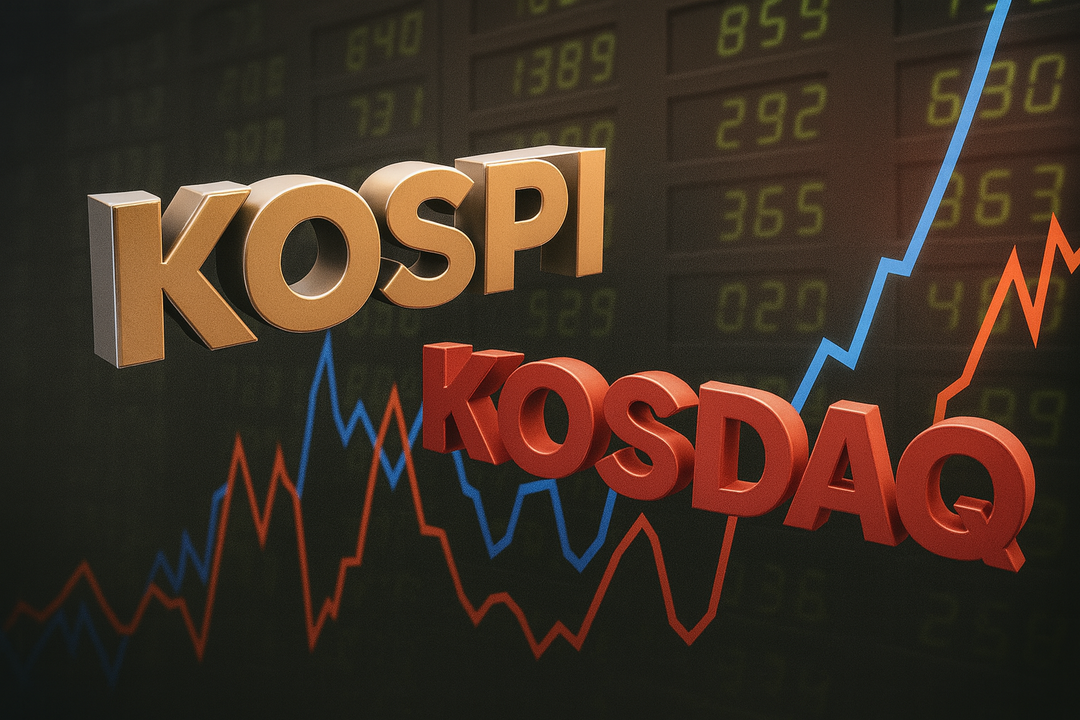
The benchmark KOSPI index closed at 5,872.34, soaring 377.56 points (6.87%) from the previous session. The tech-heavy KOSDAQ also mirrored this bullish momentum, finishing at 1,089.85, up 53.12 points (5.12%).

The morning session began with such explosive buying pressure that the Korea Exchange (KRX) was forced to intervene. At 9:06 AM, a "buy-side" sidecar was triggered for the KOSPI—a program trading halt used to manage excessive volatility. This was followed shortly by a similar activation for the KOSDAQ at 9:13 AM. The visual of bustling activity at major bank dealing rooms in Seoul, including Hana Bank’s headquarters, underscored the relief felt by institutional and retail investors alike.

 
Currency and Commodities: A Retreat from the Brink
The South Korean Won, which had been battered by the strengthening U.S. dollar amid "safe-haven" demand, saw a sharp correction. The Won-Dollar exchange rate plummeted to 1,470.6 KRW, down 33.6 won from the previous day. Just days ago, the rate had threatened to break the 1,500 won barrier as concerns over a wider regional war reached a fever pitch.

Simultaneously, the global energy market signaled a cooling of tensions. International oil prices, which had spiked due to fears of a blockade in the Strait of Hormuz, fell sharply.

Brent Crude and West Texas Intermediate (WTI) dropped by approximately 14%, falling back below the psychologically significant $100 per barrel mark.
Brent, which hit $110 per barrel during the height of the risk yesterday, is now trading in the $94–$96 range.
The prospect of the Strait of Hormuz remaining open for maritime traffic has significantly mitigated concerns over global supply chain disruptions.

 
Analyst Outlook: From Geopolitics to Fundamentals
While the market's reaction has been overwhelmingly positive, experts advise a degree of cautious optimism. The current ceasefire is a temporary 2-week agreement, meaning that market volatility could resurface depending on the progress of further diplomatic negotiations.

However, many analysts believe the focus is now shifting from the battlefield back to corporate balance sheets. Han Ji-young, a researcher at Kiwoom Securities, noted that the market has been enduring "war fatigue" for over a month.

"While the war has been a persistent source of pressure, it is crucial to recognize that we have entered the first-quarter earnings season, kicked off by Samsung Electronics' recent performance announcement," Han stated. "This earnings season could serve as a vital turning point, allowing the market to overcome the downward pressure caused by the conflict."

Market Implications
The "triple stabilization"—the simultaneous drop in oil prices, exchange rates, and interest rate volatility—has provided much-needed breathing room for the South Korean economy, which is heavily dependent on energy imports and exports. As the 14-day truce begins, investors are expected to keep a close eye on both the diplomatic corridor in the Middle East and the upcoming quarterly reports from major domestic corporations to determine if this rally has the legs for a long-term recovery.

[Copyright (c) Global Economic Times. All Rights Reserved.]
  • #globaleconomictimes
  • #micorea
  • #mykorea
  • #nammidonganews
  • #singaporenewsk
  • #Samsung
  • #Daewoo
  • #Hyosung
  • #Apple
  • #korea
KO YONG-CHUL Reporter
Reporter Page

Popular articles

  • BMW Korea Ignites May with Exclusive 9-Model Online Limited Edition Lineup

  • U.S. Intelligence: Iran’s Nuclear Capabilities Remain Intact Despite Two Months of Strikes

  • Kakao Hits Record Q1 Performance: Operating Profit Surges 66% as Focus Shifts to "Agentic AI"

I like it
Share
  • Facebook
  • X
  • Kakaotalk
  • LINE
  • BAND
  • NAVER
  • https://globaleconomictimes.kr/article/1065613229413783 Copy URL copied.
Comments >

Comments 0

Weekly Hot Issue

  • Samsung Electronics Super-Enterprise Union Loses Majority Status Amid Backlash Over Bonus Disparities
  • Samsung to Embed Vital Signs and Heart Health Scores in Upcoming Galaxy Watch9 Lineup
  • Apple Honors Digital Excellence: 12 Exceptional Apps and Games Celebrated at the 2026 Design Awards
  • Nexon Revamps Signature Youth Coding Competition into AI-Driven 'Nexon Young Programmers Cup'
  • Tech University of Korea Gathers 200 Game and AI Researchers to Discuss Industrial Expansion
  • Major Korean Telcos Trim Online-Exclusive Plans by Up to 50% Amid Shift to Unified Mobile Tariffs

Most Viewed

1
From a moment of collective sacrifice to a moment of collective democracy: The Timing of the Election in Ethiopia and Korea
2
U.S. Holds Off on Immediate Comprehensive Semiconductor Tariffs, but Pressure Mounts for Samsung and SK Hynix to Accelerate Domestic Investments
3
[Interview] "Halal is Not a Religious Regulation, but a 'Trust Infrastructure'… Creating a Premium 'K-Halal' Centered on Data and Platforms"
4
‘600 Million Won Bonus’ at Samsung Electronics Triggers Deep Sense of Relative Deprivation Among Korean Workers
5
Bomb Attack Targets Moving Train in Pakistan: At Least 29 Dead, 102 Injured
광고문의
임시1
임시3
임시2

Hot Issue

Murata Unveils Next-Gen Resin Electrode MLCC for Automotive Applications

Samsung to Embed Vital Signs and Heart Health Scores in Upcoming Galaxy Watch9 Lineup

L&F Plus Secures KRW 220 Billion from National Growth Fund to Anchor South Korea’s First Mass LFP Cathode Production

Samsung Electronics Super-Enterprise Union Loses Majority Status Amid Backlash Over Bonus Disparities

Fashion Runway Show 2026

Global Economic Times
korocamia@naver.com
CEO : LEE YEON-SIL
Publisher : KO YONG-CHUL
Registration number : Seoul, A55681
Registration Date : 2024-10-24
Youth Protection Manager: KO YONG-CHUL
Singapore Headquarters
5A Woodlands Road #11-34 The Tennery. S'677728
Korean Branch
Phone : +82(0)10 4724 5264
#304, 6 Nonhyeon-ro 111-gil, Gangnam-gu, Seoul
Copyright © Global Economic Times All Rights Reserved
  • 에이펙2025
  • APEC2025가이드북TV
  • 반달곰 프로젝트
Search
Category
  • All articles
  • Synthesis
  • World
  • Business
  • Industry
  • ICT
  • Distribution Economy
  • Well+Being
  • Travel
  • Eco-News
  • Education
  • Korean Wave News
  • Opinion
  • Arts&Culture
  • Sports
  • People & Life 
    • 전체
    • International Student Report
    • With Ambassador
  • Column 
    • 전체
    • Cho Kijo Column
    • Cherry Garden Story
    • Ko Yong-chul Column
    • Kim Seul-Ong Column
    • Lee Yeon-sil Column
  • Photo News
  • New Book Guide
  • Multicultural News
  • Jobs & Workers