![[등록] 2026-09-01 15:48:31](/support/_updata/banner2/tl181982910_6749.png)


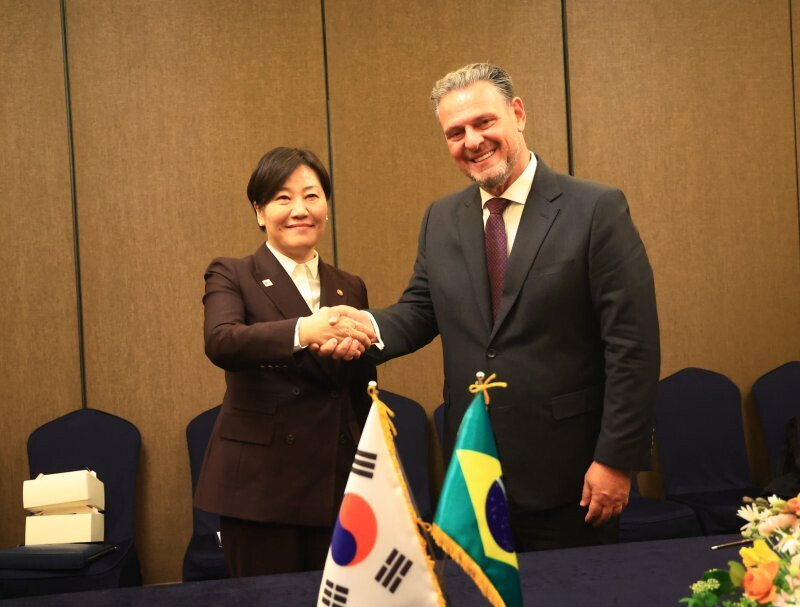
SEOUL – In a significant move to fortify global supply chains and expand market reach, South Korean Minister of Agriculture, Food and Rural Affairs Song Mi-ryung met with her Brazilian counterpart, Carlos Fávaro, on February 23, 2026. The high-level meeting, held at the Lotte Hotel in Seoul, resulted in a revamped bilateral agreement aimed at deepening cooperation in food security, digital farming, and the export of premium Korean agricultural products.
A Strategic Pivot to the Future
The meeting served as a follow-up to recent summits between the two nations, highlighting Brazil’s role as a global agricultural powerhouse and South Korea’s position as a leader in "K-Agrotech." The highlight of the day was the signing of a revised Memorandum of Understanding (MOU) on agricultural cooperation.
While the two countries have maintained an agreement since 2005, the partnership had largely remained stagnant. The new MOU transforms the Agricultural Cooperation Committee into a comprehensive platform. Key updates include:
Increased Frequency: Meetings will now be held annually instead of every two years.
Expanded Scope: The agenda now encompasses digital agriculture, smart farming, fertilizers, pesticides, and Sanitary and Phytosanitary (SPS) measures.
Boosting "K-Agribusiness" in Latin America
Minister Song utilized the meeting to champion the excellence of Korean agricultural technology. The Ministry intends to use Brazil—the largest agricultural market in Latin America—as a springboard for K-Agromaterials.
"By leveraging our world-class smart farm technologies, machinery, and eco-friendly pesticides, we aim to establish a permanent footprint in the South American market," a Ministry spokesperson stated.
The partnership is expected to open doors for Korean startups specializing in automated farming systems and high-efficiency machinery, providing Brazil with the tools to further optimize its massive crop yields.
Paving the Way for Red Ginseng and Grapes
On the consumer goods front, the discussion turned toward the export of Korean Red Ginseng and Grapes.
Red Ginseng: Despite high demand, Korean exporters have faced hurdles due to the lengthy approval processes of Brazil’s Health Regulatory Agency (ANVISA). Minister Song explicitly requested a fast-track review to reduce wait times for Korean functional food products.
K-Grapes: Both ministers agreed to manage quarantine issues for Korean grapes systematically, ensuring they meet international standards to facilitate smoother entry into Brazilian supermarkets.
Strengthening Global Food Security
For South Korea, the alliance is a cornerstone of its national Food Security Strategy. By securing a stable partnership with Brazil—one of the world's top grain producers—Korea aims to buffer itself against global supply chain volatility.
The two nations agreed to cooperate not just on trade, but on the exchange of genomic data and sustainable farming practices, ensuring that both countries can adapt to the challenges of climate change and shifting global demographics.
[Copyright (c) Global Economic Times. All Rights Reserved.]