• 2026.06.05 (Fri)
  • All articles
  • LOGIN
  • JOIN
Global Economic Times
fashionrunwayshow2026
  • Synthesis
  • World
  • Business
  • Industry
  • ICT
  • Distribution Economy
  • Well+Being
  • Travel
  • Eco-News
  • Education
  • Korean Wave News
  • Opinion
  • Arts&Culture
  • Sports
  • People & Life
    • International Student Report
    • With Ambassador
  • Column
    • Cho Kijo Column
    • Cherry Garden Story
    • Ko Yong-chul Column
    • Kim Seul-Ong Column
    • Lee Yeon-sil Column
  • Photo News
  • New Book Guide
MENU
 
Home > Industry

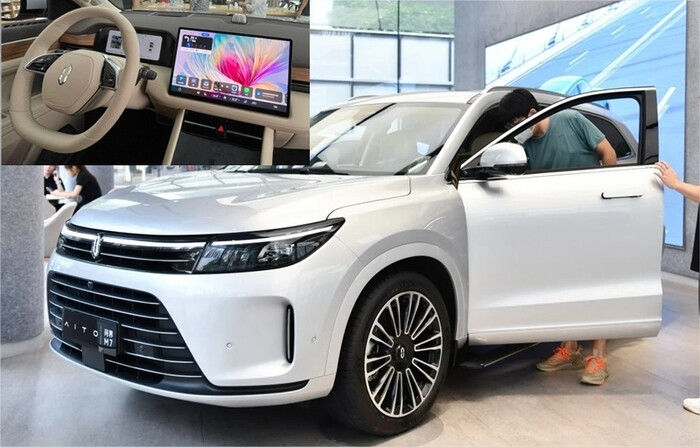
Huawei Leads China's Electric Vehicle Revolution with Smart Driving Technology

Graciela Maria Reporter / Updated : 2024-11-26 19:50:58
  • -
  • +
  • Print


BEIJING – While BYD has dominated the Chinese electric vehicle (EV) market, Huawei is emerging as a key player in the autonomous driving sector, according to a new report by the Korea Automotive Research Institute. The report, "Rise and Prospects of Huawei in the Chinese Automotive Market," suggests that Huawei, with its advanced software and hardware capabilities, is poised to lead the development of smart driving technology in China.

Huawei's strategy differs from other tech giants like Xiaomi and Baidu, as it focuses on providing advanced technologies and software solutions to established automakers rather than building its own vehicles. This approach has proven successful, with major Chinese automakers like Changan, Guangzhou Automobile, and BYD partnering with Huawei to enhance their vehicles' autonomous driving capabilities.

The report categorizes Huawei's partnerships with automakers into three levels: Tier 1 (supplying general components), HI (supplying advanced software and hardware), and HIMA (involving design, engineering, and sales). The HIMA model, in particular, has been a major success, with Huawei-powered vehicles achieving high sales despite premium pricing.

A key factor in Huawei's success is its ability to develop and commercialize advanced driver-assistance systems (ADAS) like autonomous emergency braking (AEB). Huawei has played a leading role in shaping China's AEB standards, ensuring that its technology meets and exceeds regulatory requirements.

While Huawei's dominance in the smart driving sector is significant, the report cautions that its position is not guaranteed. Other automakers, such as BYD, Xpeng, and Tesla, are investing heavily in developing their own autonomous driving technologies. The report suggests that the partnerships between Huawei and traditional automakers may be temporary, as these companies seek to reduce their reliance on external suppliers and establish their own technological capabilities.

[Copyright (c) Global Economic Times. All Rights Reserved.]

Graciela Maria Reporter

Popular articles

  • Alleged Marital Rift Between Macrons Tied to Iranian Actress: New Claims Emerge

  • OpenAI Redefines Human-AI Interaction with ‘GPT-Realtime-2’ and New Suite of Live Voice Models

  • Taiwanese President Lai Ching-te Honors Japanese Engineer from Colonial Era: "We Are Family"

I like it
Share
  • Facebook
  • X
  • Kakaotalk
  • LINE
  • BAND
  • NAVER
  • https://globaleconomictimes.kr/article/1065610028260529 Copy URL copied.
Comments >

Comments 0

Weekly Hot Issue

  • Nvidia CEO Jensen Huang to Arrive in South Korea for "Sam-So" Meeting with Tech Tycoons
  • Samsung Electronics Super-Enterprise Union Loses Majority Status Amid Backlash Over Bonus Disparities
  • Samsung to Embed Vital Signs and Heart Health Scores in Upcoming Galaxy Watch9 Lineup
  • Apple Honors Digital Excellence: 12 Exceptional Apps and Games Celebrated at the 2026 Design Awards
  • Nexon Revamps Signature Youth Coding Competition into AI-Driven 'Nexon Young Programmers Cup'
  • Tech University of Korea Gathers 200 Game and AI Researchers to Discuss Industrial Expansion

Most Viewed

1
From a moment of collective sacrifice to a moment of collective democracy: The Timing of the Election in Ethiopia and Korea
2
U.S. Holds Off on Immediate Comprehensive Semiconductor Tariffs, but Pressure Mounts for Samsung and SK Hynix to Accelerate Domestic Investments
3
[Interview] "Halal is Not a Religious Regulation, but a 'Trust Infrastructure'… Creating a Premium 'K-Halal' Centered on Data and Platforms"
4
‘600 Million Won Bonus’ at Samsung Electronics Triggers Deep Sense of Relative Deprivation Among Korean Workers
5
Musk’s SpaceX Secures Space Hegemony with Flawless Starship V3 Recovery Ahead of Historic IPO
광고문의
임시1
임시3
임시2

Hot Issue

Murata Unveils Next-Gen Resin Electrode MLCC for Automotive Applications

Samsung to Embed Vital Signs and Heart Health Scores in Upcoming Galaxy Watch9 Lineup

L&F Plus Secures KRW 220 Billion from National Growth Fund to Anchor South Korea’s First Mass LFP Cathode Production

Samsung Electronics Super-Enterprise Union Loses Majority Status Amid Backlash Over Bonus Disparities

Fashion Runway Show 2026

Global Economic Times
korocamia@naver.com
CEO : LEE YEON-SIL
Publisher : KO YONG-CHUL
Registration number : Seoul, A55681
Registration Date : 2024-10-24
Youth Protection Manager: KO YONG-CHUL
Singapore Headquarters
5A Woodlands Road #11-34 The Tennery. S'677728
Korean Branch
Phone : +82(0)10 4724 5264
#304, 6 Nonhyeon-ro 111-gil, Gangnam-gu, Seoul
Copyright © Global Economic Times All Rights Reserved
  • 에이펙2025
  • APEC2025가이드북TV
  • 반달곰 프로젝트
Search
Category
  • All articles
  • Synthesis
  • World
  • Business
  • Industry
  • ICT
  • Distribution Economy
  • Well+Being
  • Travel
  • Eco-News
  • Education
  • Korean Wave News
  • Opinion
  • Arts&Culture
  • Sports
  • People & Life 
    • 전체
    • International Student Report
    • With Ambassador
  • Column 
    • 전체
    • Cho Kijo Column
    • Cherry Garden Story
    • Ko Yong-chul Column
    • Kim Seul-Ong Column
    • Lee Yeon-sil Column
  • Photo News
  • New Book Guide
  • Multicultural News
  • Jobs & Workers