![[등록] 2026-09-01 15:48:31](/support/_updata/banner2/tl181982910_6749.png)


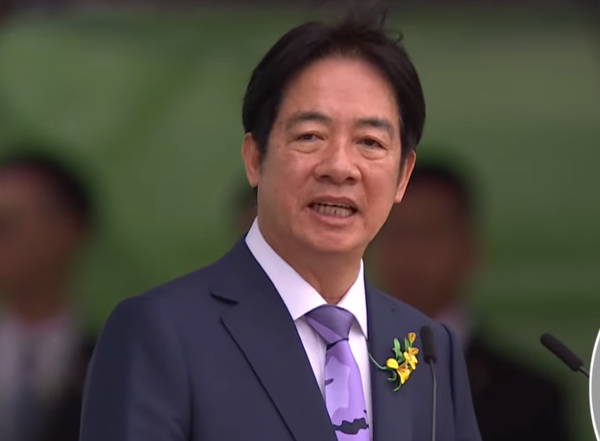
TAINAN – In a move highlighting the deep-seated historical and emotional ties between Taiwan and Japan, Taiwanese President Lai Ching-te paid high honors to Yoichi Hatta, a Japanese civil engineer who designed major irrigation projects during the Japanese colonial period.
On May 8, President Lai attended a memorial service marking the 84th anniversary of Hatta’s death at the Wusantou Reservoir in Tainan. A video circulating on social media showed the President bowing deeply and kneeling to lay flowers before a statue of Hatta, who is depicted sitting on the ground.
During his commemorative speech, President Lai referred to Hatta as both "a Japanese and a Taiwanese," emphasizing a shared identity by stating, "We are all one family." He noted that the Wusantou Reservoir, which Hatta spearheaded, remains a vital infrastructure piece today, providing essential water supplies to Taiwan’s world-leading semiconductor manufacturing plants.
Invoking the Chinese proverb "Yin Shui Si Yuan" (When drinking water, think of its source), Lai urged the public to remember the origins of their prosperity and expressed gratitude toward Japan. He also extended his appreciation for Japan’s consistent geopolitical support, mentioning the late Prime Minister Shinzo Abe and current Japanese political leaders for their roles in maintaining peace and stability in the Taiwan Strait.
The ceremony was attended by approximately 500 dignitaries from both nations, including Akie Abe, the widow of the late Prime Minister Shinzo Abe, and descendants of Yoichi Hatta.
However, the gesture sparked sharp rebukes from Beijing and pro-China circles in Taiwan. Chinese state media and scholars characterized the act as "flattery toward Japan" and an attempt to "beautify colonial exploitation." Critics, including Professor Yuan Ju-cheng of National Taiwan University, argued that the President was overlooking the dark side of colonial rule.
Furthermore, "Junzhengping," a social media account linked to the Chinese military, asserted that the water projects of that era were fundamentally designed to facilitate the extraction and seizure of Taiwanese grain for Japan.
Unlike Korea, which was forcibly annexed, Taiwan was ceded to Japan by the Qing Dynasty in 1895 following the First Sino-Japanese War under the Treaty of Shimonoseki. This historical nuance often leads to a more complex and sometimes favorable public perception of the 50-year Japanese administration in Taiwan compared to other former colonies.
[Copyright (c) Global Economic Times. All Rights Reserved.]