![[등록] 2026-09-01 15:48:31](/support/_updata/banner2/tl181982910_6749.png)


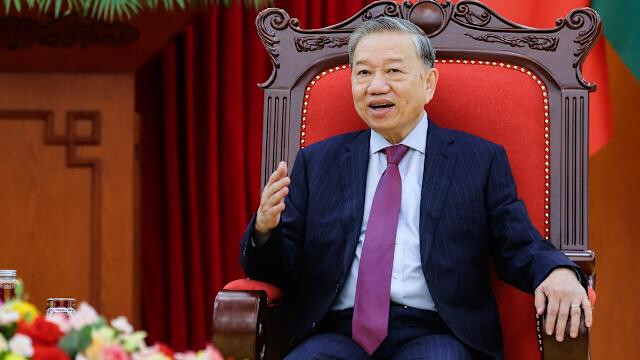
SINGAPORE – In a move signaling a strong desire to bolster trade ties with the United States, Vietnam has indicated its willingness to negotiate a reduction of tariffs on American imports down to 0%. To Lam, General Secretary of the Vietnam General Confederation of Labour, conveyed this intention during a phone conversation with U.S. President Donald Trump last Friday.
During the call, the two leaders reaffirmed their commitment to fostering mutually beneficial relations and strengthening bilateral cooperation to contribute to regional and global peace, stability, and development. They also acknowledged the significant advancements made in Vietnam-U.S. relations across various sectors.
With a particular focus on trade, both sides engaged in in-depth discussions on measures to invigorate bilateral commerce. General Secretary To Lam emphasized Vietnam's readiness to enter negotiations aimed at reducing tariffs on imports from the United States to zero percent. In a reciprocal gesture, he also requested that the U.S. consider lowering tariffs on Vietnamese goods to the same level.
Furthermore, General Secretary To Lam pledged to expand Vietnam's imports from the U.S. and to actively encourage American companies to invest in Vietnam by creating a favorable investment climate. The two leaders agreed to continue discussions to promptly finalize a bilateral agreement that would formalize these commitments.
On the same day, General Secretary To Lam extended a formal invitation to President Trump and the First Lady to visit Vietnam. President Trump readily accepted the invitation and expressed his hope to hold a meeting with General Secretary To Lam in the near future. Additionally, President Trump asked General Secretary To Lam to convey his warm regards to the leadership and people of Vietnam.
This phone conversation gains particular significance as it occurred just two days after President Trump announced the imposition of sweeping "reciprocal tariffs" on major U.S. trading partners. This measure has resulted in Vietnam facing a substantial tariff rate of 46%.
Relevant Vietnamese authorities have expressed their assessment that these U.S. tariffs are inconsistent with the robust cooperative relationship between the two nations. However, they have also stated their readiness to engage in dialogue with the U.S. side to reach a fair resolution.
Background on Vietnam-U.S. Trade Relations: The trade volume between Vietnam and the United States has steadily increased in recent years. Vietnam has emerged as a significant importer for the U.S., primarily exporting apparel, footwear, and electronics. Conversely, the U.S. mainly exports agricultural products and machinery to Vietnam.
U.S. "Reciprocal Tariffs" Initiative: The Trump administration has consistently emphasized the principle of "reciprocity" in trade, advocating for the imposition of tariffs on trading partners that mirror the tariffs those partners levy on U.S. goods. This recent action is seen as a direct implementation of this policy.
Vietnam's Stance: While expressing concerns regarding the U.S. tariff imposition, the Vietnamese government appears committed to maintaining and developing the close economic partnership between the two countries. It is likely to pursue solutions through dialogue and negotiation. General Secretary To Lam's recent remarks underscore this commitment.
Future Outlook: Despite Vietnam's proactive stance on negotiations, the assertive trade policy of the United States introduces uncertainty regarding the smooth progression of bilateral trade talks. However, given the significant economic interdependence between the two nations, a resolution that considers mutual benefits, rather than escalating conflict, remains a strong possibility.
Additional Context and Details:
The Significance of To Lam's Role: While To Lam holds a prominent position within Vietnam's labour federation, his direct engagement with the U.S. President on trade matters suggests a broader consensus within the Vietnamese government regarding the importance of addressing the tariff issue at the highest levels. This could indicate a strategic move to convey Vietnam's commitment and willingness to find a solution.
Potential Implications of 0% Tariffs: If an agreement is reached to eliminate tariffs on U.S. imports, it could significantly boost the competitiveness of American goods in the Vietnamese market. This could lead to increased exports for the U.S. in sectors such as agriculture, machinery, and potentially high-tech products. Conversely, Vietnam hopes that a reciprocal reduction in U.S. tariffs on its exports would further enhance its position as a key manufacturing hub and strengthen its overall economic growth.
Challenges to Negotiation: Despite Vietnam's willingness, several factors could complicate the negotiation process. The U.S. administration's broader trade agenda and its focus on reducing trade deficits may lead to a tough negotiating stance. Specific concerns regarding intellectual property rights, market access, and the trade balance could also become points of contention.
Broader Geopolitical Context: The strengthening of economic ties between Vietnam and the U.S. also occurs within a broader geopolitical context. Both countries share strategic interests in the Indo-Pacific region, and closer economic cooperation could further solidify their partnership in addressing regional challenges.
Impact on Other Trading Partners: The outcome of the Vietnam-U.S. tariff negotiations could have implications for other countries engaged in trade with the United States. It might set a precedent or provide insights into the U.S.'s approach to future trade discussions with other nations facing similar reciprocal tariffs.
This revised article provides more context, explores the potential implications, and highlights the complexities surrounding the proposed tariff negotiations between Vietnam and the United States.
[Copyright (c) Global Economic Times. All Rights Reserved.]