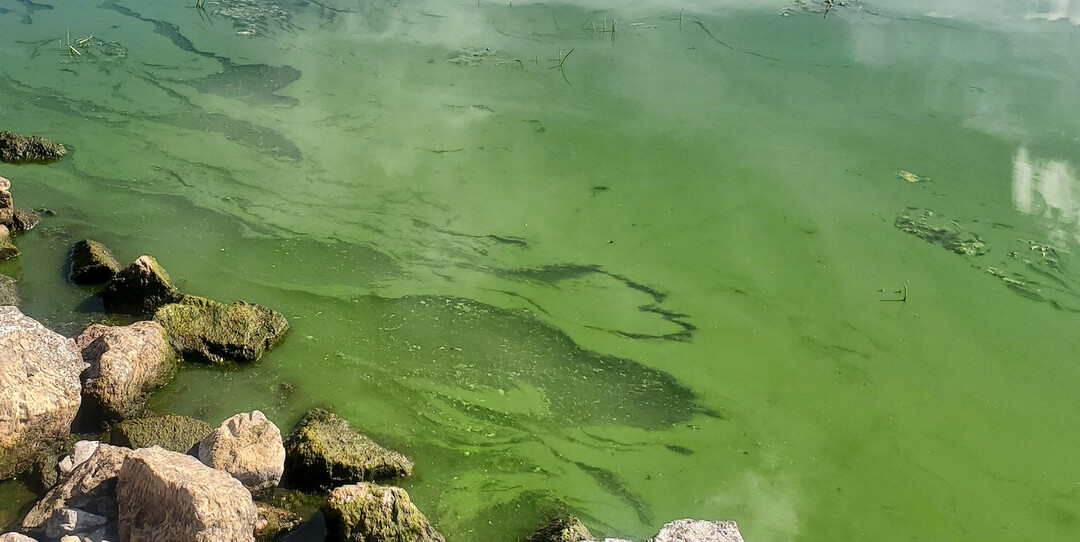
SEOUL — South Korean environmental authorities have introduced a proprietary carbon calculation framework designed to significantly enhance the monitoring and forecasting of freshwater algal blooms.
The National Institute of Environmental Research (NIER) revealed that it has successfully formulated the country's first domestic-specific carbon estimation model tailored to 36 native freshwater phytoplankton species. By taking local ecological traits into account, the newly engineered formulas cut carbon estimation margins of error by up to 39% compared to legacy foreign models, marking a pivotal step forward in water quality management.
Overcoming Limitations of Foreign Marine Models
For years, domestic researchers and field experts depended heavily on overseas carbon estimation formulas derived primarily from marine phytoplankton and protozoans. Yet, fundamental ecological differences between marine habitats and South Korean freshwater systems created substantial discrepancies when estimating the biomass of harmful cyanobacteria and other primary bloom-forming agents.
To resolve this issue, a specialized study titled “Tracing the Origin of Massive Algal Bloom Outbreaks in the Nakdong River and Predicting Generation Volumes in Response to Climate Change” was conducted in 2025.
Because individual phytoplankton cells are microscopic and notoriously difficult to measure directly, the research team adopted an advanced methodology combining digital microscopic image analysis with elemental analyzers. By evaluating cellular biovolume—the 3-dimensional volume computed via precise length and width measurements—statistically against actual carbon content, researchers established a reliable conversion model based solely on cellular dimensions.
Significant Gains in Accuracy
Comparative evaluations demonstrated that the newly devised equations reduced estimation errors between 26% and 39% relative to standard international benchmarks:
Diatoms: Achieved the highest reduction rate at 39%.
Cyanobacteria: Exhibited a 35% error decrease.
Other Algae Varieties: Recorded a 26% improvement.
This scientific advancement bridges a critical gap in local ecological monitoring, allowing environmental agencies to inject precise carbon biomass metrics directly into existing surveillance streams.
Future Outlook for Water Management
With the new mathematical framework in place, NIER anticipates a much higher resolution in tracking bloom expansion, intensity, and seasonal shifts.
Kim Kyung-hyun, head of the Water Environment Research Department at NIER, emphasized the significance of the project, calling it a milestone in quantifying domestic freshwater blooms into concrete carbon biomass data. Moving forward, the institute plans to execute comprehensive field validations, systematically integrate carbon metrics into current observation platforms, and fortify national water safety protocols for the public.
[Copyright (c) Global Economic Times. All Rights Reserved.]